Head to head · the Philippines' two famous volcanoes
Mayon vs Taal: Which Philippine Volcano Should You See?
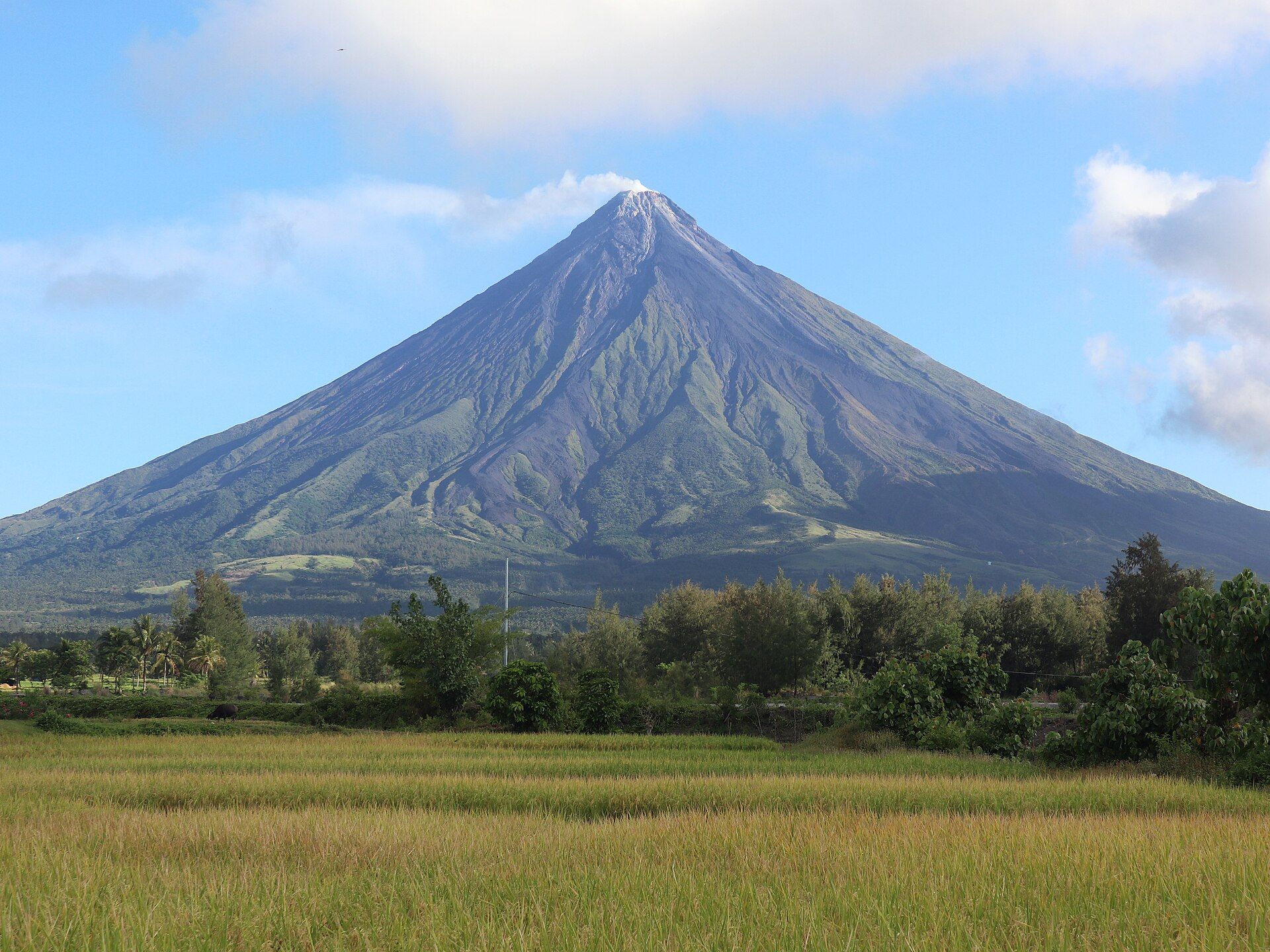
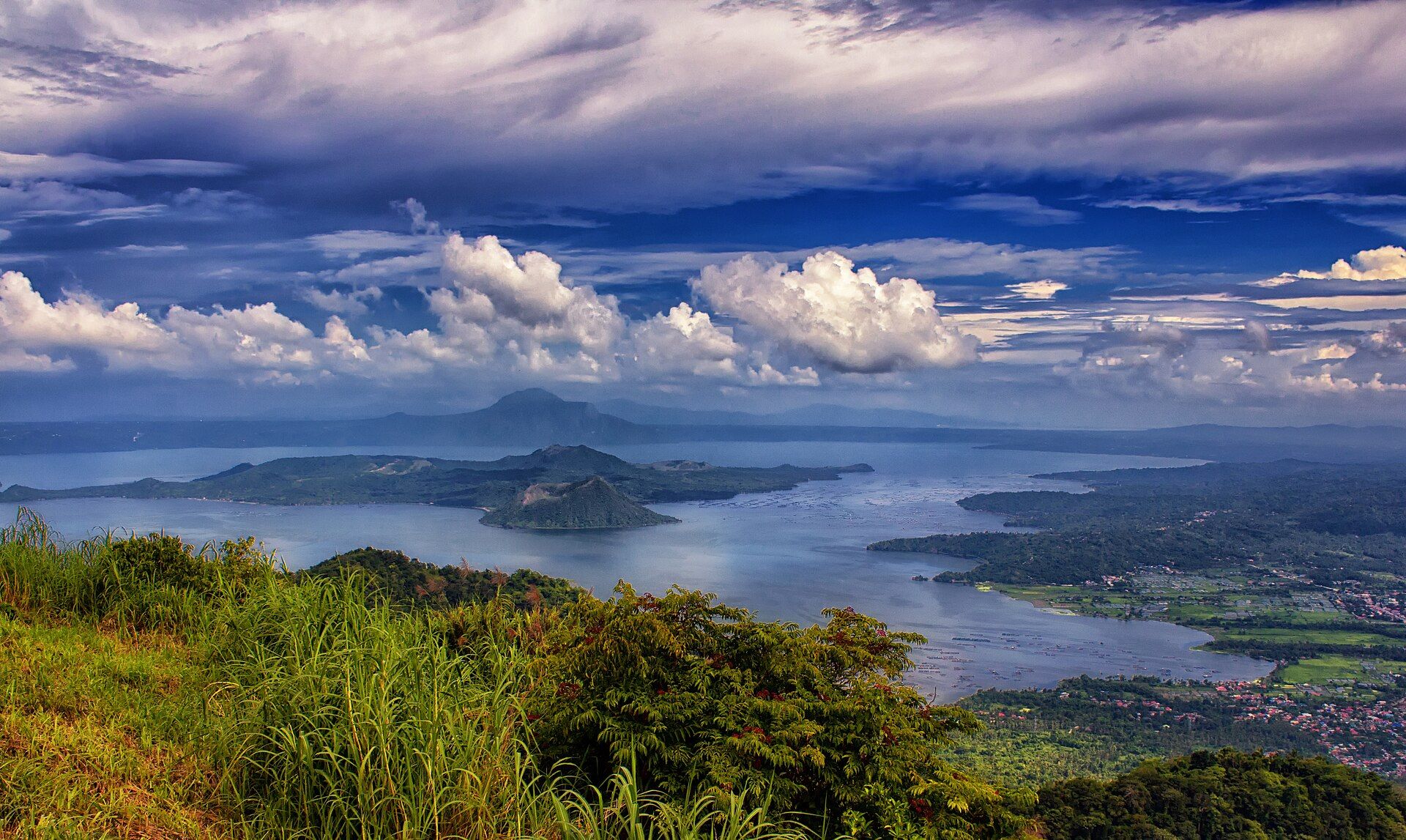
Short answer: they are opposite shapes. Mayon is a single towering cone — 2,463 m, often called the most symmetrical on Earth — rising from the Bicol plain in Albay. Taal is a volcano within a lake within a volcano: a small, very active island volcano in Taal Lake, which fills an ancient caldera about 25 km across, seen from the Tagaytay ridge.
Both are among the most active volcanoes in the country, and both are for viewing rather than climbing for now. Taal's Volcano Island is a Permanent Danger Zone, off-limits even at Alert Level 1; Mayon was at Alert Level 3 with an eruption under way as of July 2026.
The practical difference is distance: Taal's viewpoints are a half-day trip from Manila, while Mayon is a flight to Legazpi — a little over an hour from Manila to the first viewpoints.
Mayon Volcano
The perfect cone of Albay
A 2,463-metre stratovolcano and the Philippines' most active volcano, its near-flawless cone built by thousands of years of layered lava and ash. It is the core of the Albay UNESCO Global Geopark, and the Cagsawa belfry, half-buried by the 1814 eruption, stands below it.
- One of the most symmetrical volcanic cones on Earth
- Night views of glowing lava during activity, from approved viewpoints
- Cagsawa ruins, Lignon Hill and Sumlang Lake viewpoints
- UNESCO Global Geopark
Taal Volcano & Lake
A volcano within a lake within a volcano
A huge prehistoric caldera, about 25 km across, now filled by Taal Lake, with Volcano Island rising from its centre and a crater lake of its own on the island. It is a Decade Volcano — singled out for study because it is very active and close to dense population — and its 2020 eruption blanketed the region in ash and reshaped the crater.
- A nested caldera landscape seen whole from one ridge
- Cool highland air and cafés along the Tagaytay rim
- About 1.5–2 hours by car from Manila
- A designated Decade Volcano
Head to head
| What matters | Mayon Volcano | Taal Volcano & Lake |
|---|---|---|
| Shape Edge: Toss-up | One tall, near-perfect cone rising cleanly from the plain. | A low island volcano in a lake, inside a caldera about 25 km across. |
| The view Edge: Toss-up | The cone framed by the Cagsawa belfry and rice fields; glowing lava at night during eruptions. | The Tagaytay ridge panorama: a vast blue lake with the steaming island at its heart. |
| Activity and safety Edge: Toss-up | The country's most active volcano; a 6-km Permanent Danger Zone, and Alert Level 3 with an eruption under way as of July 2026. | Very active; Volcano Island is a Permanent Danger Zone and off-limits even at Alert Level 1. Boat landings have been suspended during unrest. |
| Best season Edge: Taal Volcano & Lake | The dry months, roughly February to May, for the clearest views. | November to May for clear, cool ridge views. |
| Getting there Edge: Taal Volcano & Lake | Fly or take the train or bus to Legazpi City, Albay — a little over an hour from Manila to the first viewpoints by air. | About 1.5–2 hours by car south of Manila to Tagaytay. |
| Time needed Edge: Taal Volcano & Lake | Half a day for the viewpoints; longer if higher treks reopen. | One to two hours at the ridge viewpoints. |
Which should you choose?
Choose Mayon Volcano if…
Anyone willing to fly to Bicol for the classic Philippine volcano — a perfect cone, the Cagsawa ruins and, during activity, lava glowing at night.
Choose Taal Volcano & Lake if…
Anyone in Manila with half a day: a cool ridge, a lake view and a nested-caldera landscape that explains itself at a glance.
The honest verdict
Mayon is the more dramatic single mountain; Taal the stranger, more layered landscape. Neither is for climbing right now — check PHIVOLCS for both before you go.
If you are in Manila with a day, Taal from Tagaytay is the easy choice. If you want the image most people picture when they think of a Philippine volcano, fly to Legazpi for Mayon.
Wonders mentioned here
Added