🇨🇦 Natural wonders of Canada
A vast northern country of glacier-fed turquoise lakes, soaring Rocky Mountains, and thundering waterfalls — wilderness on a continental scale, from the Rockies to the Great Lakes.
🗓️ Best time for nature: Summer to early autumn (roughly June–October) for the mountain parks, when roads open and lakes thaw to reveal their colour; winter brings snow sports and frozen spectacle.
The lay of the land
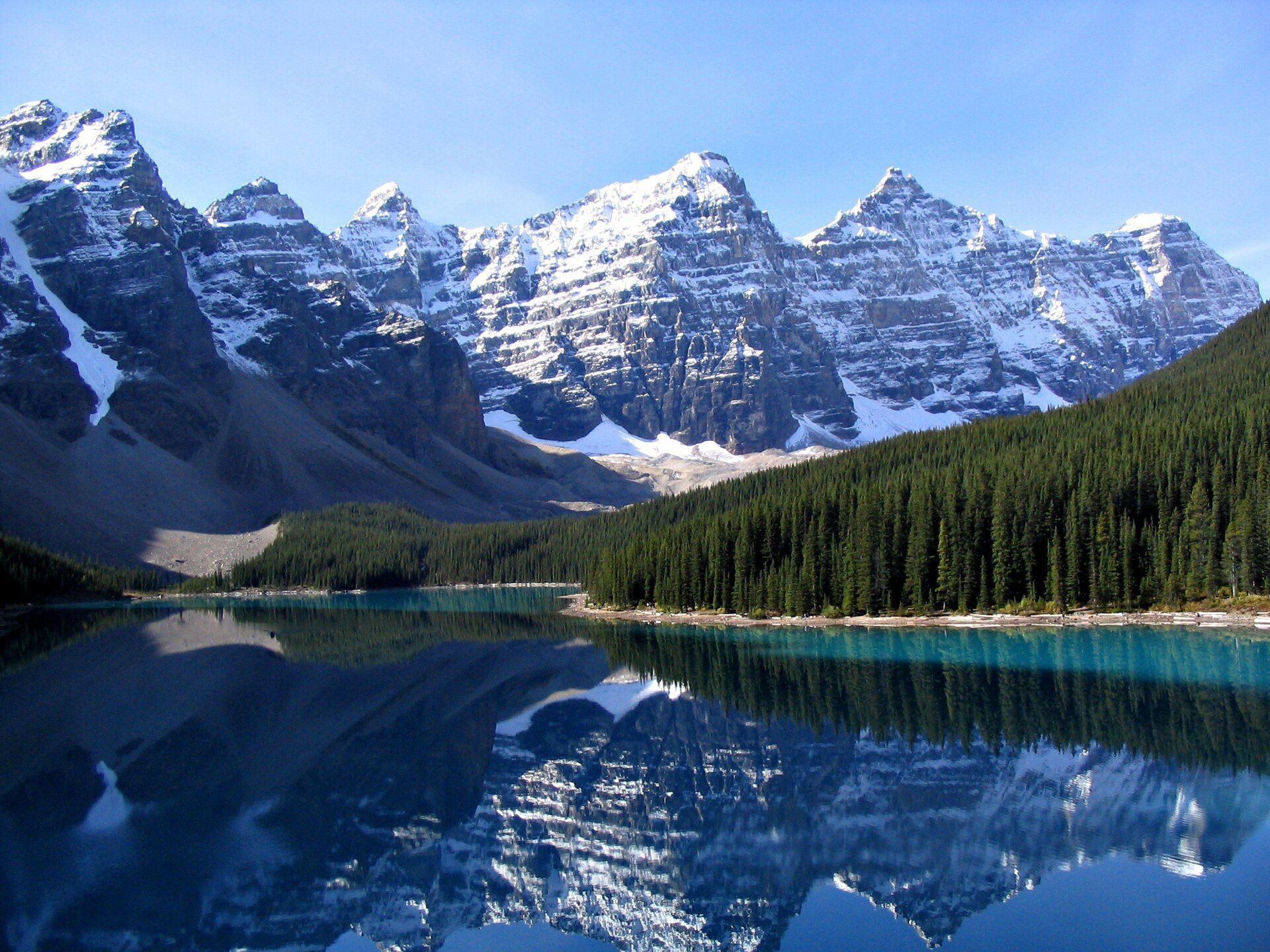
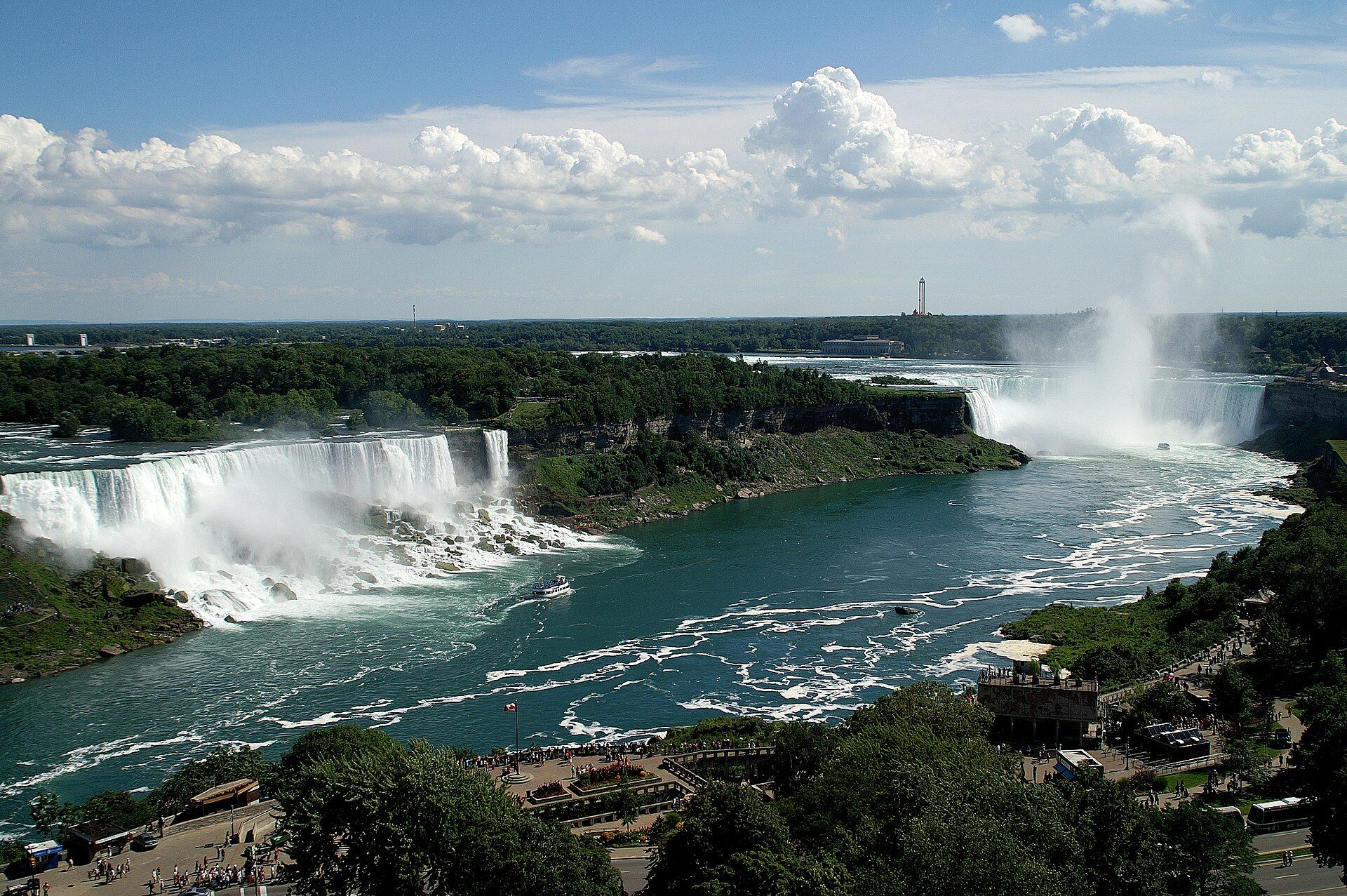
Canada is a country defined by ice and rock. Glaciers past and present shaped much of its landscape — grinding out the U-shaped valleys and rock-flour lakes of the Canadian Rockies, whose turquoise waters sit beneath jagged, snow-capped peaks in a UNESCO-listed cluster of parks. Further east, the outflow of the Great Lakes crashes over Niagara. Immense boreal forest, tundra, and coastline stretch beyond, home to bears, wolves, and vast wild spaces.
Where to begin
-
Banff & Moraine Lake
Glacier-fed turquoise lakes beneath the peaks of the Canadian Rockies.
-
Niagara Falls
Among the most powerful waterfalls on Earth, on the Great Lakes' outflow.
A taste of the place
Canadian food ranges from Alberta's celebrated beef and the bison and berries of the Rockies to the icewine and orchard fruit of the Niagara Peninsula. Indigenous traditions like bannock, and national comforts like poutine and maple syrup, round out a cuisine shaped by cold climates and abundant land and water.
Traveling responsibly
- Access to Moraine Lake is shuttle-only in season — book ahead.
- Carry bear spray and learn bear-safety basics in the mountain parks.
- Mountain weather changes fast; pack layers even in summer.
- Distances between regions are large; plan accordingly.
Canada offers wilderness at a scale few countries can match, and its most beloved landscapes were carved by ice. In the Canadian Rockies, glaciers ground mountain rock into fine ‘flour’ that tints lakes like Moraine and Louise an electric turquoise beneath sheer, snow-capped peaks — the heart of a UNESCO World Heritage cluster of parks and the country’s first national park, Banff, established in 1885.
To the east, the combined outflow of four of the five Great Lakes hurls itself over Niagara Falls in one of the most powerful cataracts on the planet. Between and beyond lie boreal forest, tundra, and coast on a continental scale. This atlas begins Canada’s chapter with its glacial lakes and its greatest waterfall — ice and water, the two forces that shaped the country.
All wonders in Canada
2 places