🇿🇼 Natural wonders of Zimbabwe
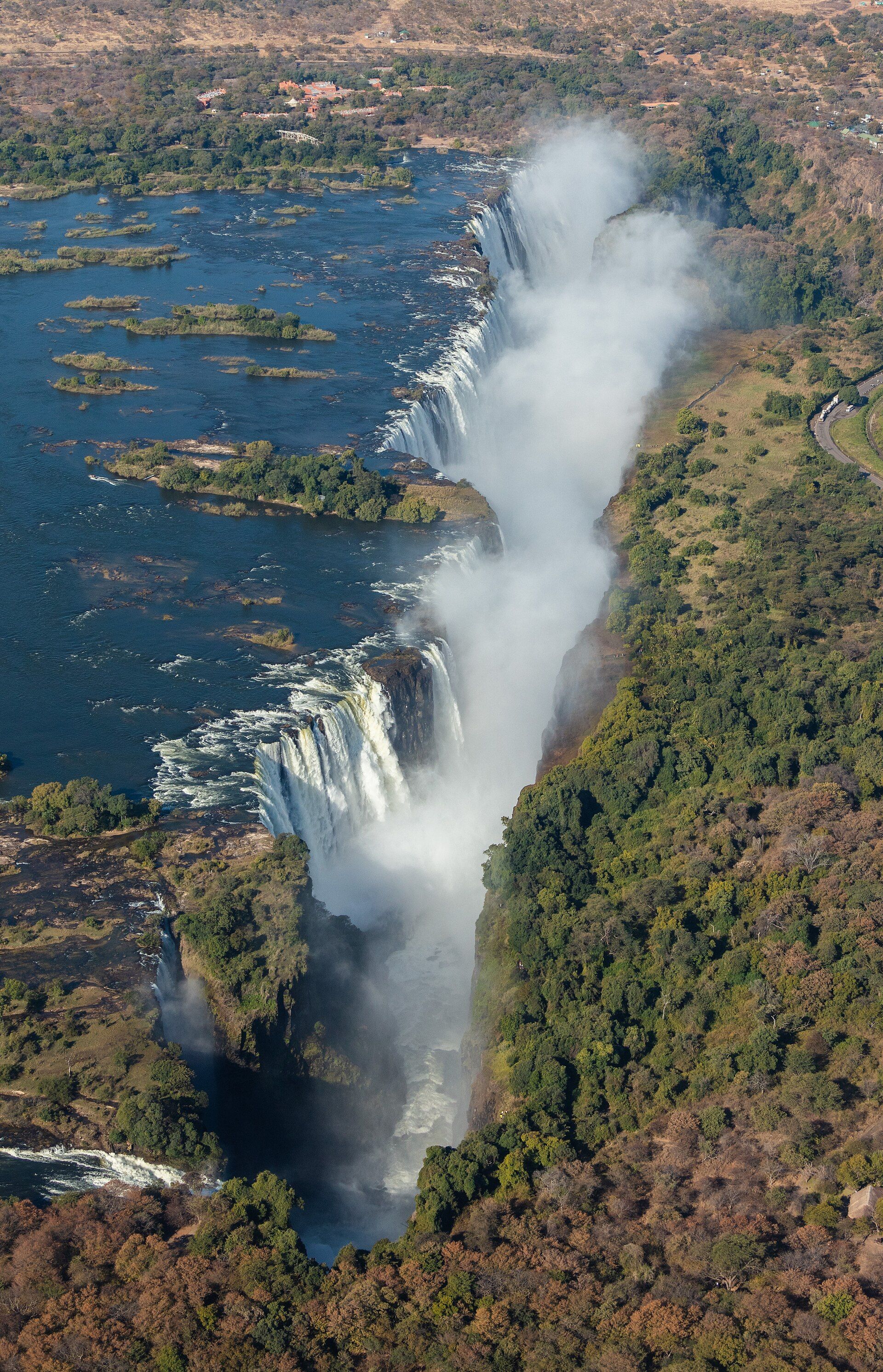
A Southern African country of dramatic water and wildlife — home to its share of Victoria Falls, the largest sheet of falling water on Earth, on the great Zambezi River.
🗓️ Best time for nature: February to May for peak Victoria Falls flow; August to December for lower water, clearer views, and prime wildlife viewing along the Zambezi.
The lay of the land
Zimbabwe sits on the high plateau of Southern Africa, drained in the north by the mighty Zambezi River, which plunges over Victoria Falls on the border with Zambia. Beyond the falls lie riverine forests, granite hills and balancing rocks, and wildlife-rich national parks. The Zambezi's gorges record how the falls have retreated over hundreds of thousands of years, and its waters sustain both dense wildlife and downstream hydropower.
Where to begin
-
Victoria Falls
Mosi-oa-Tunya — the largest sheet of falling water on Earth.
A taste of the place
Zimbabwean food centres on sadza, a maize-meal staple eaten with stews, greens, and meat; freshwater fish like bream and tiny dried kapenta come from the Zambezi and its lakes, and biltong (spiced dried meat) is a regional favourite.
Traveling responsibly
- See both the Zimbabwean and Zambian sides of Victoria Falls.
- Pack rain protection for the falls' spray in high-water season.
- Combine the falls with a Zambezi wildlife safari.
Zimbabwe’s natural fame rests above all on water: it shares Victoria Falls, where the wide Zambezi River collapses over a basalt chasm to form the single largest sheet of falling water on the planet, throwing up a ‘smoke’ of spray visible for kilometres. This atlas begins the country’s chapter there, on the great river that defines its northern edge — with its granite landscapes and wildlife parks to follow.
Added
All wonders in Zimbabwe
1 places