Chapada Diamantina
📍 Bahia, northeastern Brazil
A highland wilderness of table mountains, deep canyons, and waterfalls in the Brazilian interior — with caves holding pools so clear the light turns them electric blue.
What makes it marvelous
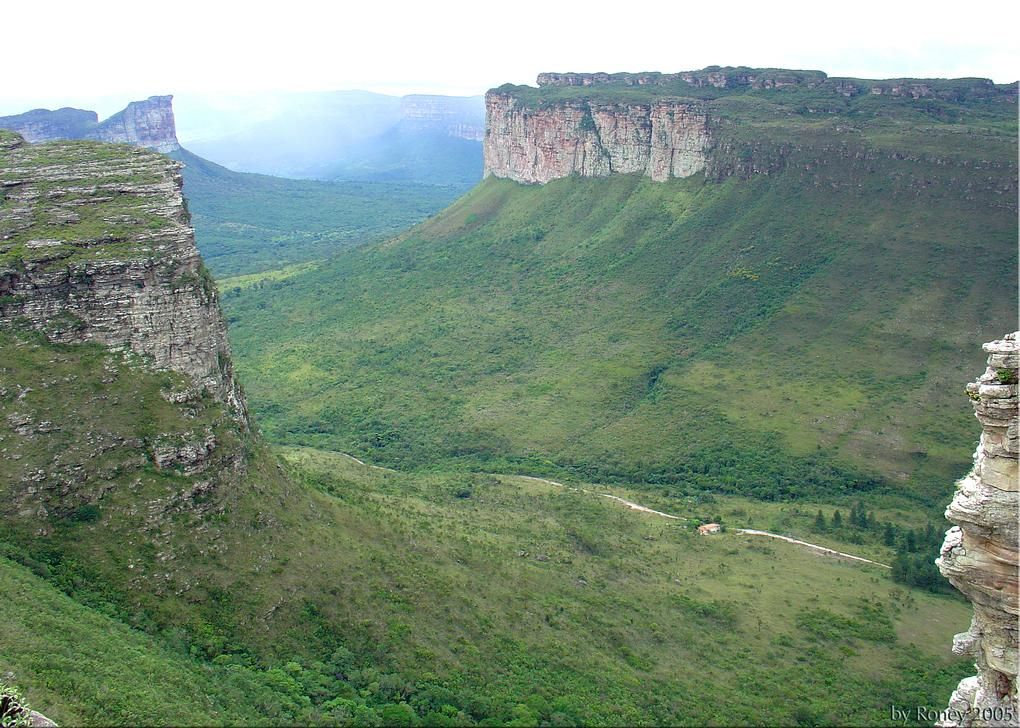
Chapada Diamantina is a vast plateau of ancient quartzite in the dry interior of Bahia, eroded over hundreds of millions of years into flat-topped table mountains, deep valleys, and dramatic canyons. Rivers stained tea-brown by plant tannins tumble off the escarpments as waterfalls — including Cachoeira da Fumaça, one of Brazil's tallest at around 340 metres, which dissolves into drifting smoke-like spray before it lands. Underground, the limestone edges hold caves such as Poço Azul and Poço Encantado, where sunlight entering at just the right angle strikes water of extraordinary clarity and floods the chamber with an unearthly electric blue. Once the centre of a 19th-century diamond rush that gave the region its name, it is now a national park of rugged trekking country, natural swimming holes, and highland cerrado plants found nowhere else.
Why visit
Trekking between table mountains to swim beneath waterfalls, then watching a cave pool ignite in electric blue as the sun hits it, makes Chapada Diamantina one of Brazil's most rewarding and least-crowded natural escapes.
What to know before you go
🗓️ Best time
The drier months (roughly April–October) for safe trekking and cave access; the blue-light effect in the caves is strongest around midday from roughly April to September.
🧭 Getting there & access
In Bahia's interior, reached via Salvador and the base town of Lençóis; trails, waterfalls, and caves are visited on guided day trips or multi-day treks across the plateau.
Good to know
- Time cave visits for midday, when the blue light effect peaks.
- Hire local guides in Lençóis — trails are remote and poorly marked.
- Come in the dry season; heavy rain closes caves and swells rivers.
Plan your visit
Moderate🧭 Getting there
From Lençóis, Bahia, Brazil
- Fly Salvador → Lençóis (LEC), or drive — roughly 6h by road
- Base in Lençóis, the old diamond town at the park's edge
- Run guided day walks and multi-day treks into the park from there
- Total travel
- A short flight or a long drive inland from Salvador
- Time at site
- Several days, more for the Vale do Pati trek
- Access
- The park is huge and largely trail-based, and many of the best routes — the long climb to the top of Cachoeira da Fumaça, the multi-day Vale do Pati traverse, the caves — are done with a local guide, both for routefinding and because some sites require one. The famous blue pools of Poço Azul and Poço Encantado only light up when a shaft of sun reaches the water, which happens around the middle of the day in particular months; ask locally about the timing before making the trip out. Rain swells the rivers and changes what is walkable.
🎒 What to bring & consider
- A local guide for the longer trails and the caves, several of which you cannot legally or safely do alone
- Proper footwear for rocky, root-tangled trails that turn to mud and running water after rain
- Timing for the sunbeam if the blue pools are the goal, since without the midday shaft of light they are simply dark water
- Enough water and sun cover for exposed plateau walks with long gaps between shade
- A head-torch for the cave visits and for early starts on the long waterfall climbs
👁️ What to expect
- Crowds
- Modest and spread across a big park. Lençóis is lively; the trails are quiet once you are on them.
- Conditions
- Warm and humid, with everything from gentle river pools to serious multi-day treks.
- Facilities
- Good in Lençóis — pousadas, restaurants, guides. Little to nothing deep in the park.
- The view
- The shaft of light turning Poço Azul's water electric blue, or the valley falling away from the top of the Fumaça waterfall. The first is a midday-and-season shot; the second is a reward for a hard climb.
Times and requirements are approximate and change with season, weather, and local rules — confirm permits, fares, and schedules with operators before you travel.
Natural riches of the area
- Ancient quartzite table mountains and deep canyons
- Cachoeira da Fumaça (~340 m), among Brazil's tallest falls
- Caves with astonishingly clear, light-lit blue pools
- Highland cerrado and campo rupestre plants, many endemic
Local food
- Moqueca
- A Bahian coconut-and-palm-oil seafood stew, the state's signature dish.
- Acarajé
- Black-eyed pea fritters fried in dendê oil, a Bahian street classic.
- Godó de banana
- A traditional Chapada dish of green banana cooked with meat.
In the dry interior of Bahia, Chapada Diamantina spreads across a vast plateau of ancient quartzite, eroded over hundreds of millions of years into flat-topped table mountains, deep valleys, and sheer canyons. Rivers stained tea-brown by plant tannins spill off the escarpments as waterfalls, among them Cachoeira da Fumaça — one of Brazil’s tallest at around 340 metres, so high that the water dissolves into drifting, smoke-like spray long before it reaches the bottom.
The plateau’s strangest wonders lie underground. In caves like Poço Azul and Poço Encantado, sunlight entering at exactly the right angle strikes water of extraordinary clarity and floods the whole chamber with an unearthly electric blue. Once the heart of a 19th-century diamond rush that gave the region its name, Chapada is now a national park of rugged trekking, natural swimming holes, and highland plants found nowhere else — and it remains blessedly uncrowded.
Chapada Diamantina: common questions
How do you get to Chapada Diamantina?
From Lençóis, Bahia, Brazil: Fly Salvador → Lençóis (LEC), or drive — roughly 6h by road; Base in Lençóis, the old diamond town at the park's edge; Run guided day walks and multi-day treks into the park from there. Allow a short flight or a long drive inland from salvador.
When is the best time to visit Chapada Diamantina?
The drier months (roughly April–October) for safe trekking and cave access; the blue-light effect in the caves is strongest around midday from roughly April to September.
How long should you spend at Chapada Diamantina?
Several days, more for the Vale do Pati trek. A short flight or a long drive inland from Salvador of travel from Lençóis, Bahia, Brazil.
What should you bring to Chapada Diamantina?
A local guide for the longer trails and the caves, several of which you cannot legally or safely do alone Proper footwear for rocky, root-tangled trails that turn to mud and running water after rain Timing for the sunbeam if the blue pools are the goal, since without the midday shaft of light they are simply dark water Enough water and sun cover for exposed plateau walks with long gaps between shade A head-torch for the cave visits and for early starts on the long waterfall climbs
Do you need a permit or guide for Chapada Diamantina?
The park is huge and largely trail-based, and many of the best routes — the long climb to the top of Cachoeira da Fumaça, the multi-day Vale do Pati traverse, the caves — are done with a local guide, both for routefinding and because some sites require one. The famous blue pools of Poço Azul and Poço Encantado only light up when a shaft of sun reaches the water, which happens around the middle of the day in particular months; ask locally about the timing before making the trip out. Rain swells the rivers and changes what is walkable.
Is Chapada Diamantina crowded, and what are conditions like?
Modest and spread across a big park. Lençóis is lively; the trails are quiet once you are on them. Warm and humid, with everything from gentle river pools to serious multi-day treks. Facilities: good in Lençóis — pousadas, restaurants, guides. Little to nothing deep in the park.
Added Updated
More wonders to explore