Head to head · the tallest waterfall vs the most famous one
Angel Falls vs Niagara Falls: Which Is Bigger — the Tallest or the Most Powerful?
Short answer: Angel Falls is far taller — 979 metres of almost uninterrupted freefall from the rim of Auyán-tepui in Venezuela, the highest waterfall on Earth. Niagara drops only about 50 metres. But Niagara is the bigger waterfall by water: it carries the outflow of four of the five Great Lakes, and even with hydroelectric diversion at least about 2,832 cubic metres per second must go over the falls in tourist-season daylight. Angel Falls is a ribbon that can thin to mist in the dry season.
They are opposite kinds of waterfall and opposite kinds of trip. Niagara is about 90 minutes from Toronto, open every day of the year, with boats into the spray. Angel Falls has no road at all: a light aircraft to Canaima, then hours by motorised canoe and a forest walk, possible only when the rivers are high.
Angel Falls
The tallest waterfall on Earth
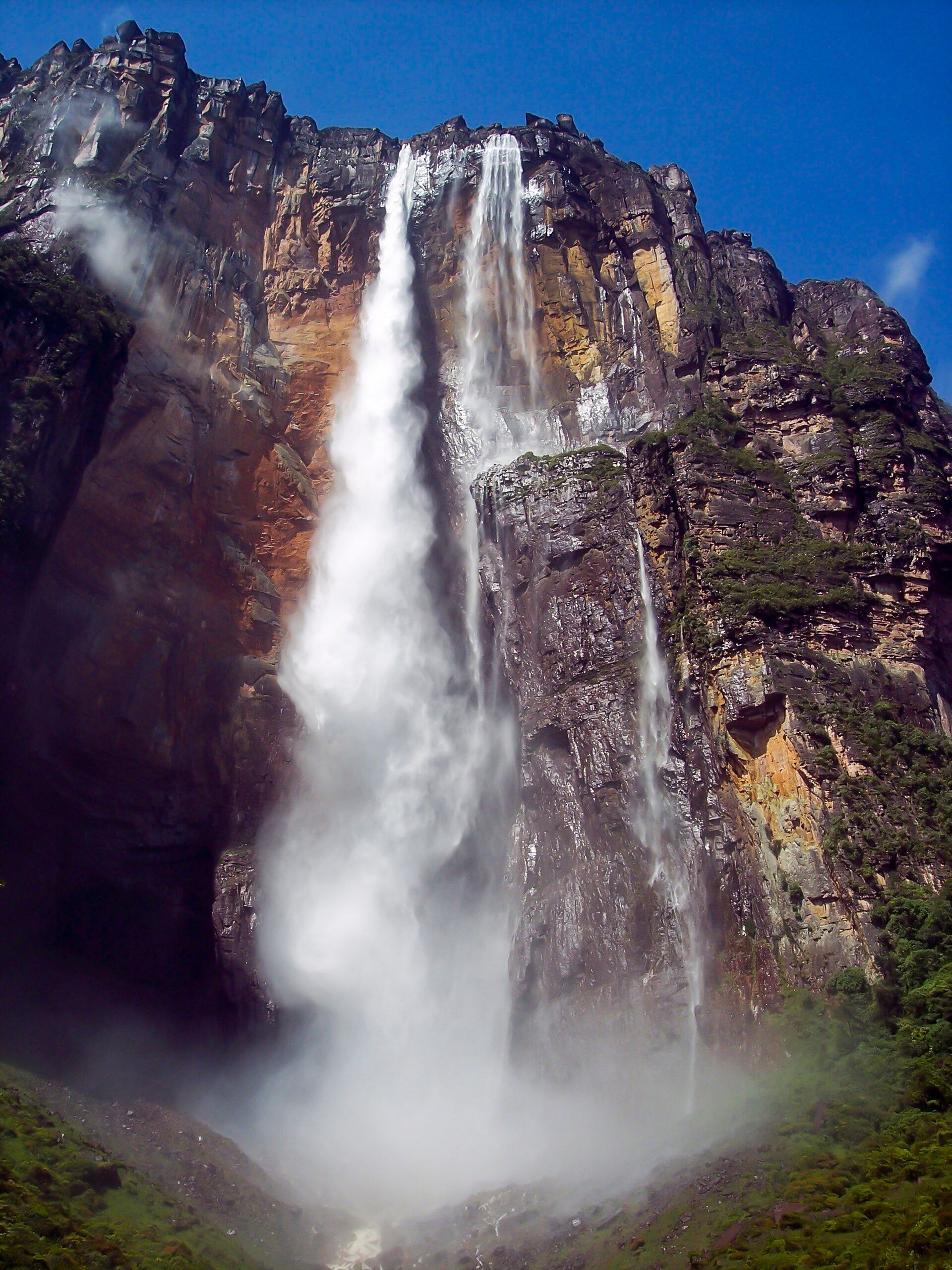
Angel Falls (Kerepakupai Merú) plunges 979 metres from the summit of Auyán-tepui, a sandstone table mountain in Canaima National Park, a UNESCO World Heritage Site — the highest uninterrupted waterfall in the world. In the dry season the water often turns to mist before reaching the base. Reaching it is a guided, multi-day trip by light aircraft, canoe and on foot.
- 979 m — the highest waterfall on Earth
- Water falling from a cloud-wrapped tepui in roadless rainforest
- Very few visitors
- A genuine expedition by air, river and forest trail
Niagara Falls
The famous one, and the heavy one
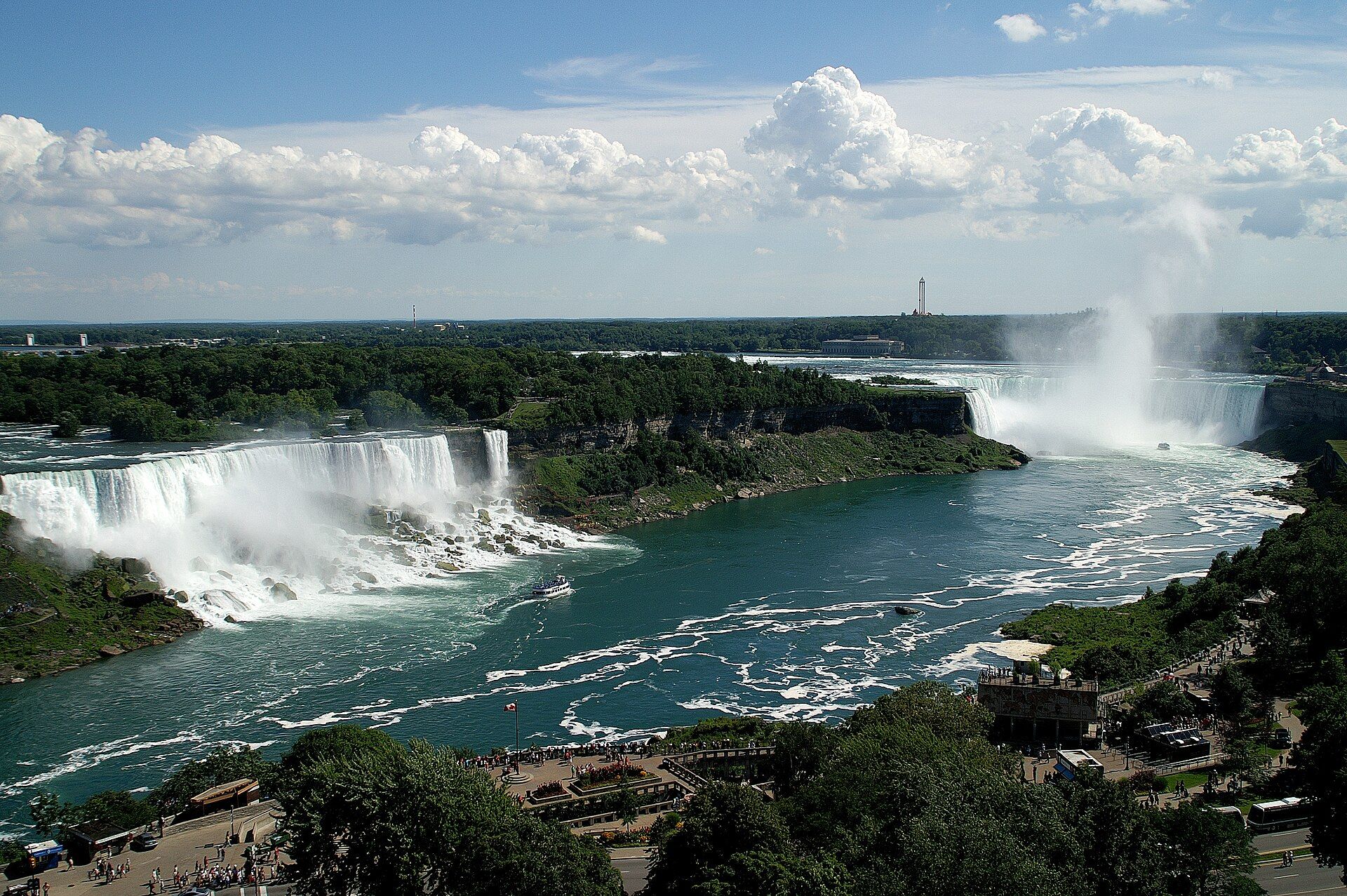
Three falls on the Niagara River between Lake Erie and Lake Ontario, on the Canada–US border. The drop is only about 50 metres, but the river carries the outflow of four of the five Great Lakes. Under the 1950 Niagara Treaty part of the flow is diverted for hydropower, with at least about 2,832 m³/s guaranteed over the falls in tourist-season daylight.
- Enormous volume of water, falling year-round
- Boat trips into the spray and tunnels behind the falls
- About 90 minutes from Toronto; no permits, no wilderness
- Illuminated at night; partly frozen in deep winter
Head to head
| What matters | Angel Falls | Niagara Falls |
|---|---|---|
| Height Edge: Angel Falls | 979 m from the rim of Auyán-tepui — the tallest waterfall on Earth. | About 50 m — nearly twenty times lower. |
| Water volume Edge: Niagara Falls | A single ribbon that can shrink to a misty trickle in the dry season. | The outflow of four Great Lakes; at least about 2,832 m³/s over the falls in tourist-season daylight, roughly half that at night and in winter. |
| Getting there Edge: Niagara Falls | Fly to Caracas, light aircraft to Canaima (roughly 1h–1h30 when weather allows), 4–5 hours by motorised canoe, then about an hour's walk to the Laime viewpoint. Two days to reach the base; a licensed guide is required. | Around 90 minutes by road or rail from Toronto, or from Buffalo on the US side. Walk straight up to the railings. |
| When to go Edge: Toss-up | The wetter months, roughly June to November, when the river is high enough for the canoes and the falls are full. | Late spring to early autumn for the boats; the falls run all year and freeze partly in deep winter. |
| Crowds Edge: Angel Falls | Very few visitors; the limit is logistics, not popularity. | Heavy in summer and on holidays; early morning at the railings is calmest. |
| Before you book Edge: Niagara Falls | Check your government's current travel advisory for Venezuela, and whether your travel insurance covers it. | Book the boat and tunnel tickets ahead in peak season. |
Which should you choose?
Choose Angel Falls if…
Travellers who want the world's tallest waterfall and are ready for a guided, multi-day trip by light aircraft and canoe — in the wet season, after checking the current travel advisory for Venezuela.
Choose Niagara Falls if…
Anyone who wants to feel the power of a huge waterfall without an expedition: a day trip from Toronto or Buffalo, a boat ride into the spray, and the illuminated falls after dark.
The honest verdict
If the question is height, there is no contest: Angel Falls drops 979 metres, nearly twenty times Niagara's roughly 50. If the question is water, Niagara wins easily — it carries four Great Lakes' worth of outflow, while Angel Falls can thin to mist in the dry months.
As trips, Niagara is a day out from Toronto and Angel Falls is a guided expedition into roadless rainforest that only works when the rivers are high. See Niagara whenever you are nearby; plan Angel Falls as the journey itself.
Wonders mentioned here
Added