Angel Falls
📍 Canaima National Park, Venezuela
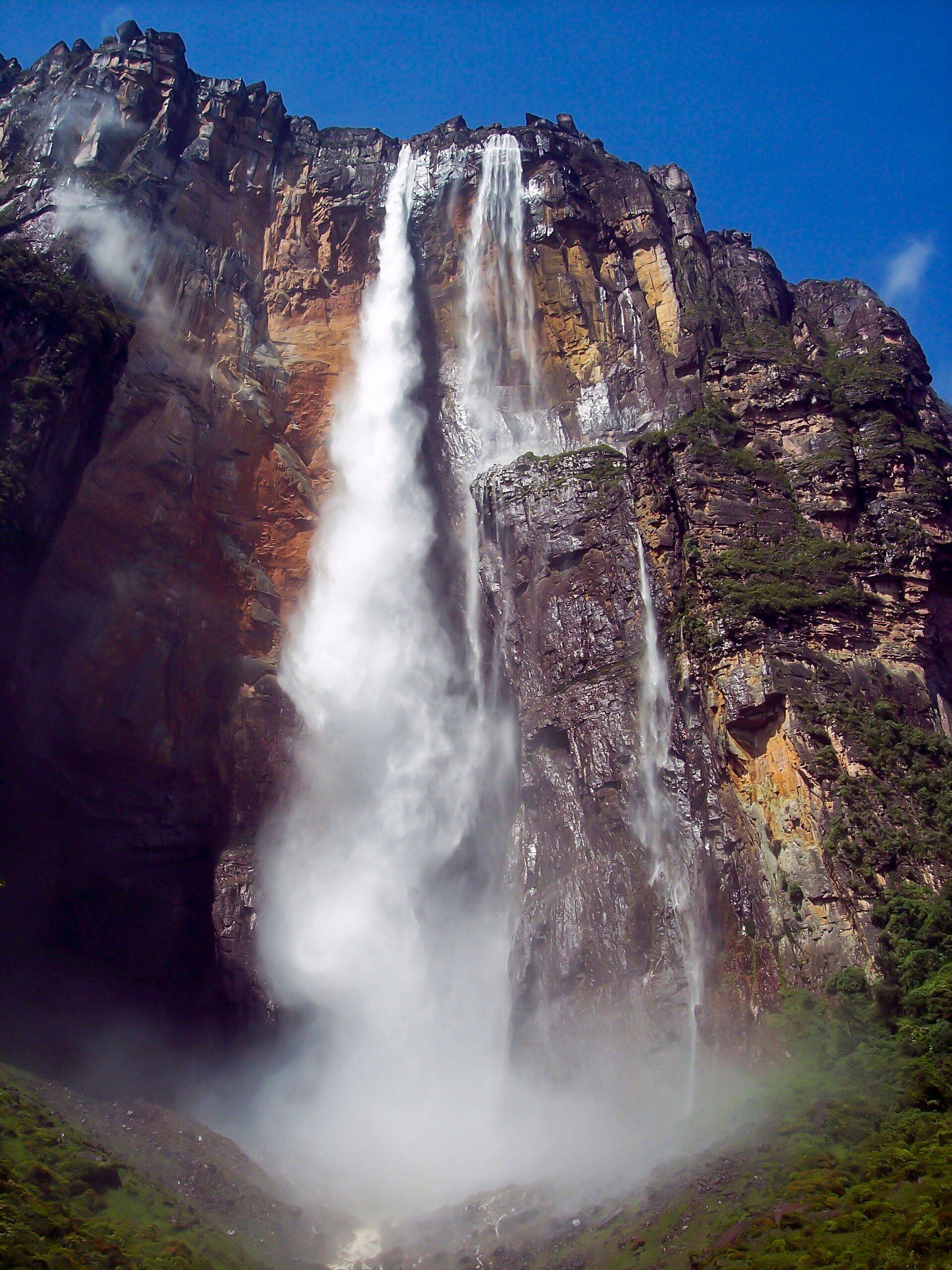
The tallest waterfall on Earth — a ribbon of water that plunges 979 metres from the rim of a flat-topped tepui, so high it dissolves into mist long before it reaches the ground.
What makes it marvelous
Angel Falls (Kerepakupai Merú) drops 979 metres from the summit of Auyán-tepui, a vast table mountain deep in the Venezuelan jungle — nearly a kilometre of freefall, the highest uninterrupted waterfall in the world and about fifteen times the height of Niagara. It is so tall that in the dry season the water often atomizes into drifting mist before it ever reaches the base. The falls spill from one of the tepuis, the ancient sandstone plateaus of the Guiana Highlands whose sheer cliffs and cloud-wrapped summits are among the oldest exposed rock on Earth. Set in the roadless wilderness of Canaima National Park, a UNESCO World Heritage Site, it is one of the most remote and awe-inspiring sights on the planet.
Why visit
Reaching Angel Falls means a genuine expedition — a flight over the tepuis and a river journey through pristine jungle — and rounding the last bend to see water falling from the clouds nearly a kilometre above you is a reward few sights on Earth can match.
What to know before you go
🗓️ Best time
The wet season (roughly June–November) for the fullest, most powerful flow; in the dry season the falls can shrink to a misty trickle, though flights and skies are clearer.
🧭 Getting there & access
Deep in Canaima National Park, southeastern Venezuela, reached by light aircraft to Canaima camp, then a motorized-canoe river trip and jungle hike to the base — a multi-day guided expedition with no roads.
Good to know
- Come in the wet season for the fullest flow; the dry season can leave it a trickle.
- Go with an organized tour from Canaima — access is by air and river only.
- Check current travel advisories for Venezuela before planning.
Plan your visit
Strenuous🧭 Getting there
From Canaima, reached by light aircraft from Caracas or Ciudad Bolivar
- Fly into Caracas
- Light aircraft to Canaima — roughly 1h–1h30 when weather allows
- Motorised canoe up the Carrao and Churun rivers — about 4–5h
- Forest walk to the Laime viewpoint — around 1h
- Total travel
- Two days to reach the base of the falls
- Time at site
- Three days as a standard package, including a night in a riverside camp
- Access
- Canaima National Park entry, with a licensed guide and an organised trip — independent travel to the falls is not realistic. The river journey only runs when water is high enough, roughly the wetter months of June to November; in the dry season the falls thin to a thread and the boats cannot get up at all. Check your government's current travel advisory for Venezuela before committing to anything.
🎒 What to bring & consider
- Serious insect protection — the puri-puri blackflies along these rivers are relentless and bite through thin fabric
- Dry bags for absolutely everything; the canoe journey soaks you and your luggage
- Quick-dry clothing and a second pair of shoes for wet rock
- Cash in a usable currency, since card and banking systems are unreliable
- A hard look at your travel insurance, which may exclude the country outright
👁️ What to expect
- Crowds
- Very few visitors. The constraint here is logistics and access, not popularity.
- Conditions
- Long hours in an open canoe running rapids, then a slippery walk over roots and boulders. Camps are basic hammock shelters.
- Facilities
- Canaima village has lodges and an airstrip. Beyond it there is nothing but the camps.
- The view
- The falls are frequently wrapped in cloud and the top is often invisible even from the viewpoint. High water gives you the volume, at the cost of more cloud and rain — you cannot optimise for both.
Times and requirements are approximate and change with season, weather, and local rules — confirm permits, fares, and schedules with operators before you travel.
Natural riches of the area
- The tallest waterfall on Earth (979 m)
- Ancient tepui table mountains of the Guiana Highlands
- Roadless rainforest wilderness of Canaima
- Endemic plants found only atop the tepuis
Local food
- Freshwater river fish
- Fish from the rivers of the Gran Sabana, cooked by local Pemón communities.
- Casabe
- A flatbread made from cassava, a staple of the region's Indigenous peoples.
- Tropical fruit
- Fruit of the Venezuelan lowlands and savanna.
Angel Falls is water falling from the sky. Deep in the roadless jungle of southeastern Venezuela, a ribbon of water spills 979 metres from the summit of Auyán-tepui — nearly a full kilometre of freefall, the tallest waterfall on Earth and around fifteen times the height of Niagara. It falls so far that, in the drier months, the water often breaks into drifting mist before it ever touches the ground.
The falls pour from the edge of a tepui, one of the flat-topped sandstone table mountains of the Guiana Highlands — ancient plateaus of some of the oldest exposed rock anywhere, their cliffs wrapped in cloud and crowned with plants found nowhere else. Reaching Angel Falls is a true expedition: a flight over the tepuis and a canoe journey through pristine rainforest in Canaima National Park, a UNESCO World Heritage Site. Round the final bend, look up, and you’ll see water tumbling from the clouds — one of the most remote and staggering sights on the planet.
Angel Falls: common questions
How do you get to Angel Falls?
From Canaima, reached by light aircraft from Caracas or Ciudad Bolivar: Fly into Caracas; Light aircraft to Canaima — roughly 1h–1h30 when weather allows; Motorised canoe up the Carrao and Churun rivers — about 4–5h; Forest walk to the Laime viewpoint — around 1h. Allow Two days to reach the base of the falls.
When is the best time to visit Angel Falls?
The wet season (roughly June–November) for the fullest, most powerful flow; in the dry season the falls can shrink to a misty trickle, though flights and skies are clearer.
How long should you spend at Angel Falls?
Three days as a standard package, including a night in a riverside camp. Two days to reach the base of the falls of travel from Canaima, reached by light aircraft from Caracas or Ciudad Bolivar.
What should you bring to Angel Falls?
Serious insect protection — the puri-puri blackflies along these rivers are relentless and bite through thin fabric Dry bags for absolutely everything; the canoe journey soaks you and your luggage Quick-dry clothing and a second pair of shoes for wet rock Cash in a usable currency, since card and banking systems are unreliable A hard look at your travel insurance, which may exclude the country outright
Do you need a permit or guide for Angel Falls?
Canaima National Park entry, with a licensed guide and an organised trip — independent travel to the falls is not realistic. The river journey only runs when water is high enough, roughly the wetter months of June to November; in the dry season the falls thin to a thread and the boats cannot get up at all. Check your government's current travel advisory for Venezuela before committing to anything.
Is Angel Falls crowded, and what are conditions like?
Very few visitors. The constraint here is logistics and access, not popularity. Long hours in an open canoe running rapids, then a slippery walk over roots and boulders. Camps are basic hammock shelters. Facilities: canaima village has lodges and an airstrip. Beyond it there is nothing but the camps.
Added
More wonders to explore