Head to head · North America's highest vs Africa's highest
Denali vs Kilimanjaro: Why Is the Higher-Looking Climb So Much Harder?
Short answer: Denali, at 6,190 metres, is just 295 metres higher than Kilimanjaro (5,895 m) — but it is a far harder mountain. Kilimanjaro's routes need no ropes or technical skill; with a licensed operator and enough days to acclimatise, ordinary fit trekkers reach the summit. Denali is a serious, cold, glaciated mountaineering expedition.
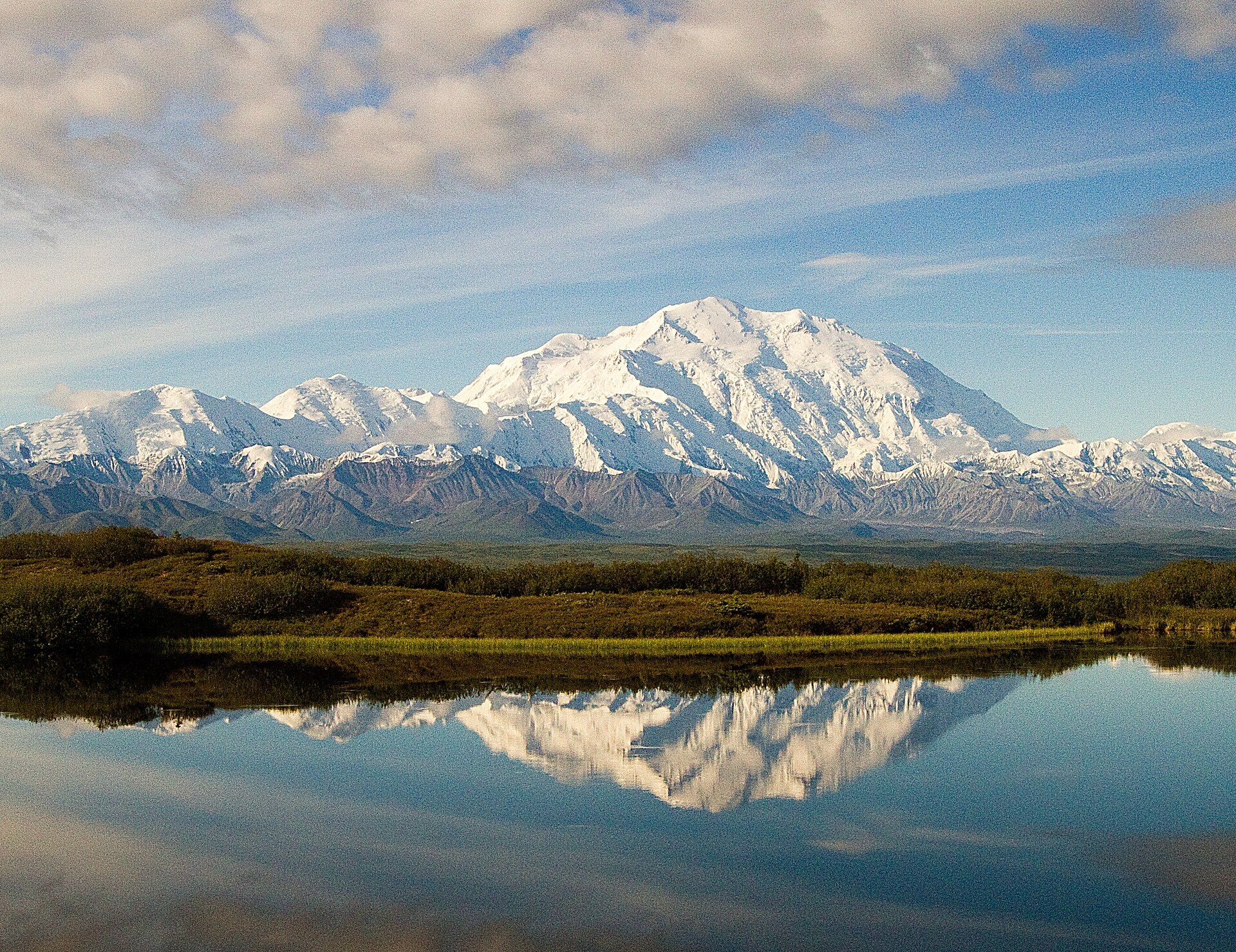
Latitude makes the difference. Kilimanjaro stands three degrees south of the equator, its climb passing from farmland and rainforest to an arctic summit in under a week. Denali stands at 63°N in interior Alaska, where its upper slopes are among the coldest places on Earth outside the poles and the mountain brews its own violent weather.
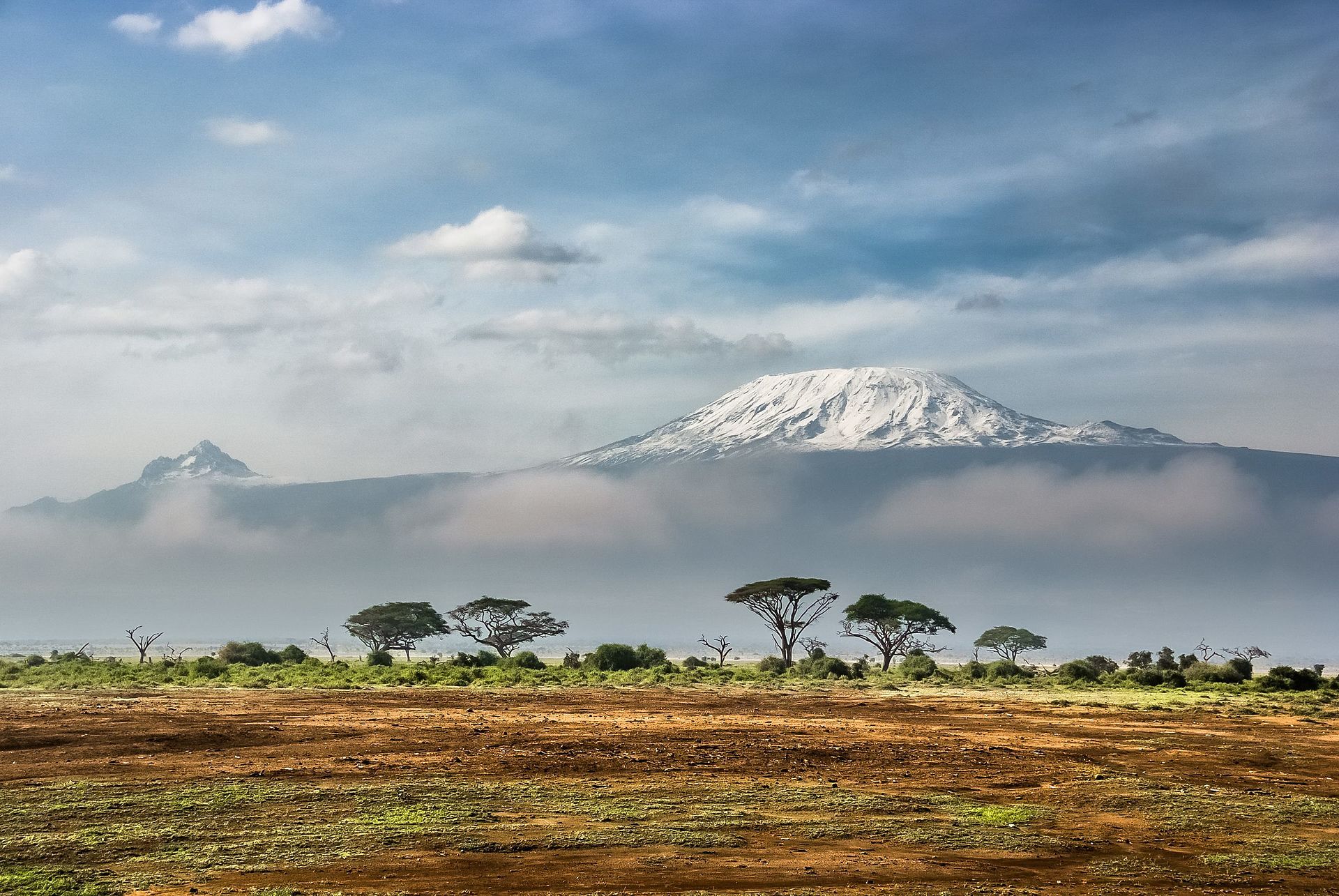
Both are Seven Summits — the highest points of North America and Africa — and both can be enjoyed without climbing: Denali from the park road through six million acres of wildlife country, Kilimanjaro from the savanna of Amboseli and the Tanzanian plains.
Denali
North America's highest, a polar-cold expedition
North America's highest peak at 6,190 metres. It lifts off lowland at roughly 600 metres and climbs about 5,500 metres in one sweep — the greatest base-to-summit relief of any mountain on land. US federal agencies, including the park service, now call the peak Mount McKinley; the national park keeps the name Denali.
- One of the greatest base-to-summit rises on Earth
- Grizzlies, wolves, caribou and moose along the park road
- A summit only for experienced, self-sufficient mountaineers or guided expeditions
- Flightseeing reveals the peak without climbing it
Mount Kilimanjaro
Africa's highest, a walk-up summit
Africa's highest mountain and the tallest free-standing mountain on Earth: a dormant volcano of three centres — Kibo, Mawenzi and Shira — rising alone from the plains to 5,895 metres, through five climate zones to shrinking summit glaciers.
- No technical climbing on any of the main routes
- Five climate zones in under a week
- Two dry windows a year
- Pairs with a safari in the Serengeti or Ngorongoro Crater
Head to head
| What matters | Denali | Mount Kilimanjaro |
|---|---|---|
| Height Edge: Denali | 6,190 m — the highest point in North America. | 5,895 m — the highest point in Africa, 295 m lower. |
| Difficulty Edge: Mount Kilimanjaro | A serious, cold, glaciated mountaineering expedition; upper slopes among the coldest places on Earth outside the poles. | Non-technical: altitude sickness, not terrain, is what turns people back. Longer routes succeed far more often. |
| Rules for climbing Edge: Toss-up | The National Park Service requires a special use permit and registration at least 60 days before the start date (registration for the 2027 season opens 1 January 2027). Seven companies are authorised to guide. | Independent climbing is not permitted: every ascent goes through a licensed operator with registered guides and porters, who collect the park fees. |
| Time on the mountain Edge: Mount Kilimanjaro | No fixed itinerary: an expedition paced by weather and acclimatisation, with time built in to wait out storms. | Typically 5–9 days; eight or nine-day itineraries such as Lemosho reach the top far more often than five or six-day ones. |
| Seeing it without climbing Edge: Toss-up | The park road by shuttle bus, June to early September — though the summit is hidden in cloud most days. | From the plains, most famously from Amboseli in Kenya, with the snow cap above the savanna. |
| Season Edge: Mount Kilimanjaro | Park visits roughly June to early September. | Dry windows roughly January–March and June–October. |
Which should you choose?
Choose Denali if…
Experienced mountaineers ready for a cold, glaciated expedition — or visitors who want to see a colossal mountain over Alaskan wilderness and its grizzlies, wolves and caribou, accepting that cloud hides the summit most days.
Choose Mount Kilimanjaro if…
Fit trekkers without technical skills who want to stand on one of the Seven Summits: choose an eight or nine-day route with a licensed operator, and pair it with a safari.
The honest verdict
The 295-metre difference in height tells you almost nothing. Kilimanjaro is an equatorial walk-up where the challenge is acclimatisation; Denali is a polar-cold expedition where the challenge is the mountain itself.
If you want a summit, climb Kilimanjaro. If you want to look at a giant, go to Denali in summer, ride the park road and hope for one of the clear days.
Wonders mentioned here
Added