🇨🇱 Natural wonders of Chile
A ribbon of a country running the length of South America's Pacific edge — from the hyper-arid Atacama in the north to the granite towers and ice fields of Patagonia in the south.
🗓️ Best time for nature: The Atacama is good year-round (clear, dry, cold nights); Patagonia is best in the southern summer (roughly November–March) for milder, if windy, conditions.
The lay of the land
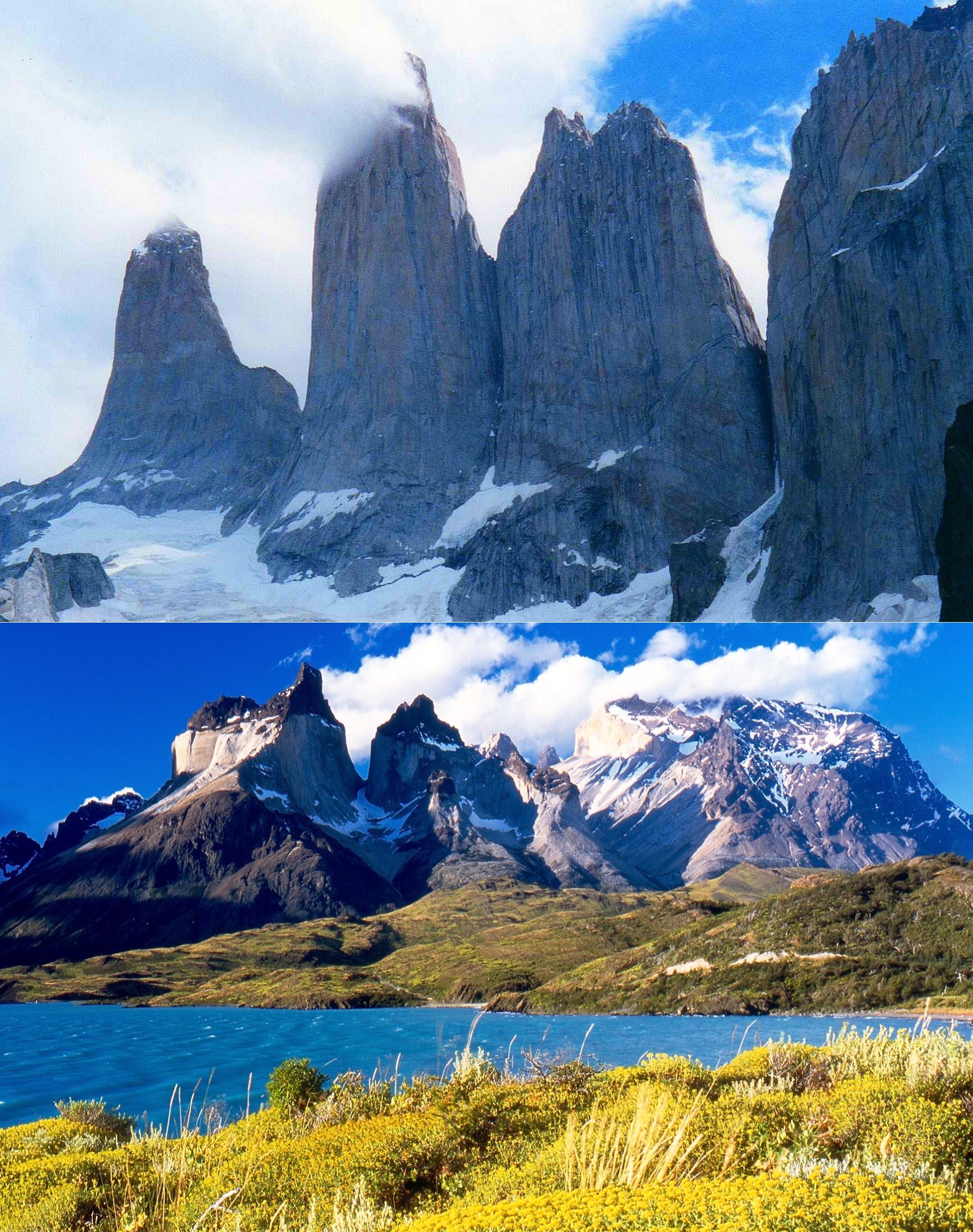
Squeezed between the Andes and the Pacific, Chile spans an extraordinary climatic range. In the north lies the Atacama, the driest nonpolar desert on Earth — salt flats, geysers, and skies so clear they host the world's great observatories. Far to the south, Patagonia offers the opposite extreme: the granite spires of Torres del Paine above glacial lakes, hanging glaciers, and steppe raked by fierce wind. Between them run vineyards, temperate rainforest, fjords, and volcanoes along one of the planet's most active tectonic margins.
Where to begin
-
Torres del Paine
Granite towers above turquoise lakes and glaciers, roamed by guanacos and pumas.
-
The Atacama Desert
The driest nonpolar desert — salt flats, geysers, and world-class night skies.
A taste of the place
Chilean food reflects its geography: quinoa, llama, and native desert herbs and fruit (rica-rica, chañar) in the arid north; Patagonian lamb and southern king crab (centola) in the far south; and abundant Pacific seafood along the whole coast. Merkén, a smoky Mapuche chilli, and Chile's celebrated wines tie the table together.
Traveling responsibly
- Acclimatise to altitude before high-desert trips like the El Tatio geysers.
- In Patagonia, book Torres del Paine refugios/campsites months ahead and prepare for extreme wind.
- The country is very long — use internal flights between north and south.
- Take an Atacama stargazing tour; the skies are among the best on Earth.
Chile is a study in extremes, a thread of a country pressed between the Andes and the Pacific and stretching almost from the tropics to the sub-Antarctic. In the north lies the Atacama, the driest nonpolar desert on the planet — a Mars-like world of salt flats, high-altitude geysers, flamingo lagoons, and skies so clear that humanity’s great telescopes gather here to study the cosmos.
At the other end, in Patagonia, the granite towers of Torres del Paine rise above turquoise glacial lakes and hanging glaciers, across steppe roamed by guanacos, condors, and pumas. Few countries pack such opposite landscapes — parched desert and glaciated mountains — into one territory. This atlas begins Chile’s chapter at both ends, with the desert and the towers.
All wonders in Chile
2 places