Torres del Paine
📍 Magallanes, Chilean Patagonia
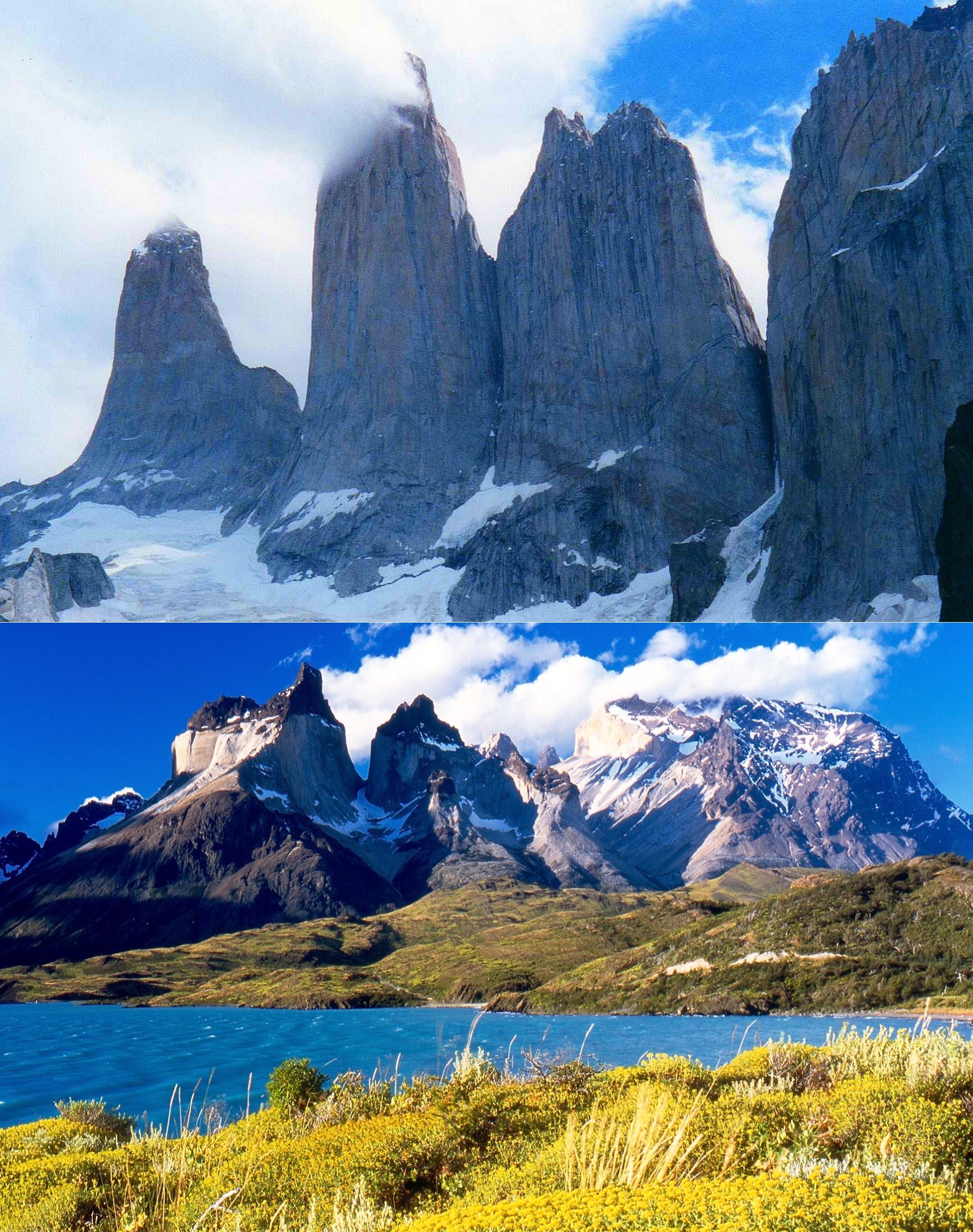
The signature landscape of Chilean Patagonia — three sheer granite towers rising above windswept steppe, glacial lakes, and hanging glaciers, roamed by guanacos, condors, and pumas.
What makes it marvelous
The park's namesake 'towers' (torres) are spires of granite laid bare where glaciers and weather stripped away softer rock, leaving near-vertical columns streaked with dark sedimentary caps — a textbook of mountain-building and glaciation. Around them lie turquoise glacial lakes, the horn-shaped Cuernos, hanging glaciers off the Southern Patagonian Ice Field, and open steppe. It is a UNESCO Biosphere Reserve and one of the strongholds of the wild puma.
Why visit
It's the definitive Patagonian trek: the multi-day 'W' and 'O' circuits pass beneath the towers, alongside glacier-fed lakes, and up to viewpoints of the granite at dawn, when the first light can set the rock glowing red. Wildlife — guanaco herds, condors overhead, and increasingly visible pumas — adds to the sense of wild remoteness.
What to know before you go
🗓️ Best time
The Patagonian summer (roughly November–March) for the most stable weather and long days, though the region's fierce, fast-changing wind is a constant year-round.
🧭 Getting there & access
From Puerto Natales in Chile's Magallanes region (via Punta Arenas). The park has trailheads, catamarans, and refugios/camps supporting the trekking circuits; book well ahead in season.
Good to know
- Book refugios/campsites for the W and O circuits months in advance.
- Prepare for extreme, sudden wind and four-seasons-in-a-day weather.
- Give pumas and guanacos space; never approach wildlife.
Natural riches of the area
- Granite towers and glacier-carved mountain geology
- The Southern Patagonian Ice Field and hanging glaciers
- Turquoise glacial lakes and rivers
- Guanacos, Andean condors, and wild pumas
Local food
- Patagonian lamb (cordero al palo)
- Lamb slow-roasted over open fire, the regional specialty.
- Centolla (king crab)
- Prized king crab from the cold Magallanes waters.
- Calafate & merkén
- Patagonian berries and a smoky Mapuche chilli seasoning.
Torres del Paine condenses everything wild about Patagonia into one park. Its icons are the three granite towers that give it its name — sheer columns exposed where glaciers and relentless weather stripped away the softer rock around them, capped in dark sedimentary rock and, at dawn, sometimes catching the first light in a burst of red. Around them spread turquoise glacial lakes, the sculpted Cuernos (‘horns’), hanging glaciers, and open steppe raked by ferocious wind.
It’s a magnet for trekkers, who walk the multi-day W and O circuits beneath the towers and along the lakes, and for wildlife lovers: guanaco herds graze the flats, condors ride the updrafts, and pumas — increasingly seen — hunt at the edges. A UNESCO Biosphere Reserve, it demands respect for its weather and its wildlife, and repays it with some of the most dramatic mountain scenery on Earth.
More wonders to explore