🇮🇪 Natural wonders of Ireland
An emerald island on the edge of the Atlantic — green, wet, and wild, where ancient sea cliffs, limestone karst, and windswept coasts meet the ocean along the Wild Atlantic Way.
🗓️ Best time for nature: Late spring to early autumn (roughly April–September) for milder weather and nesting seabirds; the coast is dramatic year-round.
The lay of the land
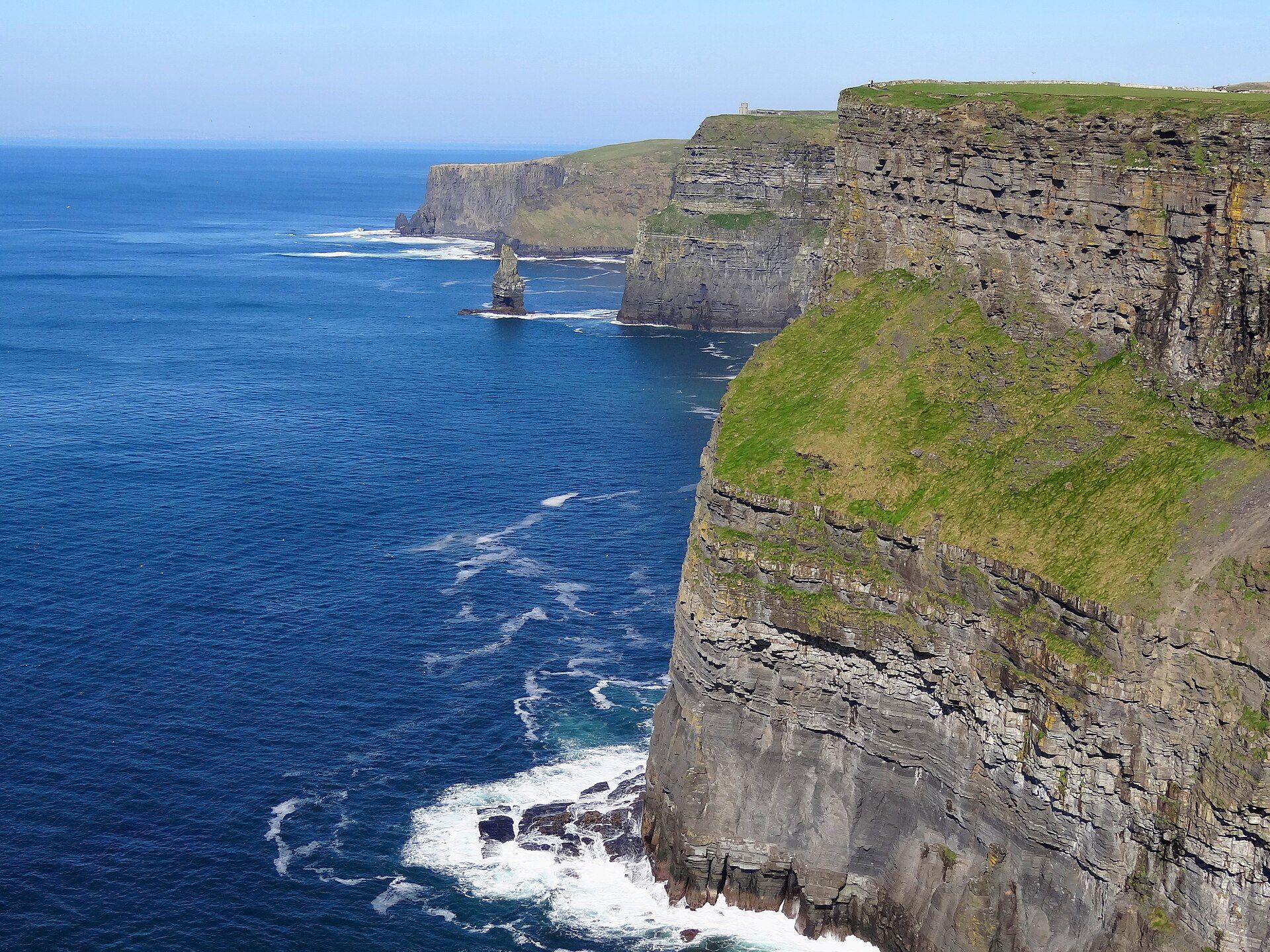
Ireland's damp Atlantic climate keeps it famously green, and its western edge is its wildest. There, along the Wild Atlantic Way, the Cliffs of Moher rise in a sheer wall of 300-million-year-old rock straight from the ocean, hosting major seabird colonies. Nearby lies the Burren, a strange limestone karst pavement where Arctic and Mediterranean plants grow side by side. Bogs, loughs, and a deeply indented coast complete a landscape shaped by rain, rock, and sea.
Where to begin
-
Cliffs of Moher
Sheer Atlantic sea cliffs alive with puffins and seabirds.
A taste of the place
Irish food draws on land and sea: creamy seafood chowder with soda bread, Atlantic oysters and mussels, and hearty Irish stew of lamb and root vegetables.
Traveling responsibly
- Mind the weather and stay behind barriers at the cliff edges.
- Visit in spring or early summer to see nesting puffins.
- Pair the cliffs with the nearby Burren karst landscape.
Ireland’s damp Atlantic climate makes it green, and its western coast makes it dramatic. Along the Wild Atlantic Way, the Cliffs of Moher rise up to 214 metres straight from the ocean — a wall of ancient layered rock hammered by the swell and crowded with nesting seabirds. This atlas begins Ireland’s chapter at those cliffs, with the strange limestone karst of the Burren and the country’s bogs and loughs to follow.
Added
All wonders in Ireland
1 places