🇱🇨 Natural wonders of Saint Lucia
A lush, volcanic Caribbean island crowned by the Pitons — two dramatic forested spires rising straight from the sea, beside hot springs and a 'drive-in' volcano.
🗓️ Best time for nature: The drier season (roughly December–April) for the sunniest, calmest weather; the island is warm year-round, with a wetter, hurricane-prone stretch later.
The lay of the land
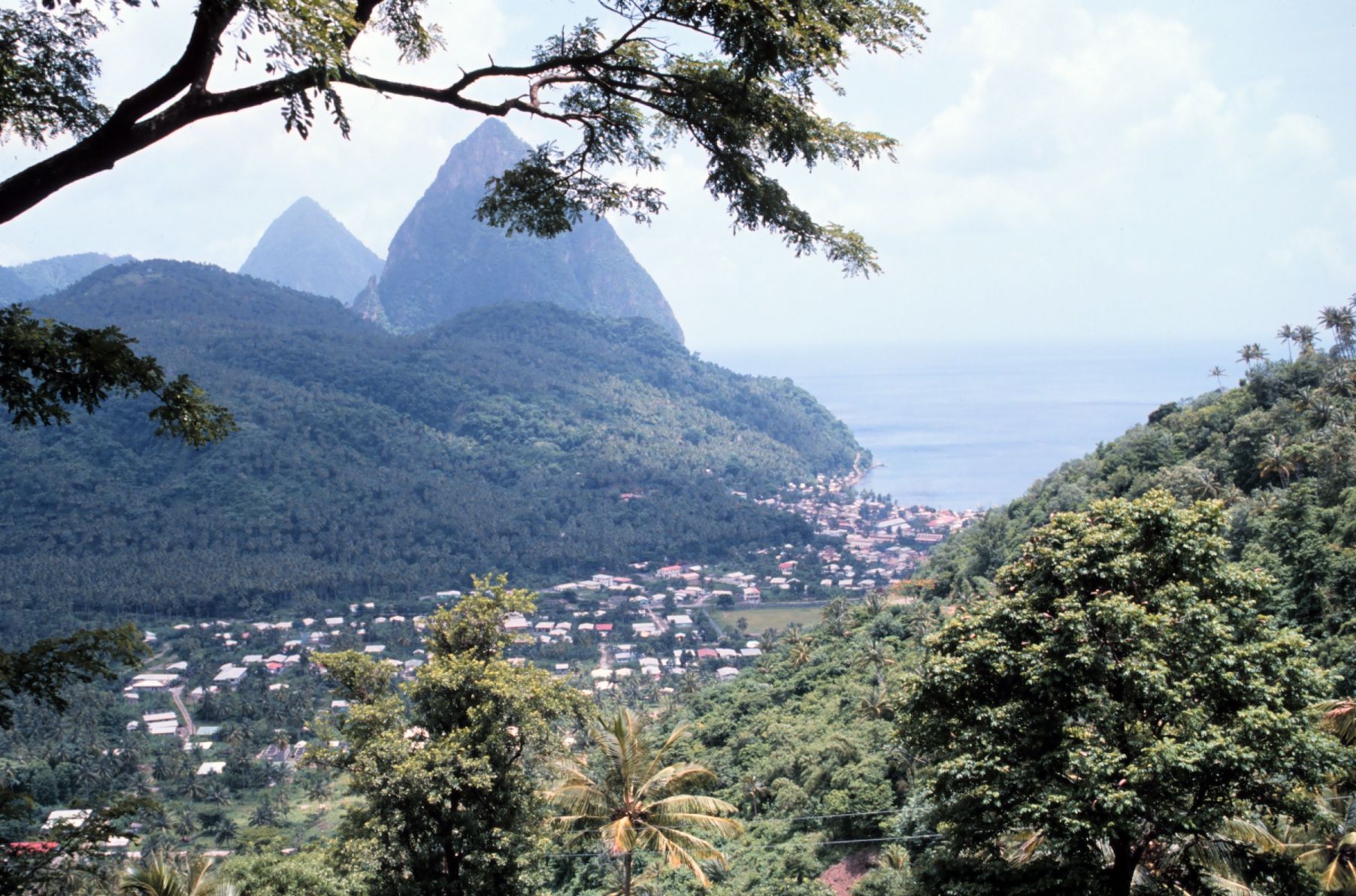
Saint Lucia is a young volcanic island in the eastern Caribbean, green with rainforest and still geothermally alive. Its emblem, the Pitons, are volcanic plugs — the hardened cores of ancient volcanoes — that soar almost vertically from the sea near Soufrière, framed by a landscape of hot springs, bubbling mud baths, and a sulphur crater you can drive into. Reefs fringe the coast, and the steep slopes shelter rich Caribbean wildlife, all protected within a UNESCO World Heritage area.
Where to begin
-
The Pitons
Twin volcanic spires rising from the sea, the emblem of the island.
A taste of the place
Saint Lucian food is Caribbean comfort: green fig and saltfish (the national dish), callaloo, roasted breadfruit, fresh seafood, and fine local cocoa.
Traveling responsibly
- Hike Gros Piton only with a licensed guide — it's steep and strenuous.
- The best Piton views are from the water or the beaches around Soufrière.
- Combine with the nearby sulphur springs and mud baths.
Saint Lucia is a green, volcanic jewel of the eastern Caribbean, and its emblem is unmistakable: the Pitons, two forested volcanic spires that rise almost straight from the sea near Soufrière. They are volcanic plugs — the solidified throats of ancient volcanoes — set in a landscape still simmering with hot springs, mud baths, and a sulphur crater. A UNESCO World Heritage Site fringed with reefs, it opens this atlas’s chapter with one of the most beautiful coastlines in the Caribbean.
Added
All wonders in Saint Lucia
1 places