The Pitons
📍 Soufrière, Saint Lucia, Caribbean
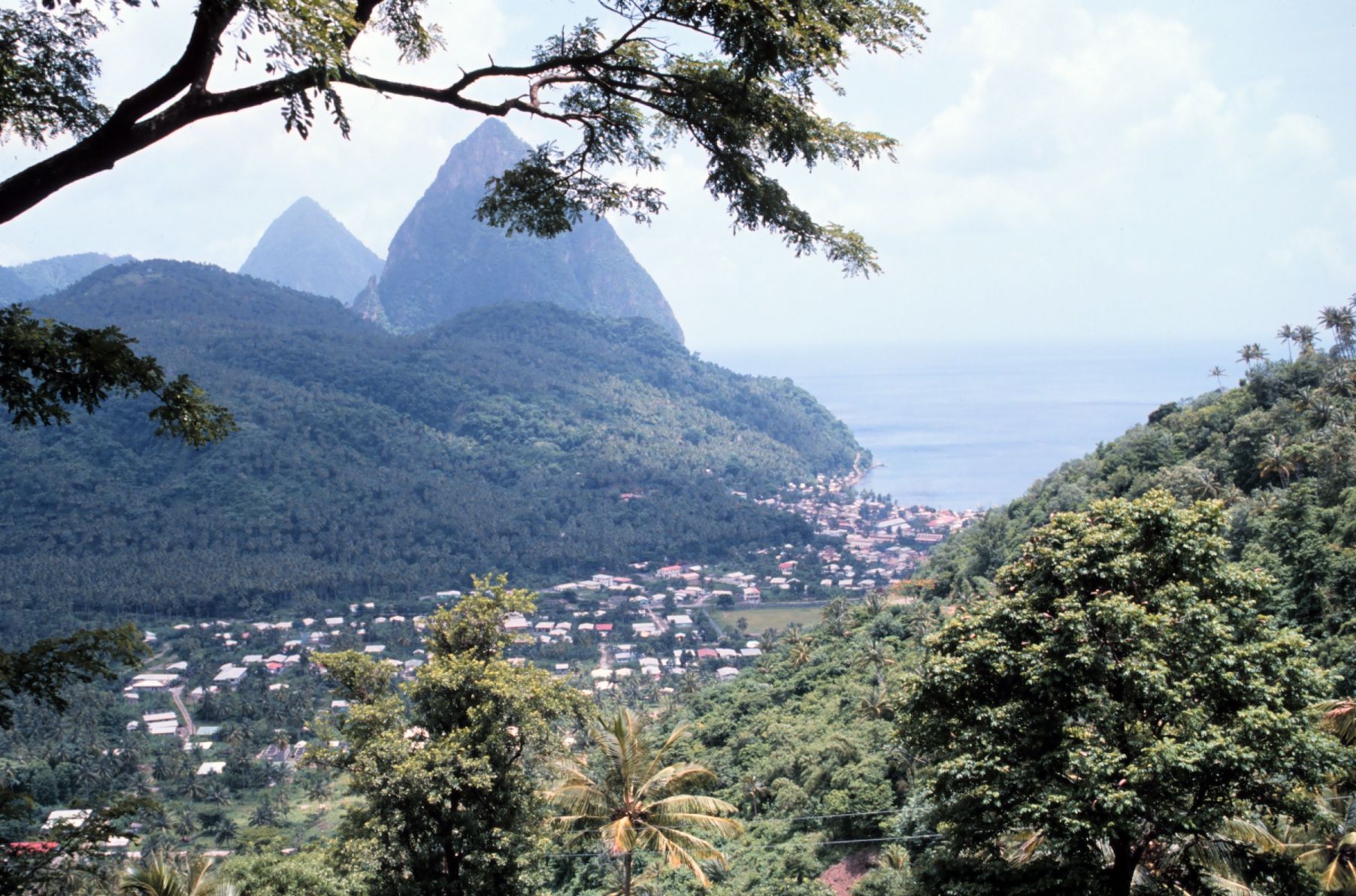
Two dramatic volcanic spires rising straight from the Caribbean Sea — the twin cones of Gros Piton and Petit Piton, cloaked in rainforest, that have become the emblem of Saint Lucia.
What makes it marvelous
The Pitons are volcanic plugs — the hardened lava that once filled the throats of ancient volcanoes, left standing as sheer forested cones after the softer surrounding rock eroded away. Gros Piton and Petit Piton rise about 770 and 743 metres almost vertically from the sea near Soufrière, linked by a ridge and set against a still-active volcanic area of hot springs and a 'drive-in' sulphur crater. The steep slopes and surrounding reefs shelter rich Caribbean wildlife, and the whole area is a UNESCO World Heritage Site.
Why visit
The sight of the two green spires plunging into a blue sea is one of the Caribbean's most beautiful, best enjoyed from the water, a beach, or a viewpoint. The energetic can hike Gros Piton with a guide, while nearby hot springs, mud baths, and reefs round out a landscape shaped by fire.
What to know before you go
🗓️ Best time
The drier season (roughly December–April) for the sunniest, calmest weather; the Caribbean is warm year-round, with a wetter, hurricane-prone stretch later in the year.
🧭 Getting there & access
Near Soufrière on the southwest coast of Saint Lucia; viewpoints, beaches, and boat trips give the classic views, and guided hikes ascend Gros Piton.
Good to know
- Hike Gros Piton only with a licensed guide — it's steep and strenuous.
- The best views are from the water or the beaches around Soufrière.
- Combine with the nearby sulphur springs and mud baths.
Plan your visit
Strenuous🧭 Getting there
From Soufrière, St Lucia
- Fly → St Lucia (UVF or SLU)
- Drive to Soufrière on the southwest coast — roughly 1h–1h30 depending on the airport
- Reach the Gros Piton trailhead at Fond Gens Libre, or view the peaks by boat and road
- Total travel
- Around an hour or more from the airport to Soufrière
- Time at site
- A day for the climb; more to enjoy the area
- Access
- The twin volcanic spires above Soufrière are the island's emblem, and the one you actually climb is Gros Piton, on a guided-only trail from Fond Gens Libre — a guide is mandatory and the climb is a steep, roughly four-hour round trip, hot and demanding despite the modest height. Petit Piton, the sharper of the two, is far more dangerous and its ascent is discouraged. Below them, the Sulphur Springs bill themselves as a drive-in volcano with warm mud baths. The peaks are also simply beautiful from a boat, the beach or the coastal road, no climbing required.
🎒 What to bring & consider
- A mandatory local guide for Gros Piton, arranged at Fond Gens Libre — the climb is not permitted or sensible alone
- Real fitness and grippy shoes for a steep, root-and-rock four-hour round trip in tropical heat
- Plenty of water and an early start to climb before the worst of the day's heat
- The good sense to admire Petit Piton rather than climb it, as its ascent is genuinely hazardous and discouraged
- A swimsuit for the Sulphur Springs mud baths and the beaches beneath the peaks afterwards
👁️ What to expect
- Crowds
- The Gros Piton trail sees a steady but modest stream of climbers. The viewpoints and springs are busier.
- Conditions
- Hot and humid, with a genuinely steep climb rewarded by coastal and peak views.
- Facilities
- Soufrière has lodging, food and tour operators; the trailhead and springs have basic facilities.
- The view
- The two Pitons rising sheer from the sea, best from a boat offshore or the coastal viewpoints at golden hour. From the summit of Gros Piton, Petit Piton and the coastline lie below you as the reward for the climb.
Times and requirements are approximate and change with season, weather, and local rules — confirm permits, fares, and schedules with operators before you travel.
Natural riches of the area
- Volcanic plugs (lava cores) rising from the sea
- An active geothermal area (hot springs, sulphur crater)
- Rainforest slopes and Caribbean reefs
- Rich birdlife and marine life around the Pitons
Local food
- Green fig and saltfish
- Saint Lucia's national dish of green banana with salted cod.
- Callaloo & breadfruit
- A leafy green soup and roasted breadfruit, island staples.
- Fresh seafood & cocoa
- Caribbean fish and Saint Lucia's fine cocoa.
The Pitons are the postcard of the Caribbean at its most dramatic: two sheer, forest-cloaked spires rising almost straight from a deep-blue sea near the town of Soufrière on Saint Lucia. They are volcanic plugs — the solidified lava that once choked the throats of ancient volcanoes — left standing as the softer rock around them wore away, so that today Gros Piton and Petit Piton soar some 770 and 743 metres out of the water.
They rise from a landscape still simmering with volcanic life: hot springs, bubbling mud baths, and a ‘drive-in’ sulphur crater lie close by, and reefs fringe the coast below. A UNESCO World Heritage Site and the emblem of the island, the Pitons are best simply admired — from a beach, a boat, or a viewpoint — though the fit can climb Gros Piton with a guide for a hard-won view over one of the most beautiful coastlines in the Caribbean.
The Pitons: common questions
How do you get to The Pitons?
From Soufrière, St Lucia: Fly → St Lucia (UVF or SLU); Drive to Soufrière on the southwest coast — roughly 1h–1h30 depending on the airport; Reach the Gros Piton trailhead at Fond Gens Libre, or view the peaks by boat and road. Allow Around an hour or more from the airport to Soufrière.
When is the best time to visit The Pitons?
The drier season (roughly December–April) for the sunniest, calmest weather; the Caribbean is warm year-round, with a wetter, hurricane-prone stretch later in the year.
How long should you spend at The Pitons?
A day for the climb; more to enjoy the area. Around an hour or more from the airport to Soufrière of travel from Soufrière, St Lucia.
What should you bring to The Pitons?
A mandatory local guide for Gros Piton, arranged at Fond Gens Libre — the climb is not permitted or sensible alone Real fitness and grippy shoes for a steep, root-and-rock four-hour round trip in tropical heat Plenty of water and an early start to climb before the worst of the day's heat The good sense to admire Petit Piton rather than climb it, as its ascent is genuinely hazardous and discouraged A swimsuit for the Sulphur Springs mud baths and the beaches beneath the peaks afterwards
Do you need a permit or guide for The Pitons?
The twin volcanic spires above Soufrière are the island's emblem, and the one you actually climb is Gros Piton, on a guided-only trail from Fond Gens Libre — a guide is mandatory and the climb is a steep, roughly four-hour round trip, hot and demanding despite the modest height. Petit Piton, the sharper of the two, is far more dangerous and its ascent is discouraged. Below them, the Sulphur Springs bill themselves as a drive-in volcano with warm mud baths. The peaks are also simply beautiful from a boat, the beach or the coastal road, no climbing required.
Is The Pitons crowded, and what are conditions like?
The Gros Piton trail sees a steady but modest stream of climbers. The viewpoints and springs are busier. Hot and humid, with a genuinely steep climb rewarded by coastal and peak views. Facilities: soufrière has lodging, food and tour operators; the trailhead and springs have basic facilities.
Added Updated
More wonders to explore