Phewa Lake
📍 Pokhara, central Nepal
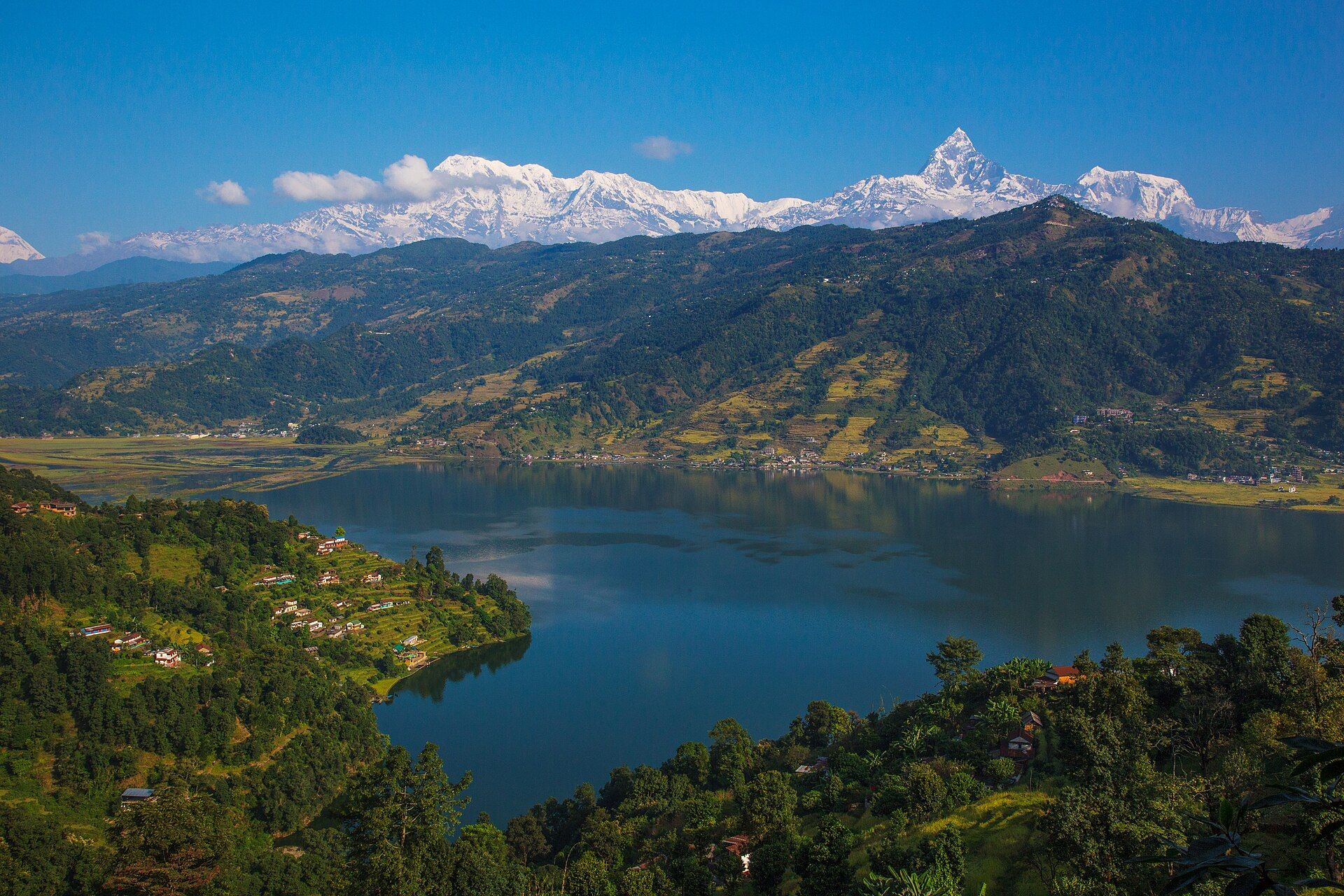
A serene lake at Pokhara that mirrors the snow peaks of the Annapurna range — including the sharp fishtail summit of Machapuchare — with a small temple island at its heart.
What makes it marvelous
Phewa Lake lies in a broad valley at the foot of the Himalaya, the second-largest lake in Nepal, its calm water fed by streams off the surrounding hills. On still mornings it becomes a perfect mirror, doubling the great wall of the Annapurna range and the distinctive fishtail peak of Machapuchare that rises abruptly to the north — one of the most beautiful mountain reflections anywhere. A small island near the shore holds the Tal Barahi temple, reached by rowing boat and busy with pilgrims.
Why visit
Rowing out onto the lake at dawn, as the peaks catch the first pink light and stand mirrored in the water, is Pokhara's signature experience. The lakeside is the relaxed base for the whole Annapurna trekking region, and above it the Sarangkot and World Peace Pagoda viewpoints look out over lake and Himalaya together — while paragliders launch from the ridges to soar above it all. It is a place of calm beauty beneath some of the highest mountains on Earth.
More views of Phewa Lake
Additional photographs of the actual site — each freely licensed, with its photographer and licence credited.
What to know before you go
🗓️ Best time
Autumn (October–November) and spring (March–April) for the clearest skies and sharpest mountain views; the monsoon (June–September) often hides the peaks behind cloud.
🧭 Getting there & access
At the city of Pokhara in central Nepal, reached by a short flight or a long scenic drive from Kathmandu. The lakeside is the tourist hub; rowing boats and the temple island are on the water's edge, with viewpoints on the ridges above.
Good to know
- Row out at dawn for the calmest water and the best mountain reflections.
- Head up to Sarangkot for sunrise over the lake and the Annapurnas.
- Come in autumn or spring — the monsoon usually hides the peaks.
Plan your visit
Easy🧭 Getting there
From Pokhara (PKR), central Nepal
- Fly to Pokhara from Kathmandu (about 25 min) or drive (6–8h)
- Base at the lakeside in Pokhara
- Rowing boats to the temple island; roads up to Sarangkot and the pagoda
- Total travel
- A short flight from Kathmandu; a long day by road
- Time at site
- 2–3 days for the lake, viewpoints, and as a trek base
- Access
- The lakeside and viewpoints are open to all; rowing boats, the temple, and paragliding are ticketed. No permit for the lake itself, though Annapurna trekking from Pokhara needs regional permits.
🎒 What to bring & consider
- Warm layers for cool dawns by the water and on the ridges
- A camera for the mountain reflections and sunrises
- Sun protection for the ridge viewpoints
- Cash for boats, temple, and local services
👁️ What to expect
- Crowds
- A relaxed but popular tourist hub; the lakeside and Sarangkot sunrise draw crowds, but dawn on the water is peaceful.
- Conditions
- Easy lakeside strolling and boating, with steeper drives or hikes to the ridge viewpoints.
- Facilities
- Full range in Pokhara — hotels, cafés, boats, and trekking outfitters along the lakeside.
- The view
- The Annapurnas and fishtail Machapuchare mirrored in the still lake at dawn, with the temple island in view. Autumn and spring mornings are clearest.
Times and requirements are approximate and change with season, weather, and local rules — confirm permits, fares, and schedules with operators before you travel.
Natural riches of the area
- Nepal's second-largest lake, fed by Himalayan streams
- Mirror reflections of the Annapurna range and Machapuchare
- The Tal Barahi temple island
- Surrounding forested hills and ridge viewpoints
Local food
- Dal bhat
- Lentil soup over rice with vegetables — Nepal’s everyday meal.
- Momos
- Steamed or fried Himalayan dumplings with a spicy dip.
Phewa Lake is the tranquil heart of Pokhara, and on a clear, still morning it offers one of the loveliest sights in Nepal. The second-largest lake in the country, it spreads across a broad valley at the very foot of the Himalaya, and when the water is calm it becomes a flawless mirror — doubling the towering wall of the Annapurna range and the unmistakable fishtail summit of Machapuchare that spikes into the sky just to the north. Near the shore, a small wooded island holds the Tal Barahi temple, reached by little rowing boats and alive with pilgrims.
The lake is also the easygoing gateway to one of the world’s great trekking regions. Its shore is lined with cafés and guesthouses where trekkers gather before and after the Annapurna trails, and above it the viewpoints of Sarangkot and the World Peace Pagoda take in lake and mountains together at sunrise, while paragliders spiral down from the ridges. Between the serenity of the water and the scale of the peaks beyond, Phewa is a place that captures the quiet magic of the Nepali Himalaya.
Phewa Lake: common questions
How do you get to Phewa Lake?
From Pokhara (PKR), central Nepal: Fly to Pokhara from Kathmandu (about 25 min) or drive (6–8h); Base at the lakeside in Pokhara; Rowing boats to the temple island; roads up to Sarangkot and the pagoda. Allow a short flight from kathmandu; a long day by road.
When is the best time to visit Phewa Lake?
Autumn (October–November) and spring (March–April) for the clearest skies and sharpest mountain views; the monsoon (June–September) often hides the peaks behind cloud.
How long should you spend at Phewa Lake?
2–3 days for the lake, viewpoints, and as a trek base. A short flight from Kathmandu; a long day by road of travel from Pokhara (PKR), central Nepal.
What should you bring to Phewa Lake?
Warm layers for cool dawns by the water and on the ridges A camera for the mountain reflections and sunrises Sun protection for the ridge viewpoints Cash for boats, temple, and local services
Do you need a permit or guide for Phewa Lake?
The lakeside and viewpoints are open to all; rowing boats, the temple, and paragliding are ticketed. No permit for the lake itself, though Annapurna trekking from Pokhara needs regional permits.
Is Phewa Lake crowded, and what are conditions like?
A relaxed but popular tourist hub; the lakeside and Sarangkot sunrise draw crowds, but dawn on the water is peaceful. Easy lakeside strolling and boating, with steeper drives or hikes to the ridge viewpoints. Facilities: full range in Pokhara — hotels, cafés, boats, and trekking outfitters along the lakeside.
Added
More wonders to explore