Saxon Switzerland
📍 Saxony, eastern Germany
A labyrinth of free-standing sandstone towers, table mountains, and deep ravines above a bend in the River Elbe near Dresden — the birthplace of free climbing.
What makes it marvelous
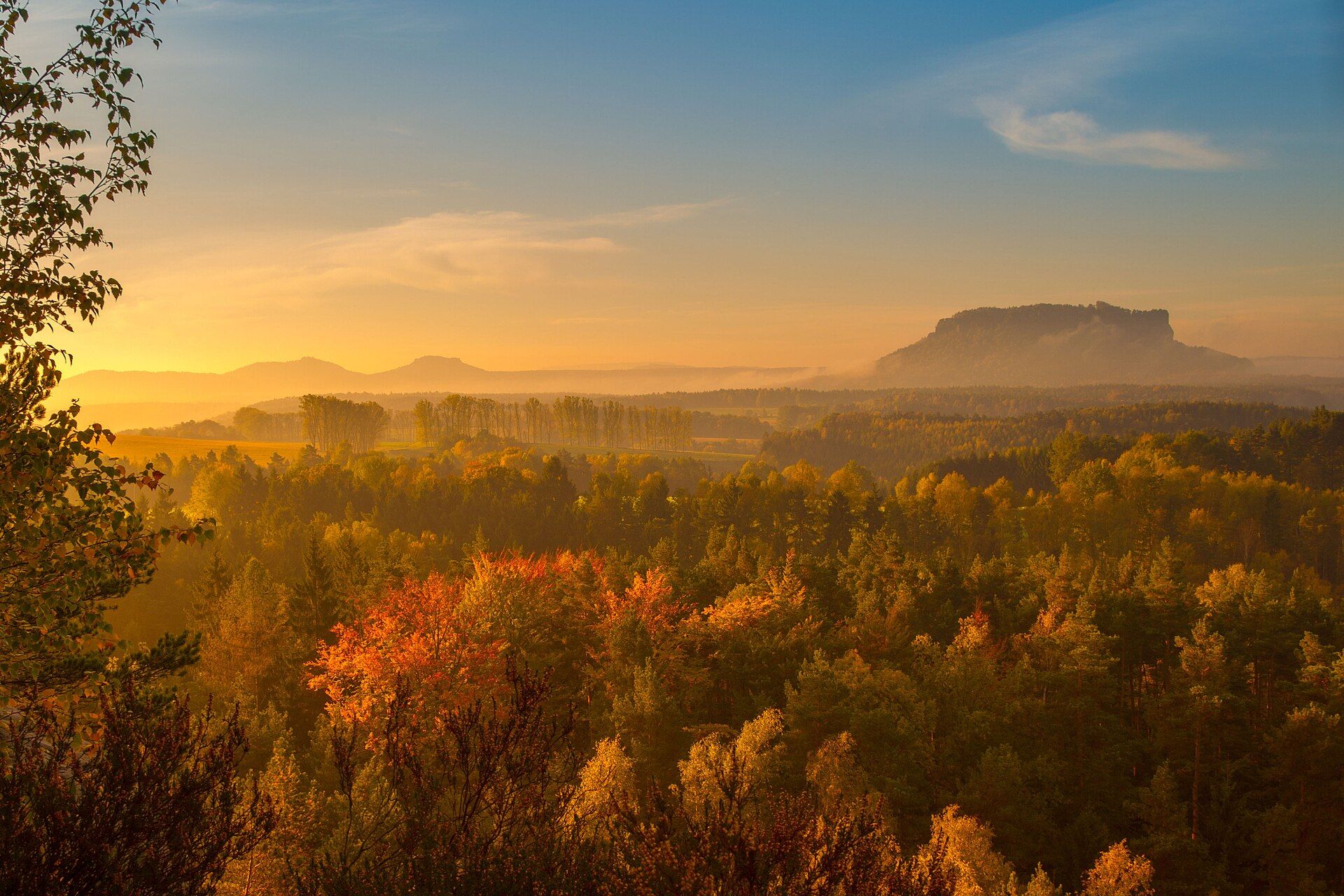
Saxon Switzerland is the German half of the Elbe Sandstone Mountains, where a thick bed of sandstone laid down under an ancient sea was uplifted and then cut by the Elbe and its streams into a maze of pinnacles, mesas, and gorges. The most famous viewpoint, the Bastei, is a wall of jagged rock towers standing about 190 metres above the river, linked since the 19th century by a slender stone bridge. Weathering along the rock's vertical joints created the free-standing towers that made this a cradle of the sport of free climbing.
Why visit
The view from the Bastei Bridge over the Elbe and its forest of stone needles is one of the great sights of central Europe. Trails thread through cool ravines and up onto flat-topped rocks, climbers work the sandstone towers by strict traditional rules, and paddle-steamers still ply the river below. It is wild, atmospheric country an easy day trip from Dresden.
What to know before you go
🗓️ Best time
Late spring through autumn for open trails and mild weather; autumn adds colour and mist in the ravines. Winter is quiet and can be icy on the rock steps.
🧭 Getting there & access
About an hour from Dresden by road or the S-Bahn train along the Elbe. Gateway towns include Rathen (for the Bastei) and Bad Schandau; trails and viewpoints fan out from the river valley.
Good to know
- Arrive early at the Bastei — it is the region's honeypot and fills by mid-morning.
- Wear grippy shoes; the sandstone steps and ladders are slick after rain.
- Combine the viewpoint with a walk down into the ravines to escape the crowds.
Plan your visit
Moderate🧭 Getting there
From Dresden (DRS), eastern Germany
- Fly to Dresden, or arrive by train from Berlin or Prague
- S-Bahn or road along the Elbe to Rathen or Bad Schandau — about 45min–1h
- Short, steep walk up to the Bastei viewpoint and bridge
- Total travel
- A half-day trip from Dresden
- Time at site
- 2–3 hours for the Bastei; a full day to walk the ravines and mesas
- Access
- The national park is free and open. Some viewpoints charge a small fee, and climbing follows strict traditional rules (no metal protection in the soft rock). A little ferry crosses the Elbe to the Rathen trailhead.
🎒 What to bring & consider
- Shoes with grip for sandstone steps, ladders, and roots
- A rain layer; the ravines stay damp and showers are common
- Water and snacks for the longer loops between villages
- Cash for the small ferry and viewpoint fees
👁️ What to expect
- Crowds
- The Bastei is genuinely crowded on fine weekends and through summer; the wider trail network is far quieter.
- Conditions
- Well-marked forest and rock trails with stairs, ladders, and some exposed edges; muddy after rain.
- Facilities
- Restaurants and hotels at the Bastei and in the valley towns; little deep in the ravines.
- The view
- The Bastei Bridge and rock towers above the Elbe, best in early light or with mist rising from the river. Midday sun and crowds are the enemy of the classic frame.
Times and requirements are approximate and change with season, weather, and local rules — confirm permits, fares, and schedules with operators before you travel.
Natural riches of the area
- Eroded sandstone towers, mesas, and ravines
- The River Elbe and its side-stream gorges
- Cool, damp forest of pine, beech, and fir on the rocks
- Nesting peregrine falcons and eagle owls on the cliffs
Local food
- Sauerbraten
- Marinated pot roast, a German Sunday classic served with dumplings.
- Eierschecke
- A layered Saxon cheesecake, a specialty of nearby Dresden.
Saxon Switzerland is a fairy-tale landscape of stone. Over millions of years a thick layer of sandstone, once the floor of a shallow sea, was lifted up and then dissected by the River Elbe and its tributaries into a bewildering maze of free-standing towers, flat-topped table mountains, and shadowed ravines. The rock’s natural vertical cracks did the sculpting, leaving needles and pillars that rise straight from the forest.
The most celebrated spot is the Bastei, where a cluster of pinnacles stands nearly 190 metres above the Elbe, linked by a graceful 19th-century stone bridge that has become one of Germany’s iconic views. Below, paddle-steamers still work the river; on the towers, climbers follow the strict traditional rules that were born here, making this one of the historic homes of free climbing. Protected as a national park and an easy trip from Dresden, it is central Europe at its most atmospheric.
Saxon Switzerland: common questions
How do you get to Saxon Switzerland?
From Dresden (DRS), eastern Germany: Fly to Dresden, or arrive by train from Berlin or Prague; S-Bahn or road along the Elbe to Rathen or Bad Schandau — about 45min–1h; Short, steep walk up to the Bastei viewpoint and bridge. Allow a half-day trip from dresden.
When is the best time to visit Saxon Switzerland?
Late spring through autumn for open trails and mild weather; autumn adds colour and mist in the ravines. Winter is quiet and can be icy on the rock steps.
How long should you spend at Saxon Switzerland?
2–3 hours for the Bastei; a full day to walk the ravines and mesas. A half-day trip from Dresden of travel from Dresden (DRS), eastern Germany.
What should you bring to Saxon Switzerland?
Shoes with grip for sandstone steps, ladders, and roots A rain layer; the ravines stay damp and showers are common Water and snacks for the longer loops between villages Cash for the small ferry and viewpoint fees
Do you need a permit or guide for Saxon Switzerland?
The national park is free and open. Some viewpoints charge a small fee, and climbing follows strict traditional rules (no metal protection in the soft rock). A little ferry crosses the Elbe to the Rathen trailhead.
Is Saxon Switzerland crowded, and what are conditions like?
The Bastei is genuinely crowded on fine weekends and through summer; the wider trail network is far quieter. Well-marked forest and rock trails with stairs, ladders, and some exposed edges; muddy after rain. Facilities: restaurants and hotels at the Bastei and in the valley towns; little deep in the ravines.
Added
More wonders to explore