Sun Moon Lake
📍 Yuchi Township, Nantou County, central Taiwan
Taiwan's largest lake — 748 metres up in the hills of Nantou, about 7.9 km² of green water around the tiny Thao island of Lalu, with a bikeway, boats and a ropeway around its shore. Since the Japanese era it has been dammed and raised for hydropower.
What makes it marvelous
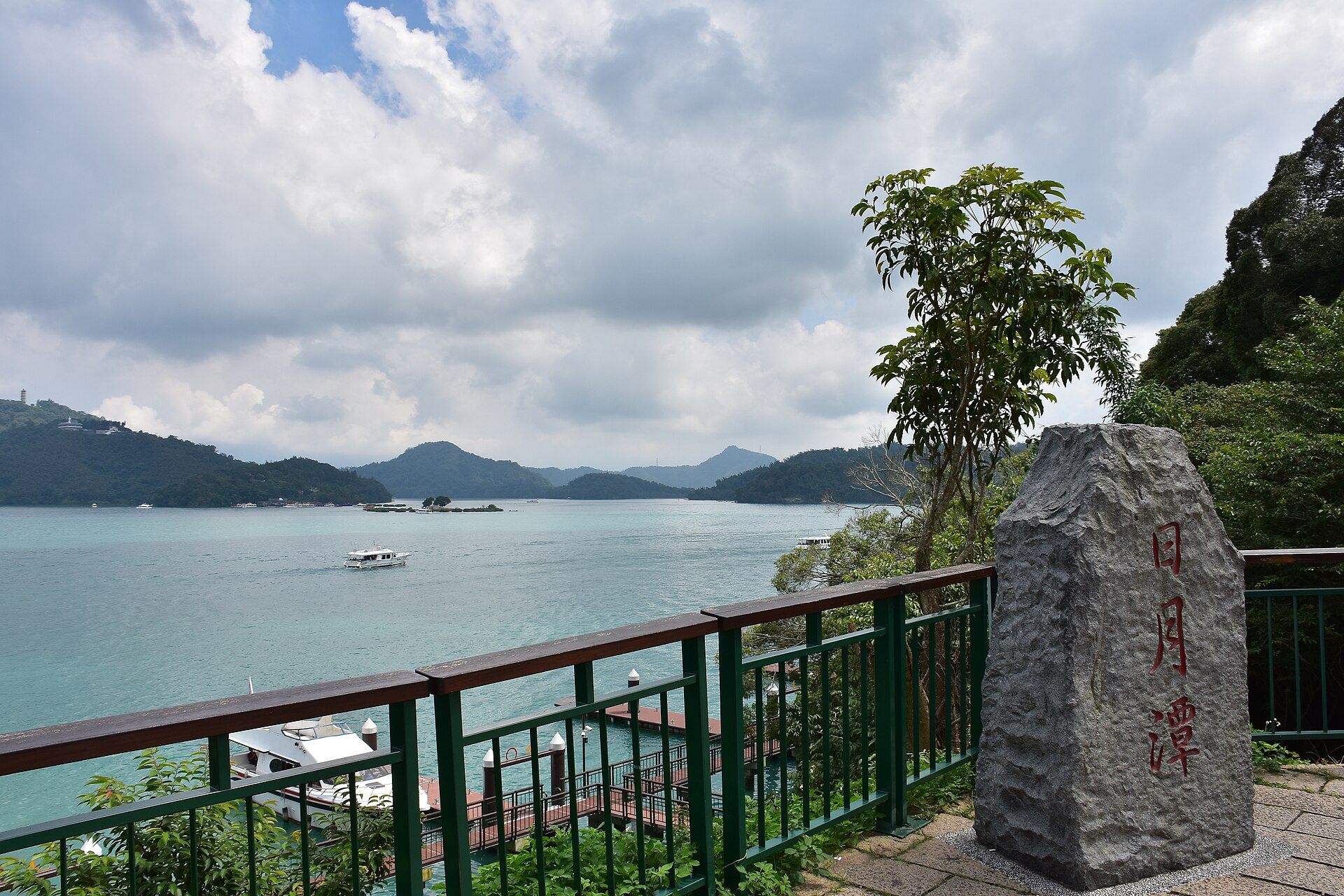
Sun Moon Lake sits about 748 metres above sea level in the forested hills of central Taiwan, with a surface of roughly 7.9 square kilometres and a depth of around 27 metres. The name describes its shape: the eastern side was likened to a sun and the western side to a crescent moon. It is also a working lake. Work on damming it for hydropower began under Japanese rule in 1919, and the first hydroelectric plant was finished in 1934, fed partly by water diverted from the Zhuoshui River; the higher water level forced several lakeside temples to be moved, and pumped-storage power stations still use the lake today. In the middle sits Lalu, a small island sacred to the Thao people, one of Taiwan's Indigenous peoples, whose homeland this is — most of it sank in the 921 earthquake of 1999, after which it was given back its Thao name.
Why visit
It is the easiest big landscape in Taiwan to enjoy without a permit or a climb: a ring of green hills folded around open water, best seen from a boat between the Shuishe, Ita Thao and Xuanguang piers, from the bikeway that runs along the shore — partly on a raised path over the water — or from the ropeway that climbs out of Ita Thao. Early morning, before the boats start, is when mist lies on the lake.
What to know before you go
🗓️ Best time
October to April. The Central Weather Administration's normals for the Sun Moon Lake station put October to March at roughly 40–100 mm of rain a month, against 350–450 mm a month from May to August, when the plum rains and summer storms arrive. April–May is the official firefly season and the swimming carnival is held in September.
🧭 Getting there & access
Sun Moon Lake is in Yuchi Township, Nantou County, in the hills south-east of Taichung. Taiwan Tourist Shuttle buses serve the lake, and Shuishe is the main village; from there, lake boats link the Shuishe, Ita Thao and Xuanguang piers, the shoreline bikeway runs section by section around the lake, and the Sun Moon Lake Ropeway leaves from near Ita Thao. Swimming is not allowed outside the annual organised swim.
Good to know
- Stay a night by the lake: the mist and still water are at their best before the first boats run.
- Rent a bike for the Shuishe–Xiangshan section, which crosses the water on a 400-metre raised bikeway past the Shuishe Dam.
- Check the scenic area's construction notices before a hike — the Shuishe Mountain trail has been closed since January 2026 after severe damage.
- Visit between October and April for the driest months; May to August is the wettest stretch.
- Drones are banned in seven no-fly zones around the lake — check the scenic area's notice before flying.
Plan your visit
Easy🧭 Getting there
From Shuishe village, Yuchi Township, Nantou County (via Taichung)
- Fly into Taipei (or Taichung)
- Travel to Taichung
- Take a bus into the hills to Shuishe village on the lakeshore
- Get around by lake boat, bike or the ropeway
- Total travel
- About half a day from Taipei
- Time at site
- One or two days — a full day covers a boat loop, a bikeway section and the ropeway; staying overnight gets you the early-morning mist
- Access
- Boats link the main piers, the bikeway runs in sections around the shore, and the ropeway leaves from near Ita Thao. Some trails close after storm damage, so check the scenic area's construction notices before you go.
🎒 What to bring & consider
- Rain gear from May to September
- A light layer for early mornings on the water
- Cash in New Taiwan dollars for boats, bikes and food
- A booking for a lakeside night on weekends and holidays
👁️ What to expect
- Crowds
- Busy at the piers on weekends, holidays and during the autumn fireworks festival; quiet early in the morning.
- Conditions
- A gentle lake at 748 m — warm, humid summers with heavy rain, and mild, mostly dry winters.
- Facilities
- Visitor centres (including Xiangshan), piers, bike rental, hotels and restaurants around Shuishe and Ita Thao.
- The view
- The lake from a shoreline viewpoint early in the morning, with mist on the water, the green hills folding away behind and Lalu Island small in the middle.
Times and requirements are approximate and change with season, weather, and local rules — confirm permits, fares, and schedules with operators before you travel.
Natural riches of the area
- Taiwan's largest body of water, about 7.9 km² at 748 m
- A natural lake dammed and raised for hydropower (work began in 1919)
- Lalu Island, sacred to the Thao people
- Forested hills of the Central Mountain foothills on every side
- Firefly season in the surrounding forest each spring
Local food
- Sun Moon Lake black tea
- Black tea grown on the hills around Yuchi, the township the lake sits in.
- Lake fish
- Freshwater fish from the lake, served in the restaurants of Shuishe and Ita Thao.
- Thao dishes
- Food of the lake's Indigenous Thao community, found around Ita Thao.
Sun Moon Lake is the largest lake in Taiwan: about 7.9 square kilometres of water, around 27 metres deep, sitting 748 metres up in the forested hills of Nantou County. The national scenic area’s own description calls it Taiwan’s largest natural lake. Its name comes from its old outline — a rounder eastern side likened to a sun, and a crescent on the west likened to a moon.
What you see today is also the work of engineers. Damming began under Japanese rule in 1919, and the raised lake fed a hydroelectric plant finished in 1934, topped up with water diverted from the Zhuoshui River. The higher water forced several lakeside temples to be moved, and pumped-storage power stations still draw on the lake. The 400-metre raised bikeway between Shuishe and the Xiangshan visitor centre passes the Shuishe Dam and the lake’s water outlet.
The lake is the homeland of the Thao people, and the small island in the middle, Lalu, is sacred to them. Most of the island sank in the 921 earthquake of 1999; afterwards it was renamed Lalu, its Thao name. Ita Thao, on the southeast shore, is the Thao village and one of the lake’s three main piers.
Come between October and April for dry, mild weather: the Sun Moon Lake weather station averages roughly 40–100 mm of rain a month from October to March, but 350–450 mm a month from May to August. The forests hold a firefly season from April to the end of May, and the annual swimming carnival — the one time swimming is allowed — was held on 20 September in 2026.
Sources: Sun Moon Lake National Scenic Area (attractions, bikeway sections, events calendar and construction notices; checked 23 November 2026), About the Headquarters and Origin (Sun Moon Lake National Scenic Area Headquarters, Tourism Administration), Central Weather Administration monthly normals for the Sun Moon Lake station (1991–2020), and the Wikipedia Sun Moon Lake article for elevation, depth, area, dam history and the station’s rainfall table.
Sun Moon Lake: common questions
How do you get to Sun Moon Lake?
From Shuishe village, Yuchi Township, Nantou County (via Taichung): Fly into Taipei (or Taichung); Travel to Taichung; Take a bus into the hills to Shuishe village on the lakeshore; Get around by lake boat, bike or the ropeway. Total travel time: About half a day from Taipei.
When is the best time to visit Sun Moon Lake?
October to April. The Central Weather Administration's normals for the Sun Moon Lake station put October to March at roughly 40–100 mm of rain a month, against 350–450 mm a month from May to August, when the plum rains and summer storms arrive. April–May is the official firefly season and the swimming carnival is held in September.
How long should you spend at Sun Moon Lake?
One or two days — a full day covers a boat loop, a bikeway section and the ropeway; staying overnight gets you the early-morning mist. Total travel time: About half a day from Taipei.
What should you bring to Sun Moon Lake?
Rain gear from May to September A light layer for early mornings on the water Cash in New Taiwan dollars for boats, bikes and food A booking for a lakeside night on weekends and holidays
Do you need a permit or guide for Sun Moon Lake?
Boats link the main piers, the bikeway runs in sections around the shore, and the ropeway leaves from near Ita Thao. Some trails close after storm damage, so check the scenic area's construction notices before you go.
Is Sun Moon Lake crowded, and what are conditions like?
Busy at the piers on weekends, holidays and during the autumn fireworks festival; quiet early in the morning. A gentle lake at 748 m — warm, humid summers with heavy rain, and mild, mostly dry winters. Facilities: Visitor centres (including Xiangshan), piers, bike rental, hotels and restaurants around Shuishe and Ita Thao.
Added
More wonders to explore