Jiuzhaigou
📍 Sichuan Province, China
A valley of impossibly blue and turquoise lakes, terraced waterfalls, and travertine pools stepping down from snow peaks on the edge of the Tibetan Plateau.
What makes it marvelous
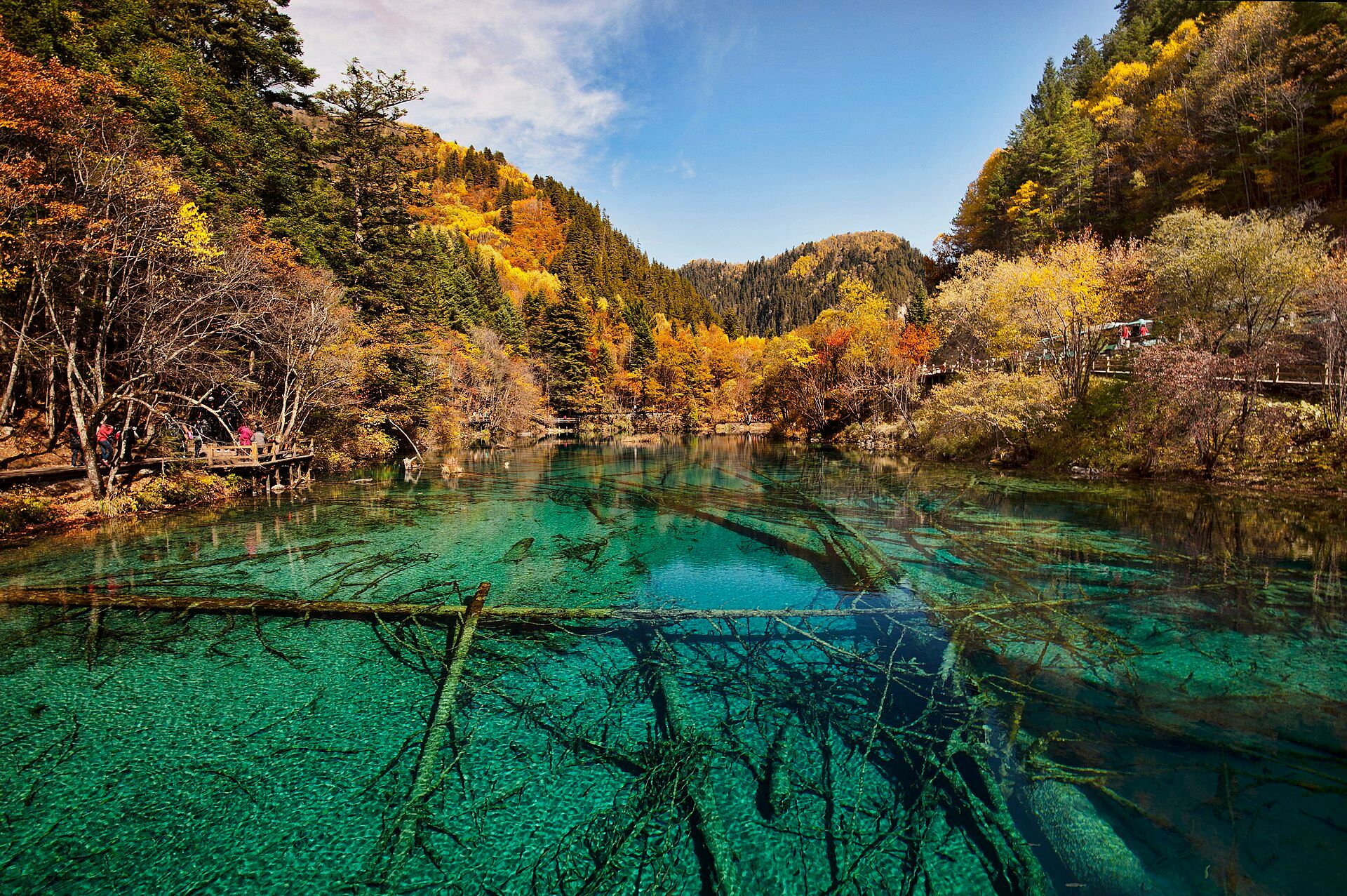
Jiuzhaigou — the 'Valley of Nine Villages' — is a fairy-tale landscape of more than a hundred lakes whose waters glow in astonishing shades of blue, turquoise, and green, coloured by mineral-rich travertine and framed by forested slopes and snow-capped peaks. Multi-tiered waterfalls spill between the lakes, and in autumn the surrounding forests blaze gold and red, doubling in the mirror-still water. The clarity is extraordinary: submerged fallen trees lie perfectly visible metres below the surface. Sacred to the local Tibetan and Qiang peoples, the valley is a UNESCO World Heritage Site and one of China's most beloved natural scenes.
Why visit
Wandering the boardwalks past lake after luminous lake — each a different jewel-tone — beneath snow peaks and autumn forests is a genuinely dreamlike experience, and one of the most photogenic places in China.
What to know before you go
🗓️ Best time
Autumn (roughly September–November) for peak colour reflected in the lakes; late spring and early summer are lush and less crowded. Winter freezes the falls into ice.
🧭 Getting there & access
In the mountains of northern Sichuan, reached by air (Jiuzhai Huanglong Airport) or a long drive from Chengdu. Shuttle buses and boardwalks link the lakes within the park.
Good to know
- Visit in autumn for the famous colour, but expect crowds — go early.
- Use the park shuttle buses and walk the boardwalks between stops.
- Respect the sacred sites of the local Tibetan communities.
Plan your visit
Easy🧭 Getting there
From Chengdu, Sichuan, then Jiuzhai Huanglong (JZH) or road
- Fly Chengdu → Jiuzhai Huanglong — about 1h, then road to the valley, roughly 1h30
- Or drive from Chengdu — a long 8–10h through the mountains
- Inside the valley you travel on the park's compulsory shuttle system
- Total travel
- Half a day flying; a long day by road
- Time at site
- One to two full days on the shuttle circuit
- Access
- Park ticket plus a compulsory shuttle ticket, with a daily visitor cap and advance online booking that genuinely sells out in peak season. The park closed for an extended period after a major earthquake and has reopened in stages — confirm which sectors are currently open with the park administration rather than assuming.
🎒 What to bring & consider
- Warm layers; the valley floor sits above 2,000m and climbs from there, and it is cold outside high summer
- Sun protection for thin high-altitude air, which burns faster than the temperature suggests
- Awareness of mild altitude effects if you have flown straight up from low ground
- Your passport, which is required for ticketing
- Food and water, since options inside are limited and heavily queued
👁️ What to expect
- Crowds
- Heavy in autumn colour season and Chinese holidays. The daily cap helps, but the boardwalks still bottleneck.
- Conditions
- Flat boardwalks and paved paths with shuttles covering the distances. Altitude is the only real physical demand.
- Facilities
- Toilets and a small number of eating points spaced along the shuttle route.
- The view
- The water colour comes from dissolved calcium carbonate and reads most vividly under bright overcast, or in sun with autumn foliage behind it. Frozen falls in winter are the quiet alternative.
Times and requirements are approximate and change with season, weather, and local rules — confirm permits, fares, and schedules with operators before you travel.
Natural riches of the area
- 100+ travertine-coloured lakes in blue and turquoise
- Tiered waterfalls and travertine terraces
- Snow peaks on the edge of the Tibetan Plateau
- Brilliant autumn forests and rich wildlife
Local food
- Tibetan barley & yak
- Highland staples — tsampa (roasted barley) and yak meat and butter tea.
- Sichuan flavours
- The bold, peppery cooking of the wider province.
- Wild mountain herbs & mushrooms
- Gathered from the forested slopes of the region.
Jiuzhaigou looks almost too vivid to be real. In the mountains of northern Sichuan, on the edge of the Tibetan Plateau, this ‘Valley of Nine Villages’ holds more than a hundred lakes that glow in impossible shades of blue, turquoise, and green — coloured by mineral-rich travertine and so clear that fallen trees lie perfectly visible many metres below the surface. Tiered waterfalls spill between them, and forested ridges and snow peaks rise all around.
In autumn the valley is at its most magical, when gold and crimson forests double themselves in the mirror-still water. Sacred to the local Tibetan and Qiang peoples, Jiuzhaigou is a UNESCO World Heritage Site and one of the most beloved — and most photographed — natural scenes in all of China, best explored slowly along the boardwalks that thread from one luminous lake to the next.
Jiuzhaigou: common questions
How do you get to Jiuzhaigou?
From Chengdu, Sichuan, then Jiuzhai Huanglong (JZH) or road: Fly Chengdu → Jiuzhai Huanglong — about 1h, then road to the valley, roughly 1h30; Or drive from Chengdu — a long 8–10h through the mountains; Inside the valley you travel on the park's compulsory shuttle system. Allow Half a day flying; a long day by road.
When is the best time to visit Jiuzhaigou?
Autumn (roughly September–November) for peak colour reflected in the lakes; late spring and early summer are lush and less crowded. Winter freezes the falls into ice.
How long should you spend at Jiuzhaigou?
One to two full days on the shuttle circuit. Half a day flying; a long day by road of travel from Chengdu, Sichuan, then Jiuzhai Huanglong (JZH) or road.
What should you bring to Jiuzhaigou?
Warm layers; the valley floor sits above 2,000m and climbs from there, and it is cold outside high summer Sun protection for thin high-altitude air, which burns faster than the temperature suggests Awareness of mild altitude effects if you have flown straight up from low ground Your passport, which is required for ticketing Food and water, since options inside are limited and heavily queued
Do you need a permit or guide for Jiuzhaigou?
Park ticket plus a compulsory shuttle ticket, with a daily visitor cap and advance online booking that genuinely sells out in peak season. The park closed for an extended period after a major earthquake and has reopened in stages — confirm which sectors are currently open with the park administration rather than assuming.
Is Jiuzhaigou crowded, and what are conditions like?
Heavy in autumn colour season and Chinese holidays. The daily cap helps, but the boardwalks still bottleneck. Flat boardwalks and paved paths with shuttles covering the distances. Altitude is the only real physical demand. Facilities: toilets and a small number of eating points spaced along the shuttle route.
Added
More wonders to explore