Yellowstone
📍 Wyoming / Montana / Idaho, United States
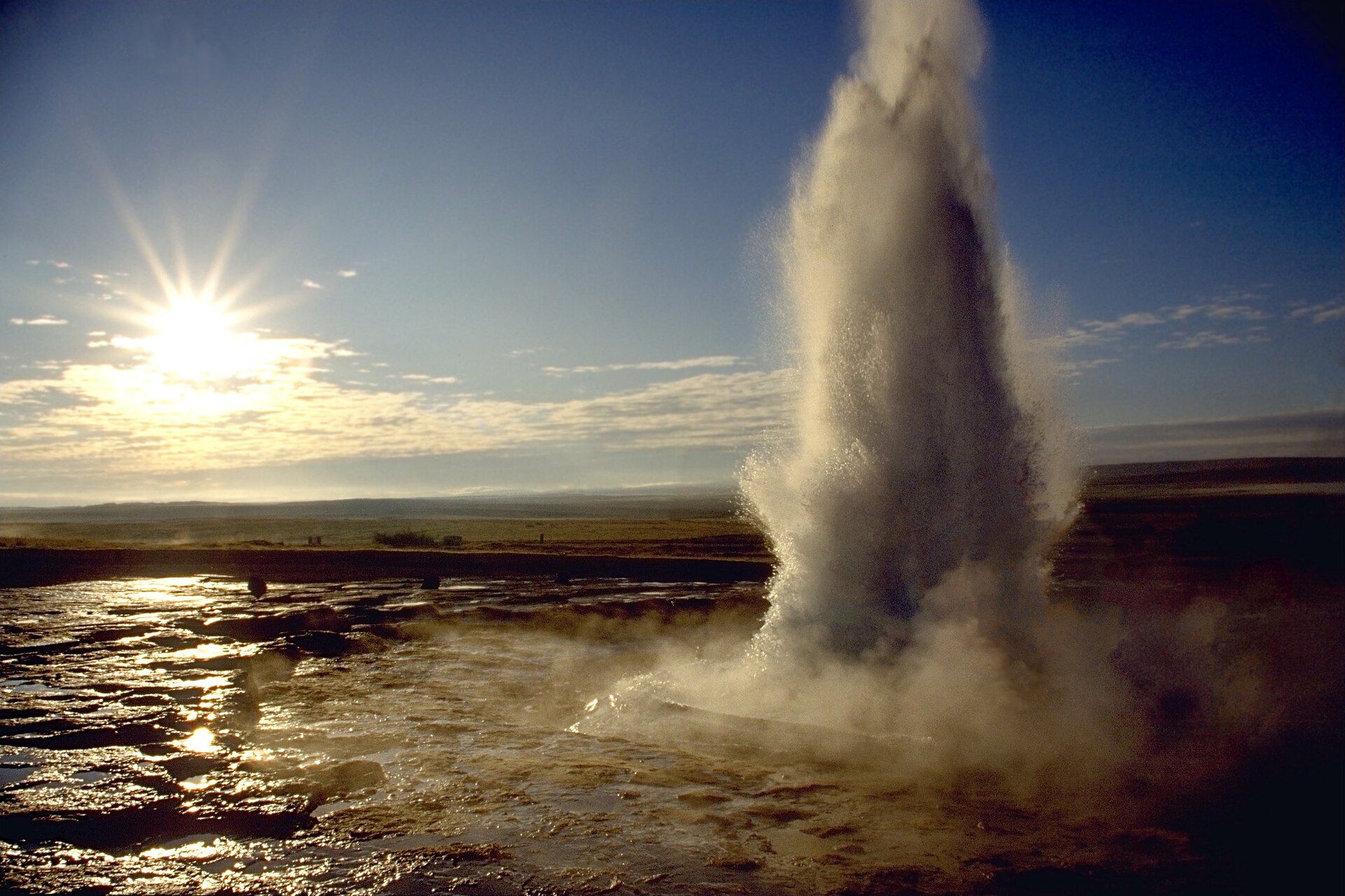
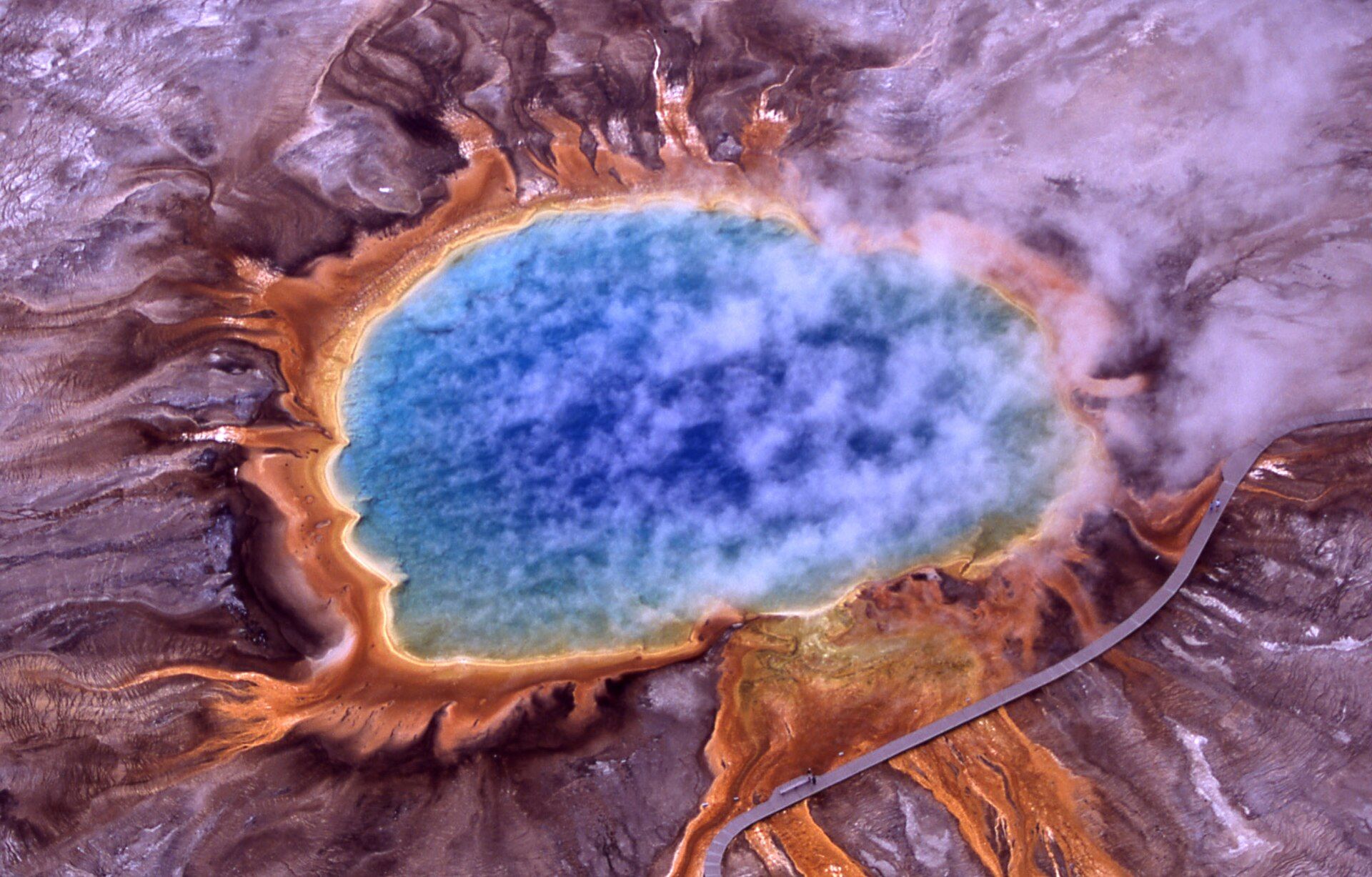
The world's first national park, sitting atop a giant volcanic hotspot — home to half the planet's geysers, rainbow-rimmed hot springs like Grand Prismatic, and vast wildlife-rich valleys of bison, wolves, and bears.
What makes it marvelous
Yellowstone sits over a mantle hotspot that has fuelled enormous eruptions and left a huge caldera. The heat close beneath the surface drives more than 10,000 hydrothermal features — over half of all the geysers on Earth — including the famously punctual Old Faithful and the vast, heat-loving-microbe-coloured Grand Prismatic Spring. Above ground it protects one of the largest nearly intact temperate ecosystems left, with free-roaming bison, grizzly bears, and reintroduced wolves. It became the world's first national park in 1872.
Why visit
It's a landscape unlike anywhere else: geysers erupting on schedule, hot springs ringed in impossible colours, steaming basins, a grand canyon of its own with waterfalls, and some of the best large-mammal watching in North America — all in one park.
What to know before you go
🗓️ Best time
Late spring to early autumn (roughly May–September) for open roads, geyser basins, and wildlife; winter offers snowy solitude with limited access.
🧭 Getting there & access
Multiple entrances from Wyoming, Montana, and Idaho (gateway towns like West Yellowstone and Gardiner). A loop road links the major basins; some roads close seasonally in winter.
Good to know
- Stay on the boardwalks — the thin crust over boiling water is genuinely deadly.
- Keep well back from wildlife; bison and bears are dangerous and fast.
- Visit popular basins early to beat midday crowds.
Natural riches of the area
- Over half of Earth's geysers and vast hydrothermal fields
- A near-intact temperate ecosystem (bison, wolves, grizzlies)
- Geothermal heat over a volcanic hotspot
- Rivers, lakes, forests, and alpine meadows
Local food
- Bison burger
- Lean, locally-raised bison, a signature of the northern Rockies.
- Trout
- Fresh mountain trout from the region's rivers and lakes.
- Huckleberries
- Wild mountain berries used in pies, jams, and ice cream.
Yellowstone is where the Earth shows its inner workings. The park sits over a mantle hotspot whose heat rises close to the surface, powering more than 10,000 hydrothermal features — over half of all the geysers on the planet. Old Faithful erupts on its dependable schedule; the Grand Prismatic Spring spreads in bands of blue, green, orange, and red, coloured by heat-loving microbes; and whole basins hiss and steam over ground that is, in geological terms, a sleeping supervolcano.
Set that against one of the last great temperate wildernesses — herds of bison on the Lamar Valley, grizzlies in the meadows, wolves reintroduced to complete the food web — and you have a park that helped invent the very idea of national parks when it was established in 1872. It rewards patience: keep to the boardwalks, keep your distance from the wildlife, and let the geysers keep their own time.
More wonders to explore