🇪🇹 Natural wonders of Ethiopia
A high, ancient land of dramatic geology — from cool highland plateaus to the searing, alien Danakil Depression, where the Earth's crust is tearing apart and a lava lake glows.
🗓️ Best time for nature: For the Danakil, November to February, the (relatively) cooler and drier months; even then, expect extreme heat.
The lay of the land
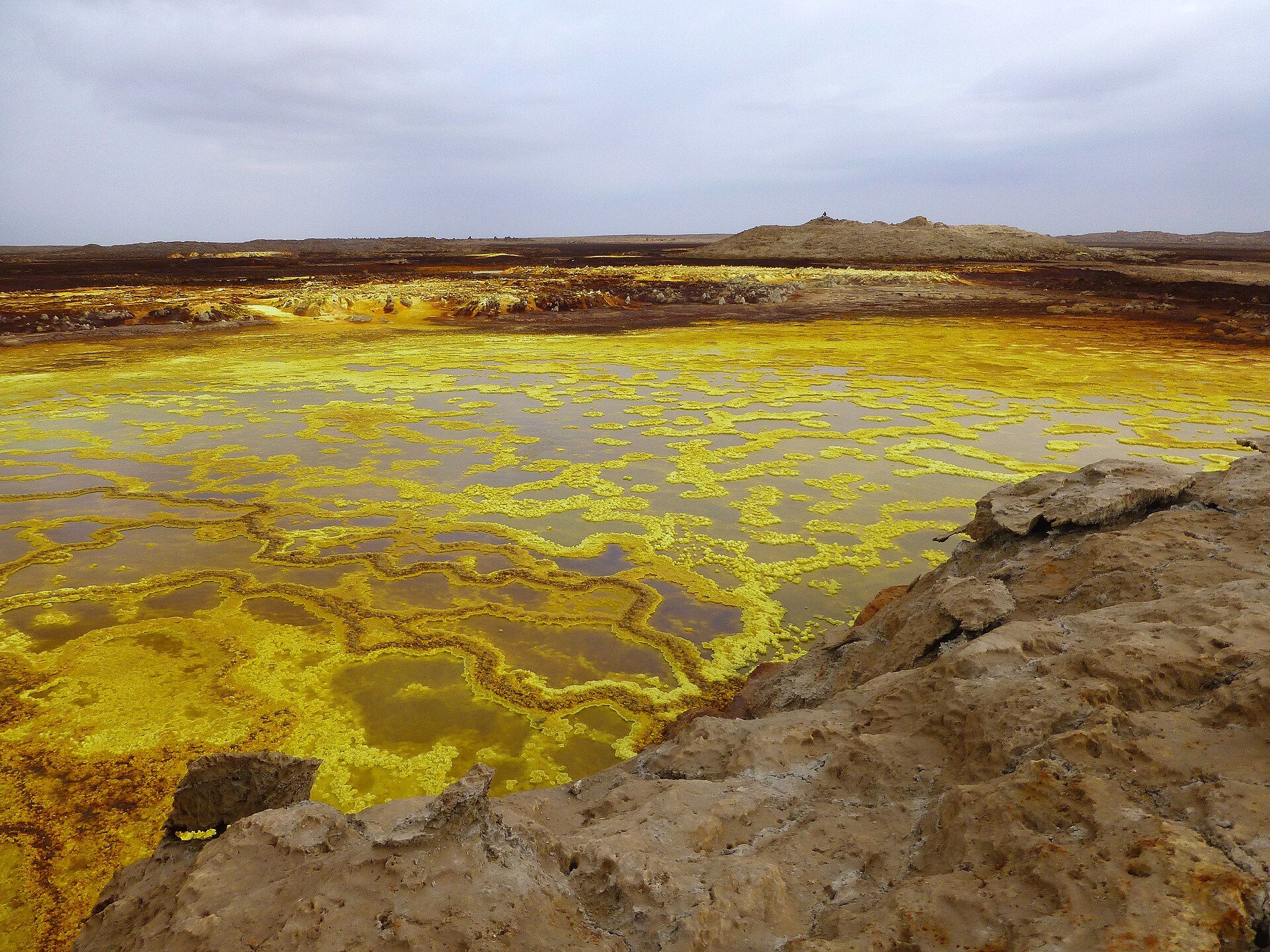
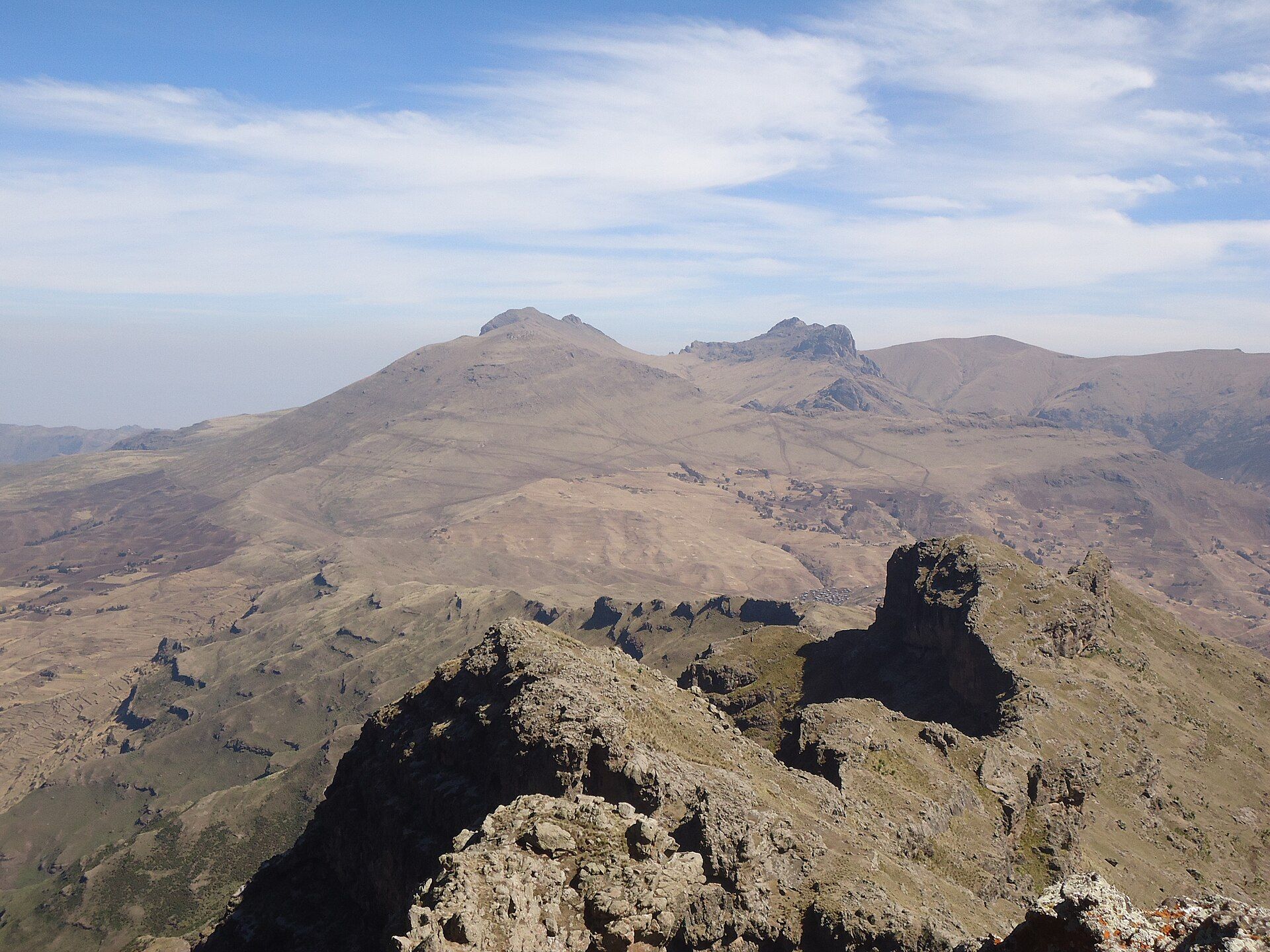
Ethiopia rises to vast highland plateaus split by the Great Rift Valley — the same rift that runs down through East Africa. At its most extreme, in the northeast, the land plunges to the Danakil Depression, a triple junction where three tectonic plates pull apart, thinning the crust until molten rock lies close beneath. The result is one of the hottest, lowest, most surreal places on Earth: neon sulphur springs, endless salt flats, and the persistent lava lake of Erta Ale. It is, in effect, a glimpse of a new ocean being born.
Where to begin
-
Danakil Depression
A searing rift-valley landscape of sulphur springs, salt flats, and a lava lake.
A taste of the place
Ethiopian food centres on injera, a spongy sourdough flatbread, eaten with an array of spiced stews (wot); coffee, native to Ethiopia, is prepared and served with ceremony.
Traveling responsibly
- Visit the Danakil only November–February, on organised, permitted expeditions.
- Check regional travel and security advisories before planning a trip.
- Prepare for extreme heat and carry ample water.
Ethiopia is a land of extremes, rising to cool highland plateaus and plunging, in its northeast, to the Danakil Depression — one of the hottest and most alien places on the planet. There, three tectonic plates pull apart, stretching the crust until heat and molten rock press close to the surface, painting the ground with neon sulphur springs, spreading salt flats to the horizon, and keeping a lava lake churning at Erta Ale. This atlas begins Ethiopia’s chapter in that rift, at the raw, extreme birthplace of a future sea.
Added
All wonders in Ethiopia
3 places