Danakil Depression
📍 Afar Region, northeastern Ethiopia
One of the hottest, lowest, and most alien places on Earth — a searing volcanic desert of neon-yellow sulphur springs, salt flats, and a permanent lava lake, where three tectonic plates are tearing the land apart.
What makes it marvelous
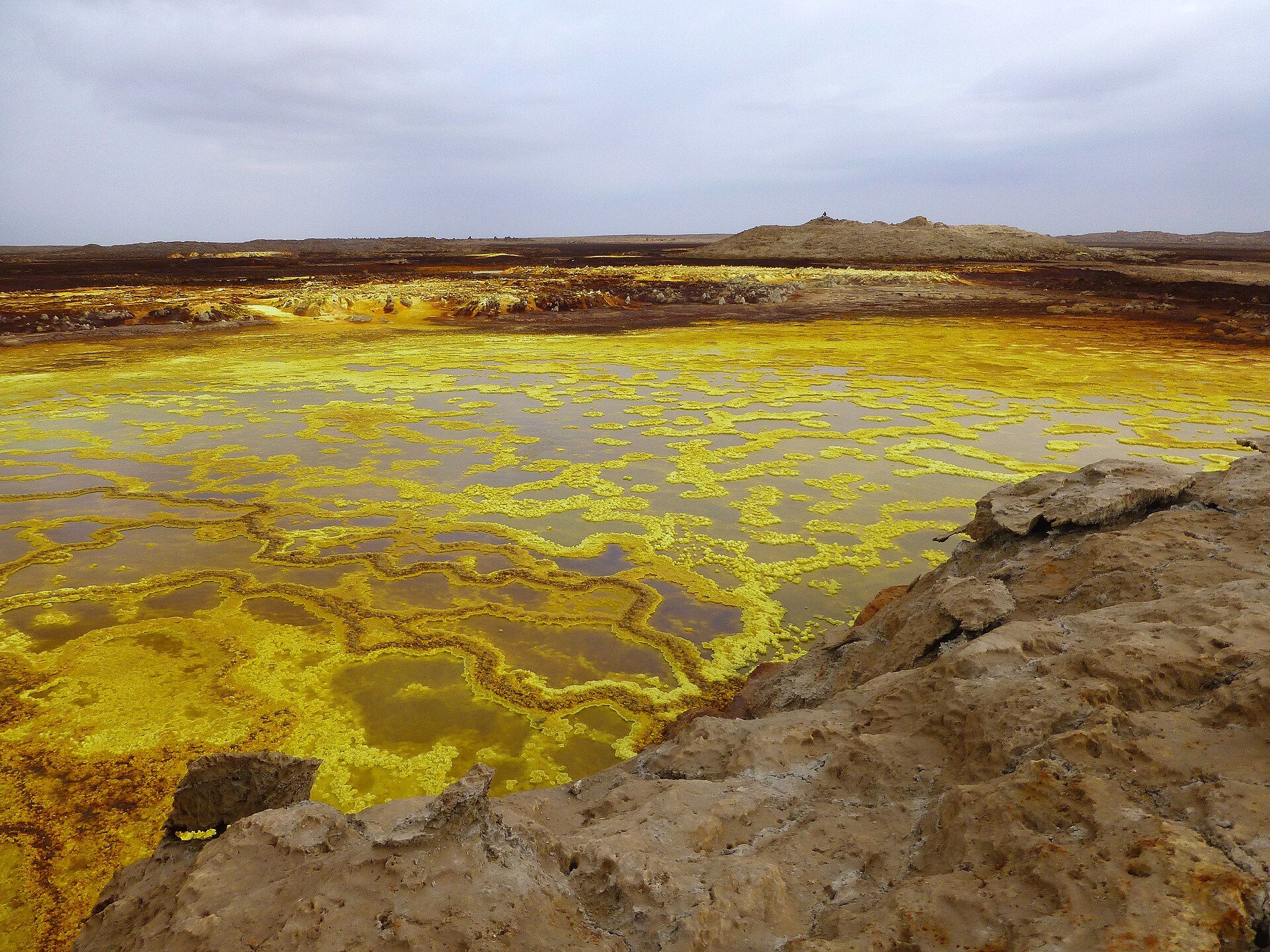
The Danakil sits at a rare triple junction where the African, Arabian, and Somali plates are pulling apart, thinning the crust until molten rock lies close to the surface. The result is extraordinary: Dallol's acidic springs paint the ground in surreal greens, yellows, and oranges from sulphur and iron salts; vast salt flats stretch to the horizon, still mined by Afar caravans; and Erta Ale holds one of the world's few persistent lava lakes, glowing red at night. With average temperatures among the highest of any inhabited place, it is a preview of how new oceans are born.
Why visit
Peering into Erta Ale's churning lava lake after dark, or walking through Dallol's psychedelic mineral terraces, is as close to visiting another planet as Earth allows — a raw, extreme, unforgettable landscape at the birthplace of a future sea.
What to know before you go
🗓️ Best time
November to February, the (relatively) cooler and drier months; even then the heat is extreme. Summer is dangerously hot and largely off-limits.
🧭 Getting there & access
From Mekele in northern Ethiopia's Tigray/Afar region, on multi-day guided 4x4 expeditions only. Conditions are harsh and the area can be volatile — check current advisories and travel with experienced, permitted operators and local Afar guides.
Good to know
- Go only November–February and only on organised, permitted expeditions.
- Prepare for extreme heat; carry far more water than seems necessary.
- Check regional security advisories before planning a trip.
Plan your visit
Expedition🧭 Getting there
From Mekele, Tigray, Ethiopia
- Fly Addis Ababa → Mekele (MQX) — roughly 1h20
- Join an organised 4x4 convoy from Mekele — the only practical way in
- Drive Mekele → the Erta Ale base or the Dallol salt flats — several hours on rough track
- Total travel
- A two-to-four-day organised expedition from Mekele
- Time at site
- Two to four days on a set itinerary
- Access
- This is not a place you visit independently. Access is through licensed tour operators who arrange the permits, the 4x4 convoy, local Afar guides and, on the routes near the Eritrean border, an armed escort — a requirement that follows deadly attacks on tourist groups here in the past. Security conditions and government travel advice for the Afar region change, and the Erta Ale lava lake has its own activity that closes the summit when it flares. Book through an established operator and defer to their current read on both, rather than any snapshot.
🎒 What to bring & consider
- An organised tour booked in advance — the permits, the escort where it is required and the salt-caravan logistics simply cannot be arranged on arrival
- Genuine heat tolerance and litres of water: this is one of the hottest inhabited places on Earth and daytime temperatures well above 40°C are normal, with almost no shade
- Closed, sturdy shoes for Dallol, where the ground is sharp salt crust and acidic pools that ruin sandals and skin alike
- Awareness of volcanic gas at Erta Ale and Dallol — the sulphurous fumes are genuinely toxic in a lungful, and you follow the guide on where to stand
- A sleeping mat for the open-air night near the lava lake, since you camp on the volcano rather than in any lodge
👁️ What to expect
- Crowds
- Thin and grouped into operator convoys. You will see other tours at the highlights and almost no one in between.
- Conditions
- Extreme, relentless heat, rough tracks, and camping rough. Genuinely demanding on the body.
- Facilities
- None to speak of. Everything — water, food, shelter — is carried in by the tour.
- The view
- The neon yellow-and-green sulphur terraces of Dallol by day, and the open lava lake of Erta Ale glowing after dark. The lava lake is the reason people endure the rest, and whether it is active enough to see is the one thing no operator can promise in advance.
Times and requirements are approximate and change with season, weather, and local rules — confirm permits, fares, and schedules with operators before you travel.
Natural riches of the area
- An active tectonic triple junction (a nascent ocean rift)
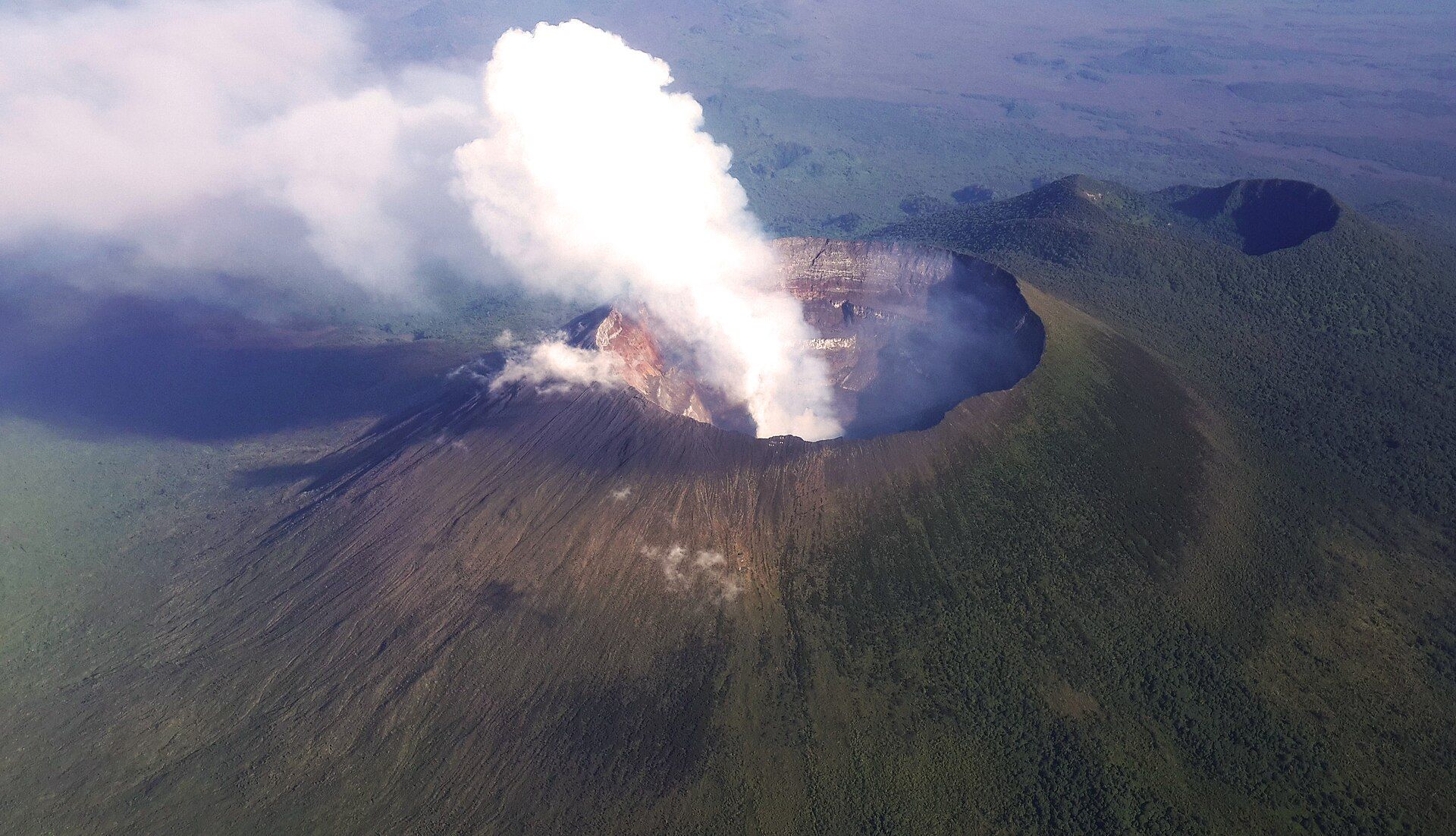
- A persistent lava lake at Erta Ale
- Vast salt flats and colourful hydrothermal fields (Dallol)
- Sulphur, potash, and salt long mined by Afar caravans
Local food
- Injera
- Ethiopia's spongy sourdough flatbread, eaten with spiced stews (wot).
- Afar goat & camel
- Herded meats central to the diet of the Afar people.
- Ethiopian coffee
- Ceremonially roasted and brewed — coffee's ancestral homeland.
The Danakil Depression is where the Earth comes apart. Three tectonic plates meet and pull away from one another here, stretching the crust so thin that heat and molten rock press close to the surface — and the results are almost hallucinatory. At Dallol, acidic springs stain the ground in neon yellows, greens, and oranges; salt flats run to the horizon, still cut and carried out by Afar caravans; and the volcano Erta Ale holds one of only a handful of permanent lava lakes on the planet, glowing and churning in the dark.
It is also one of the hottest inhabited places on Earth, and one of the most extreme. Reaching it means a hard, guided expedition across the Afar desert, with real heat and, at times, real security concerns to weigh. But to stand at the rim of a lava lake at night, or walk through Dallol’s psychedelic mineral fields, is to witness the raw machinery of the planet — and, in the slow tearing of this rift, the birthplace of a future ocean.
Danakil Depression: common questions
How do you get to Danakil Depression?
From Mekele, Tigray, Ethiopia: Fly Addis Ababa → Mekele (MQX) — roughly 1h20; Join an organised 4x4 convoy from Mekele — the only practical way in; Drive Mekele → the Erta Ale base or the Dallol salt flats — several hours on rough track. Allow a two-to-four-day organised expedition from mekele.
When is the best time to visit Danakil Depression?
November to February, the (relatively) cooler and drier months; even then the heat is extreme. Summer is dangerously hot and largely off-limits.
How long should you spend at Danakil Depression?
Two to four days on a set itinerary. A two-to-four-day organised expedition from Mekele of travel from Mekele, Tigray, Ethiopia.
What should you bring to Danakil Depression?
An organised tour booked in advance — the permits, the escort where it is required and the salt-caravan logistics simply cannot be arranged on arrival Genuine heat tolerance and litres of water: this is one of the hottest inhabited places on Earth and daytime temperatures well above 40°C are normal, with almost no shade Closed, sturdy shoes for Dallol, where the ground is sharp salt crust and acidic pools that ruin sandals and skin alike Awareness of volcanic gas at Erta Ale and Dallol — the sulphurous fumes are genuinely toxic in a lungful, and you follow the guide on where to stand A sleeping mat for the open-air night near the lava lake, since you camp on the volcano rather than in any lodge
Do you need a permit or guide for Danakil Depression?
This is not a place you visit independently. Access is through licensed tour operators who arrange the permits, the 4x4 convoy, local Afar guides and, on the routes near the Eritrean border, an armed escort — a requirement that follows deadly attacks on tourist groups here in the past. Security conditions and government travel advice for the Afar region change, and the Erta Ale lava lake has its own activity that closes the summit when it flares. Book through an established operator and defer to their current read on both, rather than any snapshot.
Is Danakil Depression crowded, and what are conditions like?
Thin and grouped into operator convoys. You will see other tours at the highlights and almost no one in between. Extreme, relentless heat, rough tracks, and camping rough. Genuinely demanding on the body. Facilities: none to speak of. Everything — water, food, shelter — is carried in by the tour.
Added Updated
More wonders to explore