Nature route · A week
Patagonia: Ice & Granite
The towers of Paine, a glacier you can hear calving, and caves of swirled marble — the deep south.
A Southern Patagonia route across the Chile–Argentina border linking the granite towers of Torres del Paine, the thundering Perito Moreno glacier at El Calafate, and the swirled Marble Caves of Lake General Carrera.
- Length 8–10 days
- Stops 3 wonders
- Budget $1,800–5,700 pp
- Region Patagonia, Chile
Trip map
The route
Stops in travel order — tap any one for the full wonder guide.
-
Torres del Paine 4 nights
Magallanes, Chilean Patagonia
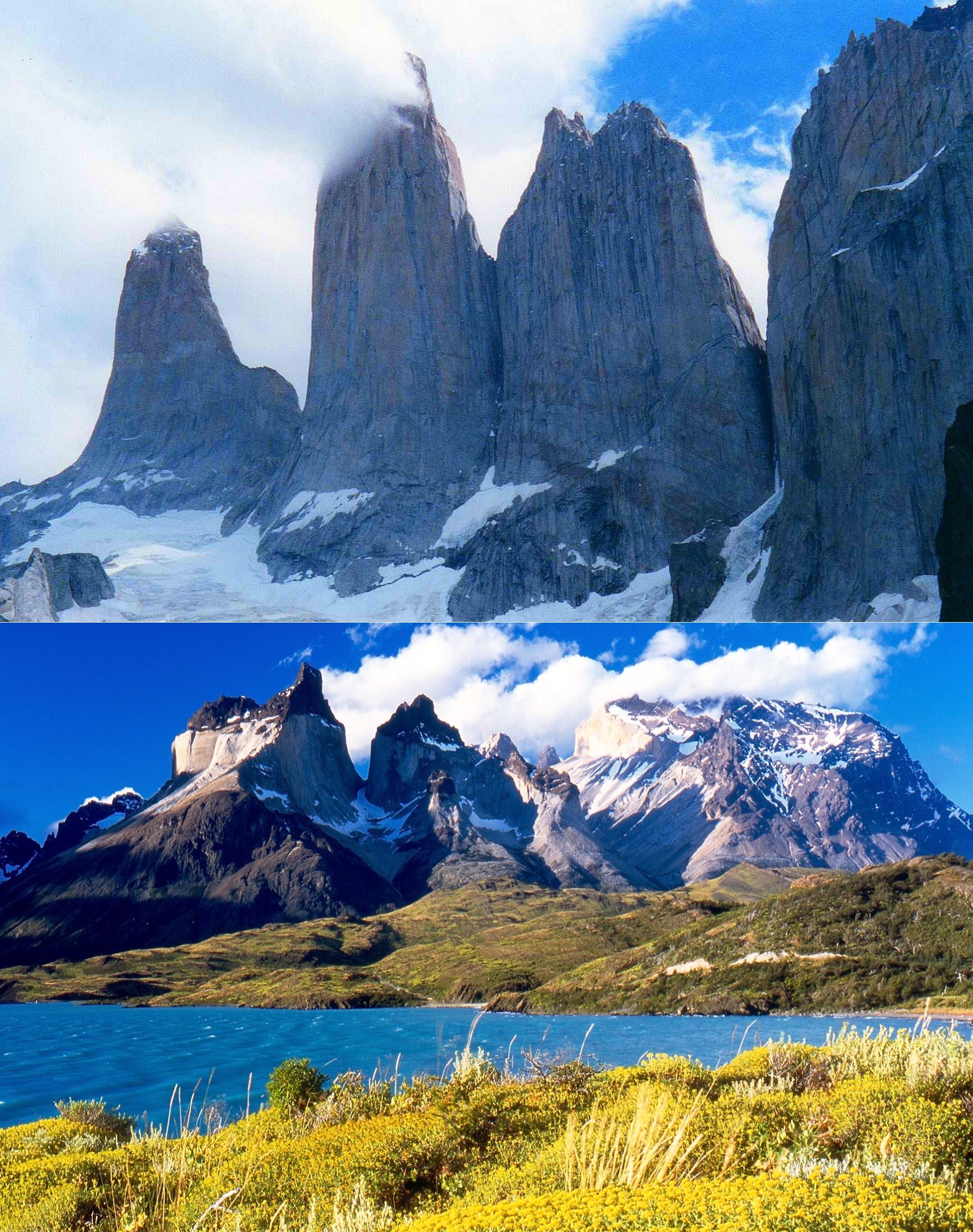
Chile's flagship park — granite towers, glacier-fed lakes, and the famous W trek; base at Puerto Natales.
-
Perito Moreno Glacier 2 nights
Los Glaciares National Park, Santa Cruz, Argentina
A 5 km wall of ice that calves into Lago Argentino, across the border at El Calafate.
-
Marble Caves 2 nights
General Carrera Lake, Aysén, Chile
Wave-sculpted marble caverns on Lake General Carrera — an optional far-north extension by air and road.
Day by day
-
To Torres del Paine
Base Puerto Natales / park, Chile
- Fly to Punta Arenas, then road to Puerto Natales — about 3h
Arrive in the Chilean south and settle at Puerto Natales, the gateway to Torres del Paine. Acclimatise and provision for the park.
-
Torres del Paine
Base Torres del Paine / Puerto Natales
- Day hikes or the multi-day 'W' trek within the park
Several days among the granite towers, milky glacial lakes, and wind-scoured valleys — from the base-of-the-towers hike to the full W circuit, as time and fitness allow.
-
Across to El Calafate & Perito Moreno
Base El Calafate, Argentina
- Cross the border by road to El Calafate — about 5–6h
Cross into Argentina to El Calafate, then out to the Perito Moreno glacier — walk the boardwalks along its face and, if you like, a mini-trek on the ice.
-
Homeward, or north to the Marble Caves
Base Onward
- Fly out of El Calafate — or fly/drive north to Lake General Carrera for the Marble Caves
Fly home from El Calafate, or extend the trip north to the swirled marble caverns of Lago General Carrera, reached by air to Balmaceda and a scenic drive.
What it costs
Per person, two sharing, 8 nights, quoted in USD (the practical currency for Patagonian tourism). Excludes international flights.
| Category | Range (per person) |
|---|---|
| TransportRegional flights, cross-border transfers, and park shuttles/catamarans. | $500–1,400 |
| Lodging8 nights from hostels and refugios to hotels and eco-lodges. | $600–2,400 |
| FoodSelf-catering and set menus to restaurants; remote-park food costs more. | $350–900 |
| Fees & guidesPark entries, the Perito Moreno boardwalks/mini-trek, and any guided treks or ice walks. | $350–1,000 |
| Estimated total | $1,800–5,700 |
What moves the number
- Refugio/camping trekking vs hotels and lodges
- Regional airfares and how early you book
- Whether you add the northern Marble Caves extension
- Season, guided vs self-guided, and exchange rates
Indicative mid-2026 ranges quoted in USD; confirm current fares, park fees, and rates before booking. Quoted in US dollars; carry Chilean and Argentine pesos for local spending and the border crossing. These are honest ranges, not quotes — real prices swing with season, group size, and how you travel. Always confirm current fares, room rates, permits, and fees with operators before you commit.
Best season & getting around
🗓️ Best time to go
The southern summer, roughly November to March, is the season for Patagonia: the parks are fully open, days are long, and the trekking is at its best (though the wind is always a factor). Shoulder months (October, April) are quieter and cooler; winter closes much of the trekking infrastructure.
🧭 Getting around
A mix of short flights (to Punta Arenas and El Calafate) and road transfers, with a cross-border bus or transfer between Chile and Argentina — carry both currencies and your passport for the crossing. Torres del Paine is explored on foot with park shuttles and catamarans; the Marble Caves are a boat trip from Puerto Río Tranquilo.
Know before you go
- Patagonian weather and wind are extreme and change hourly — pack for four seasons and build buffer days into any trek.
- The route crosses the Chile–Argentina border by land; carry your passport, both currencies, and check current crossing rules.
- Torres del Paine's refugios and campsites book out months ahead in summer — reserve the W-trek nights early.
- All distances, times, and prices are approximate and shift with season, weather, and exchange rates.
The far south of the Americas is a land of ice and granite, and this route links its three greatest set-pieces across the Chile–Argentina border. It centres on Torres del Paine, whose sheer granite towers and glacier-fed lakes make it one of the world’s great trekking parks, then crosses to Argentina for the Perito Moreno glacier — a five-kilometre wall of ice that cracks and calves into the lake while you watch — with an optional northern detour to the wave-swirled Marble Caves.
Patagonia rewards flexibility above all: the wind and weather have the final say, the distances are vast, and the best campsites and refugios fill months ahead. Come in the long southern summer, carry both currencies for the border, and give the ice and the towers the time and the buffer days they demand.
Patagonia: Ice & Granite: common questions
How many days is the Patagonia: Ice & Granite?
8–10 days — the plan is built around 8 nights. Cross-border by road and short flights across the Patagonian south
When is the best time to do the Patagonia: Ice & Granite?
The southern summer, roughly November to March, is the season for Patagonia: the parks are fully open, days are long, and the trekking is at its best (though the wind is always a factor). Shoulder months (October, April) are quieter and cooler; winter closes much of the trekking infrastructure.
How much does the Patagonia: Ice & Granite cost?
A rough guide is $1,800–5,700 per person (Per person, two sharing, 8 nights, quoted in USD (the practical currency for Patagonian tourism). Excludes international flights.). Indicative mid-2026 ranges quoted in USD; confirm current fares, park fees, and rates before booking. It varies with refugio/camping trekking vs hotels and lodges, regional airfares and how early you book, whether you add the northern marble caves extension.
How do you get around on the Patagonia: Ice & Granite?
A mix of short flights (to Punta Arenas and El Calafate) and road transfers, with a cross-border bus or transfer between Chile and Argentina — carry both currencies and your passport for the crossing. Torres del Paine is explored on foot with park shuttles and catamarans; the Marble Caves are a boat trip from Puerto Río Tranquilo.
Which natural wonders does the Patagonia: Ice & Granite include?
Torres del Paine, Perito Moreno Glacier, Marble Caves.
Added