The Black Forest
📍 Baden-Württemberg, southwest Germany
A vast range of dark, fir-cloaked hills in southwest Germany, cut by waterfalls and mirror lakes and giving rise to the Danube — the storybook forest of German legend.
What makes it marvelous
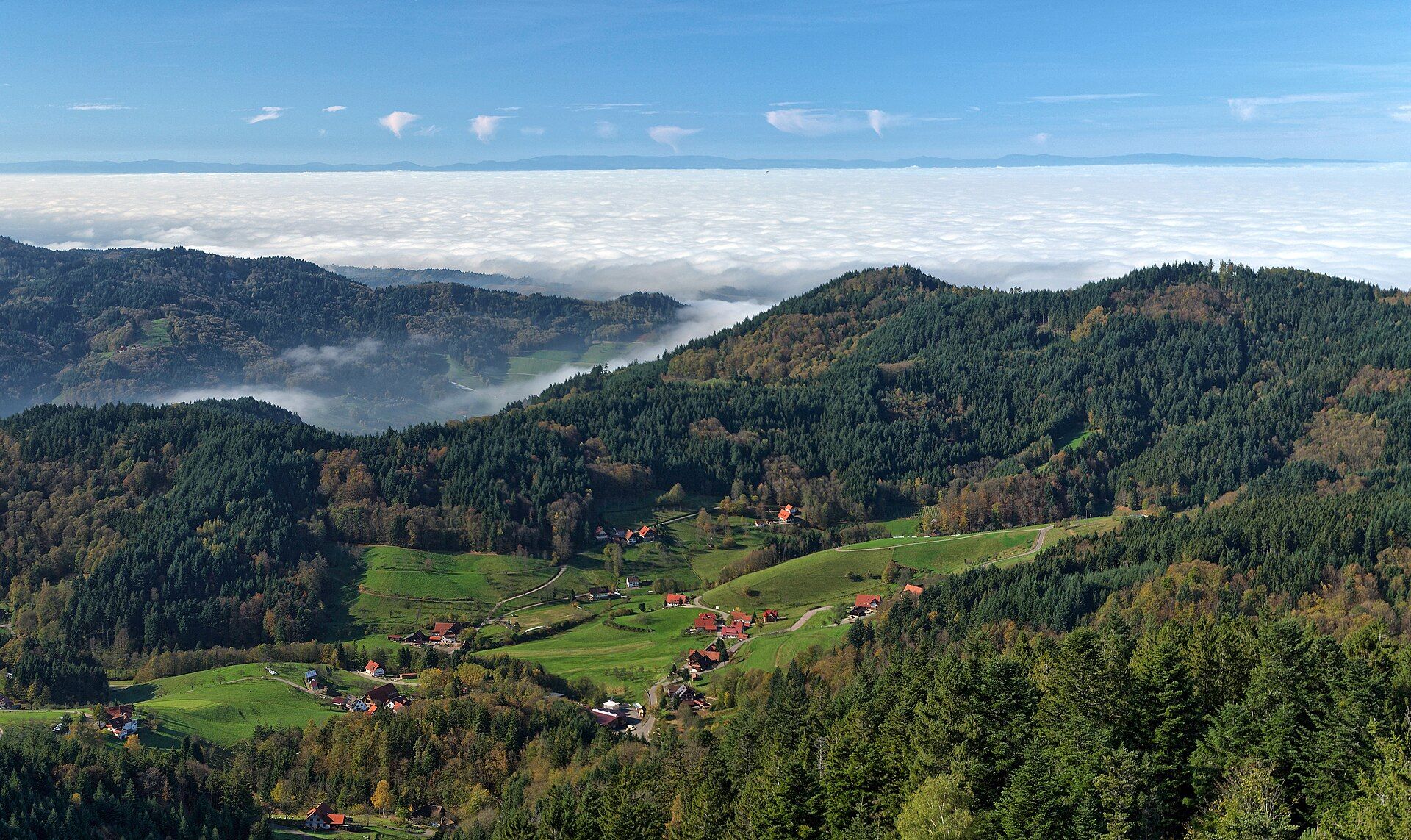
The Black Forest is a mountainous region of dense conifer forest whose deep shade gave it its name. Its rounded summits — highest of them the Feldberg at nearly 1,500 metres — are the eroded remains of an ancient upland, and its slopes are laced with tumbling waterfalls and dark glacial lakes. The Danube, one of Europe's great rivers, is born from springs on its eastern edge. Centuries of clock-making, glassblowing, and folklore have made it as much a cultural landscape as a natural one.
Why visit
This is deep, atmospheric forest country: hiking and cycling trails wind past the Triberg and Todtnau waterfalls — among the highest in Germany — and to still, tree-ringed lakes like the Titisee and Mummelsee. Spa towns, half-timbered villages, and the scenic Black Forest High Road thread through it, and in autumn the beeches among the firs turn the hills gold.
More views of The Black Forest
Additional photographs of the actual site — each freely licensed, with its photographer and licence credited.
What to know before you go
🗓️ Best time
Late spring to autumn for walking and open trails; autumn is glorious for colour, while winter brings snow and skiing to the higher ground around the Feldberg.
🧭 Getting there & access
In the far southwest corner of Germany, framed by Freiburg, Baden-Baden, and the Rhine valley. A dense network of roads, trains, and marked trails links the towns, lakes, and waterfalls.
Good to know
- Base yourself in Freiburg or Triberg and explore by the regional trains and buses.
- Walk to the waterfalls early or late; Triberg in particular draws coach tours midday.
- Autumn and clear winter days give the forest its most dramatic moods.
Plan your visit
Easy🧭 Getting there
From Basel (BSL), Stuttgart (STR), or Freiburg, southwest Germany
- Fly to Basel or Stuttgart, or take the train to Freiburg or Offenburg
- Regional trains and roads reach the forest towns — Triberg, Titisee, Baiersbronn — within 1–2h
- Trailheads for waterfalls and lakes are short walks or drives from the towns
- Total travel
- Half a day to reach from the gateway cities
- Time at site
- A day for a taste; several days to explore the valleys, lakes, and high road
- Access
- The forest is freely accessible on a huge network of public trails. Some waterfalls (such as Triberg) charge a small entry fee; the national park in the north is free.
🎒 What to bring & consider
- Comfortable walking shoes and a rain layer; the forest is often damp
- Warm clothing for the higher ground, especially outside summer
- A regional transport pass if hopping between towns by train
- Cash for the odd waterfall entry and village cafés
👁️ What to expect
- Crowds
- Honeypots like Triberg and the Titisee are busy in summer and on weekends; the wider trail network is peaceful.
- Conditions
- Gentle to moderate forest trails, well signed, with steeper climbs to the summits and waterfalls.
- Facilities
- Excellent — spa towns, hotels, cafés, and trains throughout; this is a well-developed region.
- The view
- A waterfall framed by dark firs, or mist lifting off the Mummelsee at dawn. Autumn colour among the conifers is the standout, and low light suits the deep forest.
Times and requirements are approximate and change with season, weather, and local rules — confirm permits, fares, and schedules with operators before you travel.
Natural riches of the area
- Dense fir and spruce forest over rounded uplands
- Waterfalls including Triberg and Todtnau, among Germany's highest
- Glacial lakes such as the Titisee and Mummelsee
- The headwater springs of the River Danube
Local food
- Black Forest gâteau
- Schwarzwälder Kirschtorte — chocolate, cream, and Kirsch-soaked cherries.
- Black Forest ham
- Schwarzwälder Schinken, smoked over fir and served in thin slices.
The Black Forest earns its name from the deep shade of its conifers, which cloak a range of rounded hills in Germany’s southwest so densely that the woods can feel like dusk at noon. These are the worn-down remains of an ancient upland, their highest point the Feldberg at nearly 1,500 metres, and their slopes are cut by tumbling waterfalls — Triberg and Todtnau among the tallest in the country — and dotted with dark glacial lakes like the Titisee and Mummelsee. On its eastern edge, springs give rise to the River Danube, which flows on across the whole of Europe to the Black Sea.
It is a landscape woven through with story and craft: the forest of German fairy tales, and the home of cuckoo clocks, glassblowing, and thermal spa towns. A dense web of trails, scenic roads, and little trains makes it easy to explore, whether you come to walk to a waterfall, cycle between villages, or simply drive the Black Forest High Road as the hills roll away in layers of green and, in autumn, gold.
The Black Forest: common questions
How do you get to The Black Forest?
From Basel (BSL), Stuttgart (STR), or Freiburg, southwest Germany: Fly to Basel or Stuttgart, or take the train to Freiburg or Offenburg; Regional trains and roads reach the forest towns — Triberg, Titisee, Baiersbronn — within 1–2h; Trailheads for waterfalls and lakes are short walks or drives from the towns. Allow Half a day to reach from the gateway cities.
When is the best time to visit The Black Forest?
Late spring to autumn for walking and open trails; autumn is glorious for colour, while winter brings snow and skiing to the higher ground around the Feldberg.
How long should you spend at The Black Forest?
A day for a taste; several days to explore the valleys, lakes, and high road. Half a day to reach from the gateway cities of travel from Basel (BSL), Stuttgart (STR), or Freiburg, southwest Germany.
What should you bring to The Black Forest?
Comfortable walking shoes and a rain layer; the forest is often damp Warm clothing for the higher ground, especially outside summer A regional transport pass if hopping between towns by train Cash for the odd waterfall entry and village cafés
Do you need a permit or guide for The Black Forest?
The forest is freely accessible on a huge network of public trails. Some waterfalls (such as Triberg) charge a small entry fee; the national park in the north is free.
Is The Black Forest crowded, and what are conditions like?
Honeypots like Triberg and the Titisee are busy in summer and on weekends; the wider trail network is peaceful. Gentle to moderate forest trails, well signed, with steeper climbs to the summits and waterfalls. Facilities: excellent — spa towns, hotels, cafés, and trains throughout; this is a well-developed region.
Added
More wonders to explore