Białowieża Forest
📍 Poland–Belarus border
The last great primeval lowland forest of Europe — a surviving fragment of the woodland that once covered the continent, and the home of the wild European bison.
What makes it marvelous
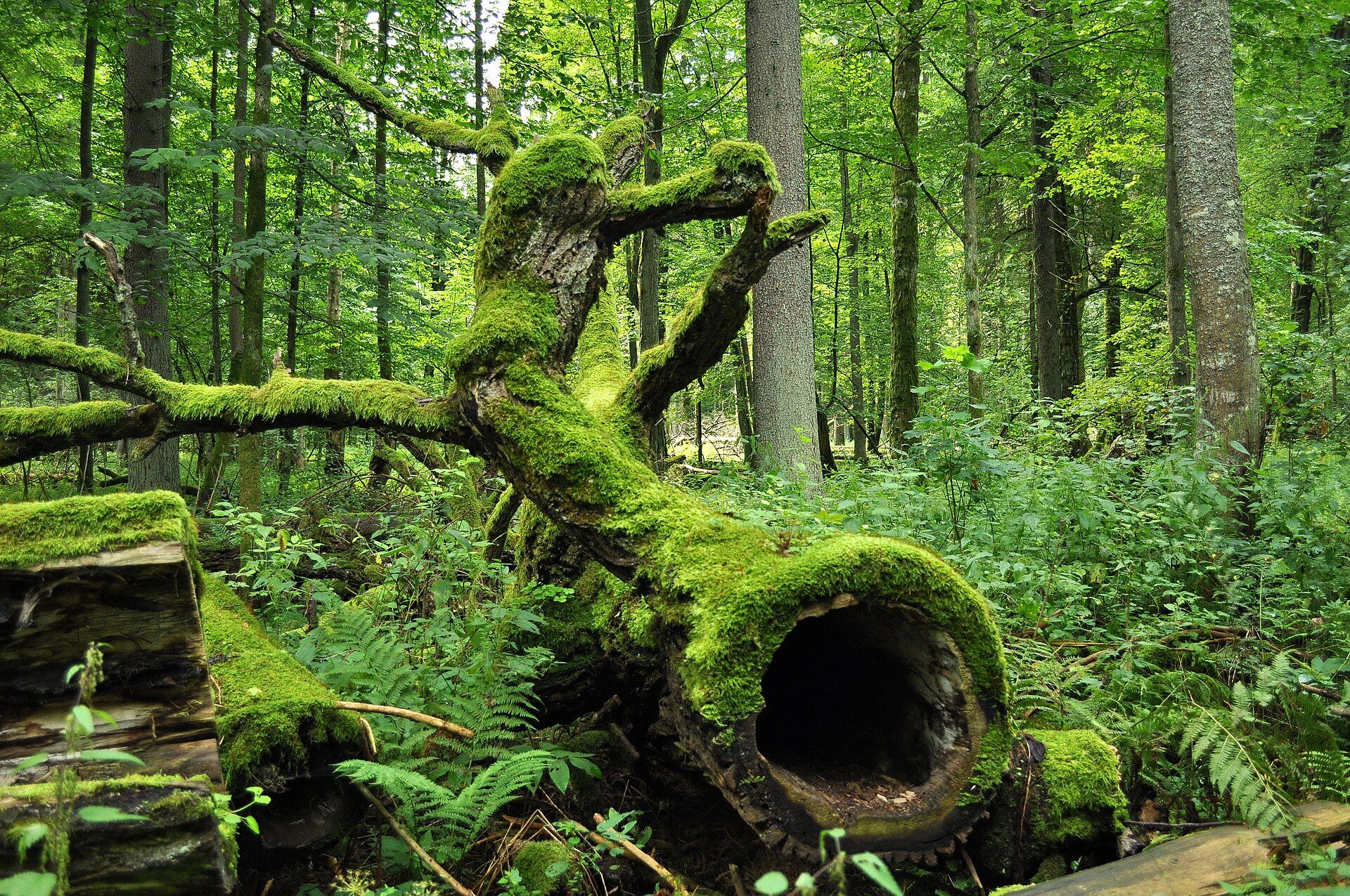
Białowieża is a living remnant of the vast forest that blanketed lowland Europe before agriculture. Preserved for centuries as a royal hunting reserve, its strictly protected core has never been logged, and it shows: enormous oaks and spruces stand hundreds of years old, dead trunks are left where they fall, and the ground is a chaos of fallen timber, fungi, and regrowth. That deadwood is the secret — it supports thousands of species of insects, fungi, and birds, including rare woodpeckers, that simply cannot survive in a managed plantation. Its most famous resident is the European bison, the continent's heaviest land animal, which was hunted to extinction in the wild and then reintroduced here from captive stock; the forest now holds the largest free-roaming herd on Earth. Wolves and lynx still hunt among the trees. It is a UNESCO World Heritage Site.
Why visit
Walking through a forest that has never been cut — among giant old trees and fallen timber, with a real chance of seeing wild bison — offers a glimpse of what all of Europe once looked like.
What to know before you go
🗓️ Best time
Spring (roughly April–June) for birdsong, wildflowers, and active wildlife; autumn brings fungi and colour, and winter offers the best chance of spotting bison against snow.
🧭 Getting there & access
On the Polish–Belarusian border, reached via the village of Białowieża, about four hours from Warsaw; the strictly protected core can be entered only with a licensed guide, while surrounding trails are open.
Good to know
- Book a licensed guide to enter the strict reserve — it's the real old-growth.
- Go at dawn with a guide for the best chance of bison and woodpeckers.
- Come in winter if bison are your priority; they're easier to spot on snow.
Plan your visit
Easy🧭 Getting there
From Warsaw, then Białystok or Hajnówka
- Fly → Warsaw (WAW or WMI)
- Train or bus Warsaw → Białystok — roughly 2h–2h30 by fast train
- Bus or drive Białystok → Białowieża village — about 1h30–2h
- Total travel
- Four to five hours from Warsaw
- Time at site
- Two days: one for the Strict Reserve, one for tracking bison
- Access
- The village, museum and outer forest are freely walkable. The Strict Protection Area — the genuinely primeval core — may only be entered with a licensed guide on a booked permit through Białowieża National Park, and numbers are capped. The forest also sits on the Belarusian border, and Polish border-zone restrictions here have changed repeatedly in recent years, closing trails at short notice. Check the current position with Białowieski Park Narodowy and Polish border guard notices before travelling.
🎒 What to bring & consider
- Tick protection taken seriously — long trousers tucked into socks, repellent, and a body check every evening. Tick-borne encephalitis is present here and a vaccine exists; ask a travel clinic well ahead
- Binoculars, because bison are usually seen at distance across a meadow rather than on the path
- Quiet boots and patience for a dawn or dusk outing, which is when large mammals actually move
- Booked guide and permit for the Strict Reserve, arranged before you arrive rather than on the day
- Waterproofs — this is wet lowland forest and the trails hold water through much of the year
👁️ What to expect
- Crowds
- Modest. The Strict Reserve is capped by design, and much of the wider forest is empty on a weekday.
- Conditions
- Flat, easy walking on soft ground, often muddy. Mosquitoes are fierce from late spring through summer.
- Facilities
- Białowieża village has hotels, restaurants, a museum and the show reserve. Little inside the forest itself.
- The view
- Huge fallen trunks left to rot where they fell — the thing that makes this forest different from every managed woodland in Europe. Wild bison are a matter of luck and early starts; the show reserve gives you the animal but not the moment. Winter, when they gather near feeding sites and the forest is bare, gives the best odds.
Times and requirements are approximate and change with season, weather, and local rules — confirm permits, fares, and schedules with operators before you travel.
Natural riches of the area
- Europe's last large primeval lowland forest, never logged in its core
- Centuries-old oaks and spruces with abundant standing deadwood
- The largest free-roaming European bison population on Earth
- Wolves, lynx, and rare deadwood-dependent birds, fungi, and insects
Local food
- Podlasie cooking
- Hearty regional dishes like kartacze — potato dumplings stuffed with meat.
- Forest mushrooms & berries
- Foraging is a deep-rooted tradition in Poland's woodland regions.
- Żubrówka
- A bison-grass vodka, flavoured with a herb from this very forest.
Białowieża is a survivor. Before agriculture reshaped the continent, forest like this covered lowland Europe; today only this fragment on the Polish–Belarusian border remains largely intact, preserved for centuries as a royal hunting reserve and never logged in its strictly protected core. It looks the part — enormous oaks and spruces hundreds of years old, fallen trunks left exactly where they dropped, and a floor tangled with timber, fungi, and new growth.
That deadwood is the whole point. It sustains thousands of species of insects, fungi, and birds — rare woodpeckers among them — that cannot survive in a tidy managed plantation. And through these trees moves the European bison, the continent’s heaviest land animal, hunted to extinction in the wild and brought back here from captive stock; Białowieża now holds the largest free-roaming herd on Earth. Wolves and lynx still hunt among the trunks. A UNESCO World Heritage Site, it is a window onto the Europe that was.
Białowieża Forest: common questions
How do you get to Białowieża Forest?
From Warsaw, then Białystok or Hajnówka: Fly → Warsaw (WAW or WMI); Train or bus Warsaw → Białystok — roughly 2h–2h30 by fast train; Bus or drive Białystok → Białowieża village — about 1h30–2h. Allow Four to five hours from Warsaw.
When is the best time to visit Białowieża Forest?
Spring (roughly April–June) for birdsong, wildflowers, and active wildlife; autumn brings fungi and colour, and winter offers the best chance of spotting bison against snow.
How long should you spend at Białowieża Forest?
Two days: one for the Strict Reserve, one for tracking bison. Four to five hours from Warsaw of travel from Warsaw, then Białystok or Hajnówka.
What should you bring to Białowieża Forest?
Tick protection taken seriously — long trousers tucked into socks, repellent, and a body check every evening. Tick-borne encephalitis is present here and a vaccine exists; ask a travel clinic well ahead Binoculars, because bison are usually seen at distance across a meadow rather than on the path Quiet boots and patience for a dawn or dusk outing, which is when large mammals actually move Booked guide and permit for the Strict Reserve, arranged before you arrive rather than on the day Waterproofs — this is wet lowland forest and the trails hold water through much of the year
Do you need a permit or guide for Białowieża Forest?
The village, museum and outer forest are freely walkable. The Strict Protection Area — the genuinely primeval core — may only be entered with a licensed guide on a booked permit through Białowieża National Park, and numbers are capped. The forest also sits on the Belarusian border, and Polish border-zone restrictions here have changed repeatedly in recent years, closing trails at short notice. Check the current position with Białowieski Park Narodowy and Polish border guard notices before travelling.
Is Białowieża Forest crowded, and what are conditions like?
Modest. The Strict Reserve is capped by design, and much of the wider forest is empty on a weekday. Flat, easy walking on soft ground, often muddy. Mosquitoes are fierce from late spring through summer. Facilities: białowieża village has hotels, restaurants, a museum and the show reserve. Little inside the forest itself.
Added
More wonders to explore