Bryce Canyon
📍 Utah, United States
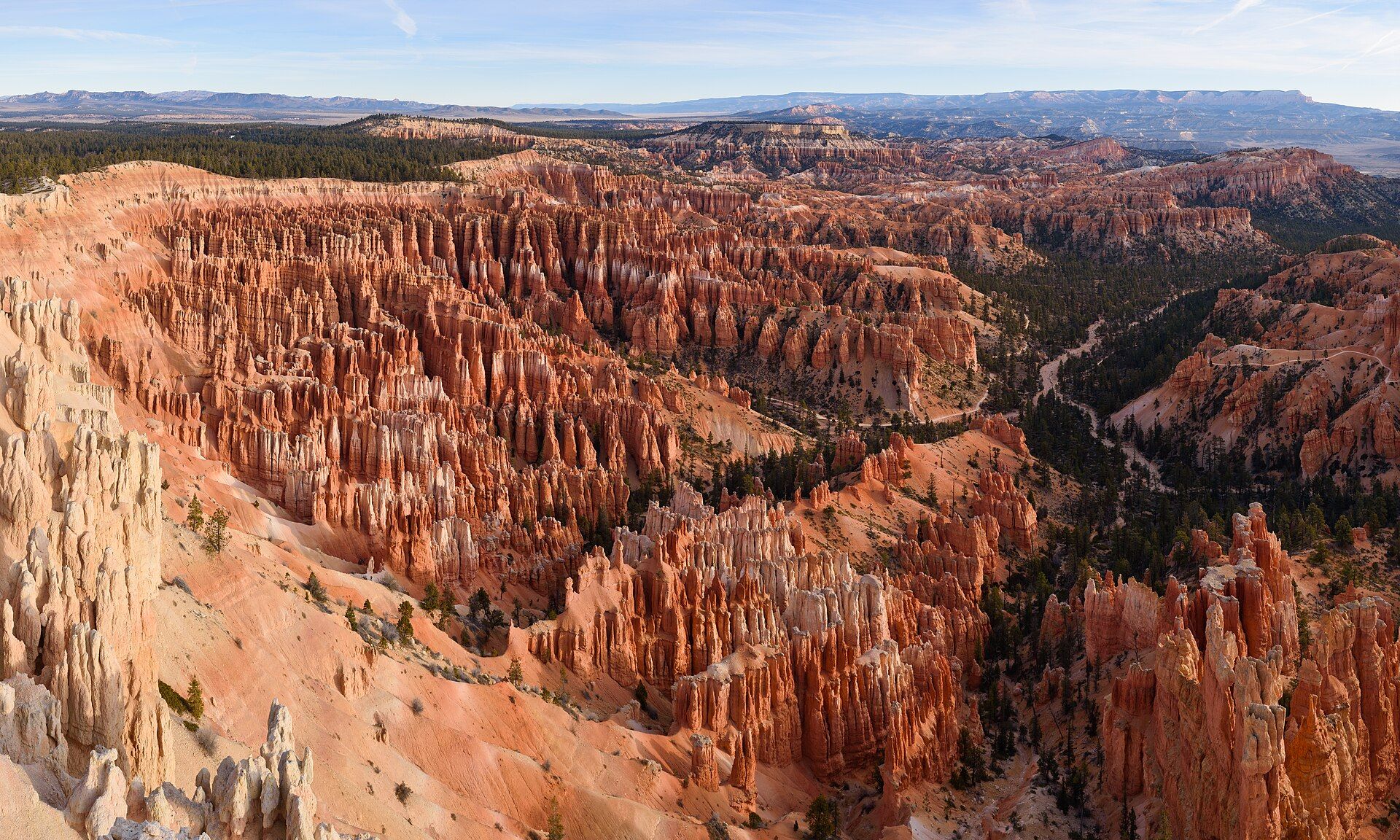
Not really a canyon at all, but a series of vast natural amphitheatres filled with thousands of glowing orange rock spires called hoodoos — the largest concentration of these strange pinnacles on Earth.
What makes it marvelous
Bryce sits high on the edge of a plateau, and its 'hoodoos' are sculpted by an unusual process: frost. Water seeps into the limestone, freezes and expands on some 200 nights a year, and pries the rock apart, while rain dissolves and rounds it — leaving forests of thin, tapering spires banded in orange, pink, and white from iron and manganese. Ranged in great bowl-like amphitheatres and lit to fire by the low sun, they form the largest collection of hoodoos anywhere. At 2,400–2,700 metres, the crisp high air also makes it one of the country's darkest skies for stargazing.
Why visit
Watching sunrise set the amphitheatre of hoodoos ablaze from Bryce Point, then hiking down among the spires on the Navajo Loop, is unforgettable — and after dark, the thin, clear mountain air reveals thousands of stars.
What to know before you go
🗓️ Best time
Late spring through early autumn (roughly May–October) for accessible trails; the high elevation means snow in winter (beautiful, but cold), and summer days are mild rather than scorching.
🧭 Getting there & access
In southern Utah, often paired with Zion, reached from Las Vegas or Salt Lake City. Rim viewpoints and trails descend among the hoodoos; a shuttle runs in peak season.
Good to know
- Catch sunrise from Bryce or Sunrise Point when the hoodoos glow.
- Descend the Navajo Loop / Queen's Garden trail to walk among the spires.
- Stay for the dark skies — Bryce is a superb stargazing spot.
Plan your visit
Moderate🧭 Getting there
From Las Vegas (LAS) or Salt Lake City (SLC)
- Fly to Las Vegas or Salt Lake City
- Drive to Bryce — roughly 4h–4h30 from Las Vegas, about 4h from Salt Lake City
- A park shuttle runs the amphitheatre viewpoints in the busy season
- Total travel
- Most of a day from either hub
- Time at site
- A day for the rim and one descent; two if you want to walk more of the amphitheatre
- Access
- National park entrance fee. The rim road stays open in winter but individual viewpoints and sections close with snow — check park conditions. No permit for day hiking; backcountry camping needs one.
🎒 What to bring & consider
- Warm layers whatever the season — at roughly 2,400–2,700m Bryce is far colder than the Utah desert people picture, and it snows heavily
- Traction devices for icy switchbacks through the cold months
- Water and sun protection; the descent among the hoodoos is exposed and the climb out is the hard half
- Awareness of the altitude if you have come straight from sea level
- Sturdy shoes — the trails are dust in summer and slick mud in spring
👁️ What to expect
- Crowds
- Sunrise and Sunset Points are busy at exactly the hours their names suggest. Fairyland and Peekaboo are far quieter for similar rock.
- Conditions
- Steep dusty switchbacks down into the hoodoos, with flat easy paths along the rim.
- Facilities
- Visitor centre, lodge, food and shuttle inside the park; Bryce Canyon City is right outside.
- The view
- The hoodoos glow when low sun reaches into the amphitheatre — sunrise from Bryce Point is the classic. Snow on orange rock in winter is the underrated version.
Times and requirements are approximate and change with season, weather, and local rules — confirm permits, fares, and schedules with operators before you travel.
Natural riches of the area
- The largest concentration of hoodoos on Earth
- Frost-and-rain-sculpted limestone (Claron Formation)
- High-plateau forest and meadows
- Exceptionally dark night skies
Local food
- Dutch-oven cooking
- Pioneer-style stews and cobblers cooked in cast iron, a regional tradition.
- Bison & trout
- Western game and mountain trout on regional menus.
- Prickly pear & berries
- Desert and mountain fruit used in sweets and drinks.
Bryce Canyon isn’t a canyon carved by a river at all — it’s the crumbling edge of a high plateau, sculpted from above into vast natural amphitheatres crowded with thousands of rock spires called hoodoos. The sculptor is mainly frost: on some 200 nights a year, water seeps into the limestone, freezes, expands, and levers the rock apart, while rain rounds and thins what remains, leaving forests of tapering pinnacles banded orange, pink, and white.
Ranged in great bowls and lit to flame by the rising sun, they form the largest concentration of hoodoos anywhere on Earth. Watching dawn ignite the amphitheatre from the rim, then walking down among the spires, is one of the Southwest’s finest experiences — and because Bryce sits high and far from city lights, the same crisp air that shatters its rocks also opens up some of the darkest, most star-filled skies in the country.
Bryce Canyon: common questions
How do you get to Bryce Canyon?
From Las Vegas (LAS) or Salt Lake City (SLC): Fly to Las Vegas or Salt Lake City; Drive to Bryce — roughly 4h–4h30 from Las Vegas, about 4h from Salt Lake City; A park shuttle runs the amphitheatre viewpoints in the busy season. Allow Most of a day from either hub.
When is the best time to visit Bryce Canyon?
Late spring through early autumn (roughly May–October) for accessible trails; the high elevation means snow in winter (beautiful, but cold), and summer days are mild rather than scorching.
How long should you spend at Bryce Canyon?
A day for the rim and one descent; two if you want to walk more of the amphitheatre. Most of a day from either hub of travel from Las Vegas (LAS) or Salt Lake City (SLC).
What should you bring to Bryce Canyon?
Warm layers whatever the season — at roughly 2,400–2,700m Bryce is far colder than the Utah desert people picture, and it snows heavily Traction devices for icy switchbacks through the cold months Water and sun protection; the descent among the hoodoos is exposed and the climb out is the hard half Awareness of the altitude if you have come straight from sea level Sturdy shoes — the trails are dust in summer and slick mud in spring
Do you need a permit or guide for Bryce Canyon?
National park entrance fee. The rim road stays open in winter but individual viewpoints and sections close with snow — check park conditions. No permit for day hiking; backcountry camping needs one.
Is Bryce Canyon crowded, and what are conditions like?
Sunrise and Sunset Points are busy at exactly the hours their names suggest. Fairyland and Peekaboo are far quieter for similar rock. Steep dusty switchbacks down into the hoodoos, with flat easy paths along the rim. Facilities: visitor centre, lodge, food and shuttle inside the park; Bryce Canyon City is right outside.
Added
More wonders to explore