Caño Cristales
📍 Serranía de la Macarena, Meta, Colombia
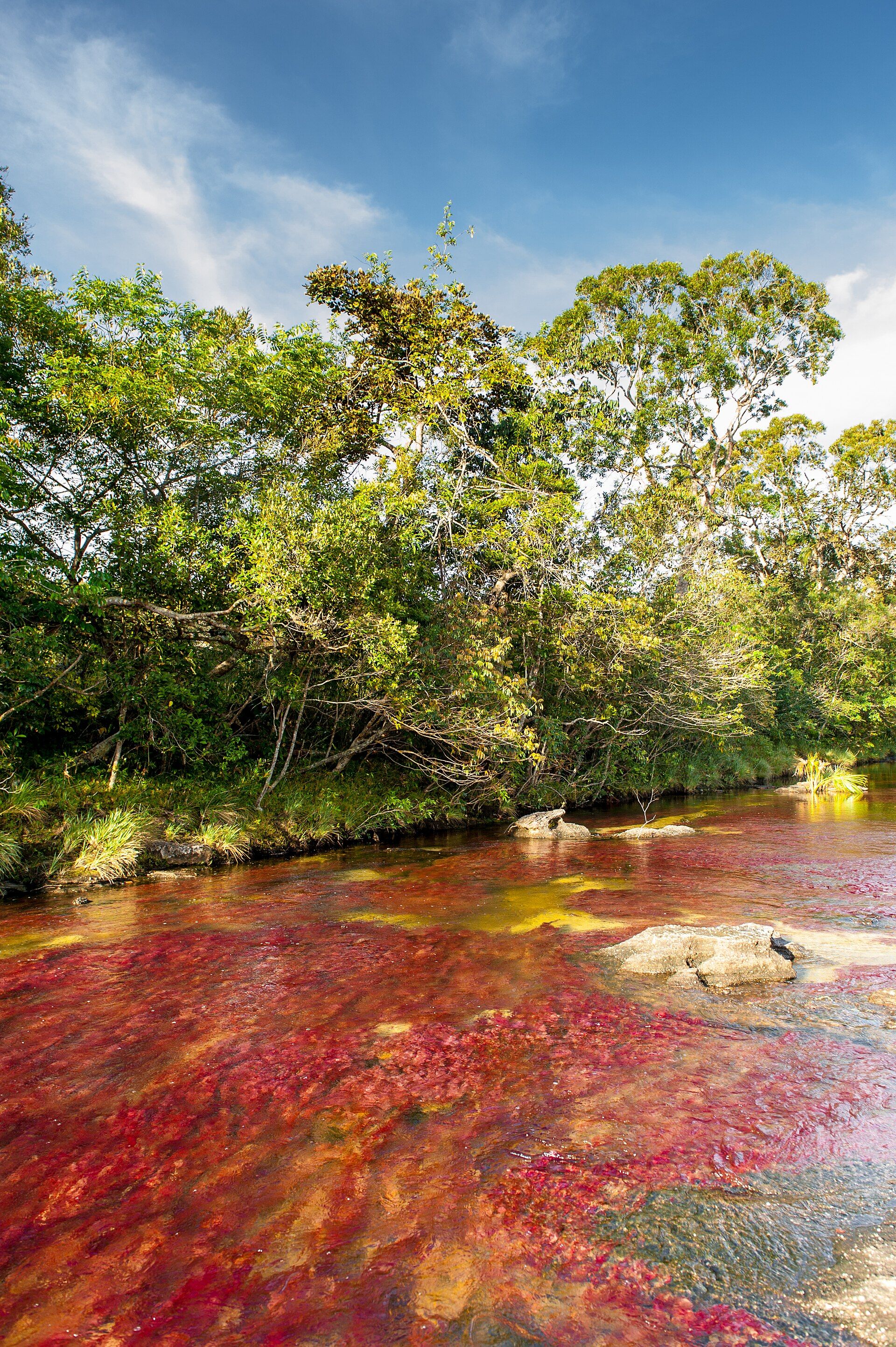
The 'river of five colours' — a crystalline Colombian stream that erupts each season into brilliant reds, pinks, yellows, greens, and blues as a rare aquatic plant blooms across its bed of ancient rock.
What makes it marvelous
For part of the year Caño Cristales looks like an ordinary clear river, but when the water level is just right — not too high, not too low — an endemic aquatic plant called Macarenia clavigera flushes deep red and pink across the riverbed, mingling with green mosses, yellow sand, blue water, and black rock to create a living rainbow. The river runs over some of the oldest exposed rock on Earth, part of the Guiana Shield, sculpted into pools, potholes, and small falls. The colour is a fleeting, purely natural phenomenon found almost nowhere else.
Why visit
Hiking to swim in pools ringed by riotous colour, with the plant glowing crimson beneath crystal water, is a surreal and joyful experience. Its remoteness — deep in a once-conflict-affected region now open to careful tourism — adds to the sense of reaching a hidden marvel.
What to know before you go
🗓️ Best time
Roughly June to November, when water levels allow the Macarenia plant to bloom red; exact timing varies year to year, so check locally.
🧭 Getting there & access
Via the town of La Macarena in Meta, Colombia (usually by light aircraft from Bogotá or Villavicencio), then guided hikes and boat trips into the Serranía de la Macarena. Visits are guide-only and seasonal.
Good to know
- Time your trip to the bloom season and confirm conditions before booking.
- Wear no sunscreen or repellent when entering the water — they harm the plants.
- Go only with authorised local guides; the area is protected and sensitive.
Plan your visit
Moderate🧭 Getting there
From La Macarena, Meta, Colombia
- Join an organised tour that includes the charter flight from Bogotá or Villavicencio
- Fly to La Macarena — the small town at the edge of the Serranía
- Transfer by boat and on foot to the river with a mandatory local guide
- Total travel
- A flight into a two-to-three-day organised trip
- Time at site
- A day or two at the river on a set itinerary
- Access
- This is a guided-tour-only destination, and for good reasons: the river sits in a national park reached by a charter flight to La Macarena, and every visit must go with a certified local guide who leads you along set trails. The colour is seasonal — the red aquatic plant that makes the river glow needs a particular balance of water and sun, so the window runs roughly from June to November and is nothing outside it. To protect the plant, sunscreen and insect repellent are banned in the water and some pools are entered barefoot. The wider region's recent history means checking current advice is sensible.
🎒 What to bring & consider
- An organised tour booked ahead — the charter flight, the park permit and the compulsory guide cannot be arranged on your own
- A visit inside the roughly June-to-November window, because outside it the plant is dormant and the river is just a river
- The discipline to wear no sunscreen or repellent when entering the water, since the chemicals kill the very plant you came to see
- Quick-dry clothes and sturdy sandals or shoes you can wade in over slippery rock
- A dry bag for the boat sections and a hat and long sleeves for sun cover you cannot get from lotion
👁️ What to expect
- Crowds
- Capped and guided, so never overwhelming, but the best pools have a steady rotation of small groups.
- Conditions
- Hot and humid, with easy walking broken by wading and rock-hopping between pools.
- Facilities
- Basic in La Macarena; nothing at the river itself beyond what the tour brings.
- The view
- The riverbed running crimson under clear water with the sun overhead to light the plant — which is exactly why midday, and the right months, matter. Reflections of the surrounding rock in the still pools are the quieter alternative.
Times and requirements are approximate and change with season, weather, and local rules — confirm permits, fares, and schedules with operators before you travel.
Natural riches of the area
- The endemic aquatic plant Macarenia clavigera (the 'colour')
- Ancient Guiana Shield rock sculpted into pools and falls
- A meeting point of Andes, Amazon, and Orinoco ecosystems
- High biodiversity in the Serranía de la Macarena
Local food
- Mamona (grilled beef)
- Llanos-style slow-grilled beef from Colombia's eastern plains.
- Arepas & river fish
- Corn cakes and freshwater fish from the region's rivers.
- Tropical fruit & aguapanela
- Abundant local fruit and a sugar-cane hot drink.
For much of the year, Caño Cristales is simply a clear stream running over old, dark rock in a remote corner of Colombia. But for a few months, when the water sits at just the right level, it transforms: an endemic aquatic plant, Macarenia clavigera, flushes brilliant red and pink across the riverbed, and combined with green mosses, golden sand, blue water, and black stone it turns the whole river into a living rainbow — earning its nickname, the ‘river of five colours’.
It flows over part of the Guiana Shield, some of the oldest exposed rock on the planet, sculpted into pools, potholes, and little waterfalls perfect for swimming. Long hard to reach because of the region’s conflict history, it is now open to careful, guided, seasonal tourism. To hike in and float in a pool ringed by impossible colour, the crimson plant glowing beneath crystal water, is to witness one of nature’s most fleeting and joyful displays.
Caño Cristales: common questions
How do you get to Caño Cristales?
From La Macarena, Meta, Colombia: Join an organised tour that includes the charter flight from Bogotá or Villavicencio; Fly to La Macarena — the small town at the edge of the Serranía; Transfer by boat and on foot to the river with a mandatory local guide. Allow a flight into a two-to-three-day organised trip.
When is the best time to visit Caño Cristales?
Roughly June to November, when water levels allow the Macarenia plant to bloom red; exact timing varies year to year, so check locally.
How long should you spend at Caño Cristales?
A day or two at the river on a set itinerary. A flight into a two-to-three-day organised trip of travel from La Macarena, Meta, Colombia.
What should you bring to Caño Cristales?
An organised tour booked ahead — the charter flight, the park permit and the compulsory guide cannot be arranged on your own A visit inside the roughly June-to-November window, because outside it the plant is dormant and the river is just a river The discipline to wear no sunscreen or repellent when entering the water, since the chemicals kill the very plant you came to see Quick-dry clothes and sturdy sandals or shoes you can wade in over slippery rock A dry bag for the boat sections and a hat and long sleeves for sun cover you cannot get from lotion
Do you need a permit or guide for Caño Cristales?
This is a guided-tour-only destination, and for good reasons: the river sits in a national park reached by a charter flight to La Macarena, and every visit must go with a certified local guide who leads you along set trails. The colour is seasonal — the red aquatic plant that makes the river glow needs a particular balance of water and sun, so the window runs roughly from June to November and is nothing outside it. To protect the plant, sunscreen and insect repellent are banned in the water and some pools are entered barefoot. The wider region's recent history means checking current advice is sensible.
Is Caño Cristales crowded, and what are conditions like?
Capped and guided, so never overwhelming, but the best pools have a steady rotation of small groups. Hot and humid, with easy walking broken by wading and rock-hopping between pools. Facilities: basic in La Macarena; nothing at the river itself beyond what the tour brings.
Added Updated
More wonders to explore