Chitwan National Park
📍 Terai lowlands, southern Nepal
Nepal's first national park — a lush lowland jungle of sal forest, tall grassland, and rivers that shelters greater one-horned rhinos, Bengal tigers, and gharial crocodiles.
What makes it marvelous
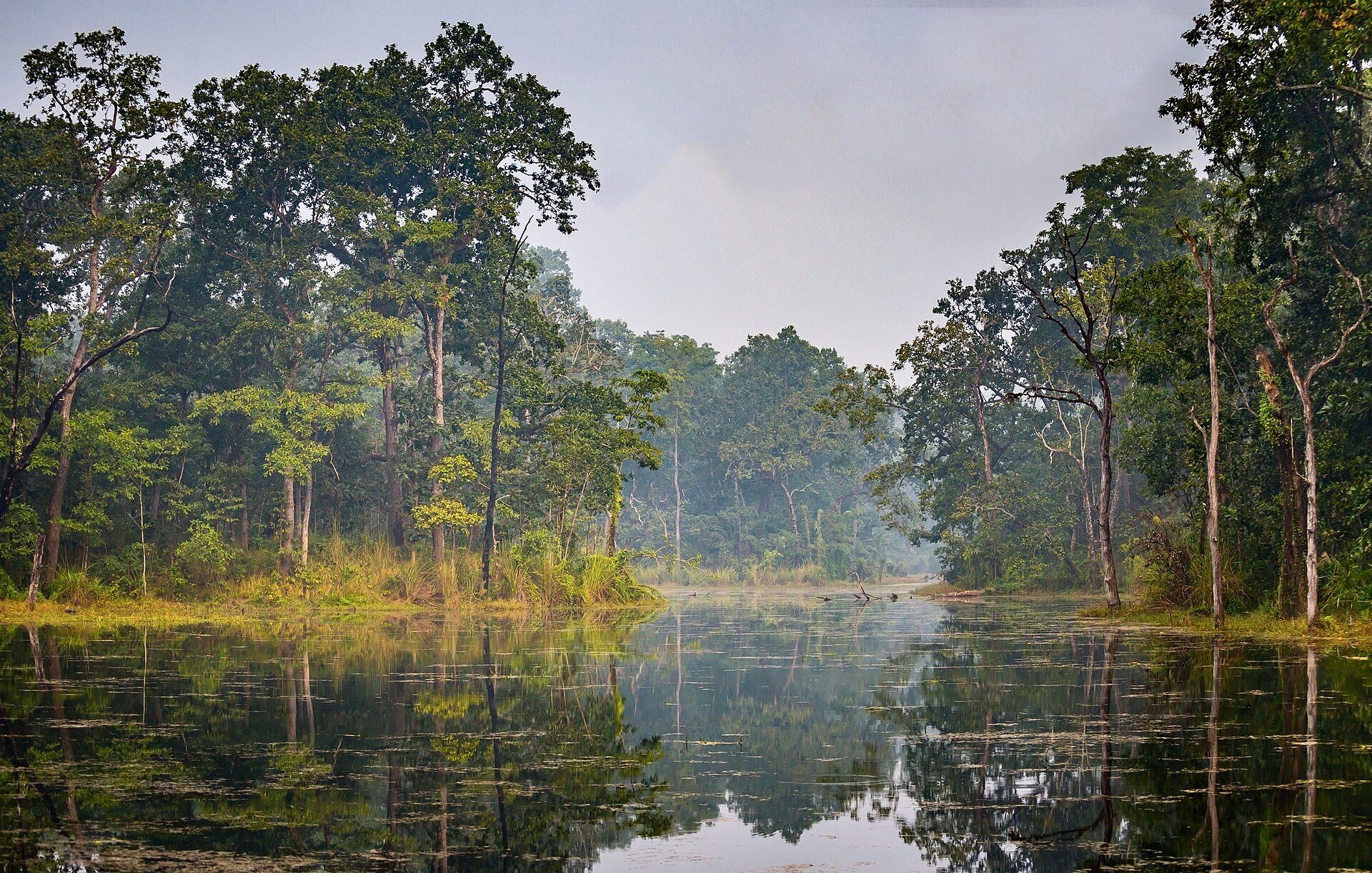
Chitwan protects one of the last great expanses of the Terai — the humid lowland belt at the foot of the Himalaya — a mosaic of tall elephant-grass, riverine forest, oxbow lakes, and sal woodland along the Rapti and Narayani rivers. This rich habitat is a stronghold for some of Asia's most endangered animals: the greater one-horned rhino, whose numbers here have recovered from the brink, the elusive Bengal tiger, sloth bears, wild elephants, and the fish-eating gharial crocodile. A UNESCO World Heritage Site, it was Nepal's very first national park.
Why visit
Chitwan offers a completely different Nepal from the mountains — steamy jungle teeming with wildlife. On foot with a guide, by jeep, or drifting down the river in a dugout canoe, you can watch rhinos graze the grasslands, crocodiles bask on the banks, and countless birds fill the forest, with the ever-present possibility of a tiger. Visits also open a window onto the culture of the local Tharu people, who have lived alongside this jungle for centuries.
More views of Chitwan National Park
Additional photographs of the actual site — each freely licensed, with its photographer and licence credited.
What to know before you go
🗓️ Best time
The dry season, roughly October to March, for comfortable weather and good wildlife viewing as animals gather at water; spring is hotter but active, and the monsoon brings heavy rain and tall grass.
🧭 Getting there & access
In the southern Terai, about 5–6 hours by road from Kathmandu or Pokhara, or a short flight to Bharatpur. Park activities run from the gateway village of Sauraha; entry is by permit with licensed guides.
Good to know
- Combine a jeep safari, a guided walk, and a river canoe trip for the fullest experience.
- Choose ethical operators — ride-free, wildlife-first — and keep a respectful distance.
- Come in the cooler dry months for the best comfort and viewing.
Plan your visit
Easy🧭 Getting there
From Bharatpur (BHR), or by road from Kathmandu/Pokhara
- Fly to Bharatpur, or drive from Kathmandu or Pokhara — 5–6h
- Continue to the gateway village of Sauraha
- Enter the park with a licensed guide for safaris, walks, and canoe trips
- Total travel
- A long day's travel from Kathmandu; best as an overnight stay
- Time at site
- 2–3 days for jeep, walking, and river safaris
- Access
- A ticketed national park entered only with licensed guides; permits are arranged through Sauraha operators. Activities include jeep safaris, guided walks, and river canoe trips; some areas close seasonally.
🎒 What to bring & consider
- Neutral, cover-up clothing and insect repellent for the jungle
- Binoculars and a zoom camera for wildlife and birds
- Sun protection and water for open grassland and river trips
- A reputable, ethical operator and licensed guide
👁️ What to expect
- Crowds
- A popular safari destination but far from crowded; Sauraha is the busy hub, the park itself quiet.
- Conditions
- Hot, humid jungle and grassland; travel by jeep, on foot, and by dugout canoe.
- Facilities
- Lodges and guides in Sauraha; basic facilities inside the park.
- The view
- A one-horned rhino in the tall grass or a gharial on a riverbank, ideally in soft early light. The dry season concentrates wildlife near water.
Times and requirements are approximate and change with season, weather, and local rules — confirm permits, fares, and schedules with operators before you travel.
Natural riches of the area
- Terai sal forest, tall grassland, and river systems
- The greater one-horned rhino and the Bengal tiger
- Gharial and mugger crocodiles, sloth bears, and wild elephants
- Exceptional birdlife and oxbow-lake wetlands
Local food
- Tharu cuisine
- The rice, fish, and foraged-greens cooking of the local Tharu people.
- Dal bhat
- The lentil-and-rice staple that fuels Nepal, mountains to lowlands.
Chitwan is the wild, green counterpoint to Nepal’s famous mountains — a steamy lowland jungle in the Terai belt at the foot of the Himalaya, and the country’s first national park. Along the Rapti and Narayani rivers, it weaves together tall elephant-grass, sal forest, and oxbow lakes into one of South Asia’s richest wildlife habitats. Here the greater one-horned rhino, hunted almost to extinction, has clawed its way back; Bengal tigers move unseen through the grass; and gharial crocodiles, sloth bears, and wild elephants share the forest, under a canopy loud with birds.
To visit is to swap thin mountain air for humid jungle. Guided on foot, by jeep, or drifting downriver in a dugout canoe, you can watch rhinos graze at dusk, crocodiles bask on the sandbanks, and a tiger, just possibly, slip between the trees. The park also offers a glimpse of the Tharu people, who have lived alongside this jungle for generations. A UNESCO World Heritage Site, Chitwan shows a side of Nepal that has nothing to do with snow and everything to do with the teeming life of the lowlands.
Chitwan National Park: common questions
How do you get to Chitwan National Park?
From Bharatpur (BHR), or by road from Kathmandu/Pokhara: Fly to Bharatpur, or drive from Kathmandu or Pokhara — 5–6h; Continue to the gateway village of Sauraha; Enter the park with a licensed guide for safaris, walks, and canoe trips. Allow a long day's travel from kathmandu; best as an overnight stay.
When is the best time to visit Chitwan National Park?
The dry season, roughly October to March, for comfortable weather and good wildlife viewing as animals gather at water; spring is hotter but active, and the monsoon brings heavy rain and tall grass.
How long should you spend at Chitwan National Park?
2–3 days for jeep, walking, and river safaris. A long day's travel from Kathmandu; best as an overnight stay of travel from Bharatpur (BHR), or by road from Kathmandu/Pokhara.
What should you bring to Chitwan National Park?
Neutral, cover-up clothing and insect repellent for the jungle Binoculars and a zoom camera for wildlife and birds Sun protection and water for open grassland and river trips A reputable, ethical operator and licensed guide
Do you need a permit or guide for Chitwan National Park?
A ticketed national park entered only with licensed guides; permits are arranged through Sauraha operators. Activities include jeep safaris, guided walks, and river canoe trips; some areas close seasonally.
Is Chitwan National Park crowded, and what are conditions like?
A popular safari destination but far from crowded; Sauraha is the busy hub, the park itself quiet. Hot, humid jungle and grassland; travel by jeep, on foot, and by dugout canoe. Facilities: lodges and guides in Sauraha; basic facilities inside the park.
Added
More wonders to explore