Dune du Pilat
📍 Arcachon Bay, Gironde, southwestern France
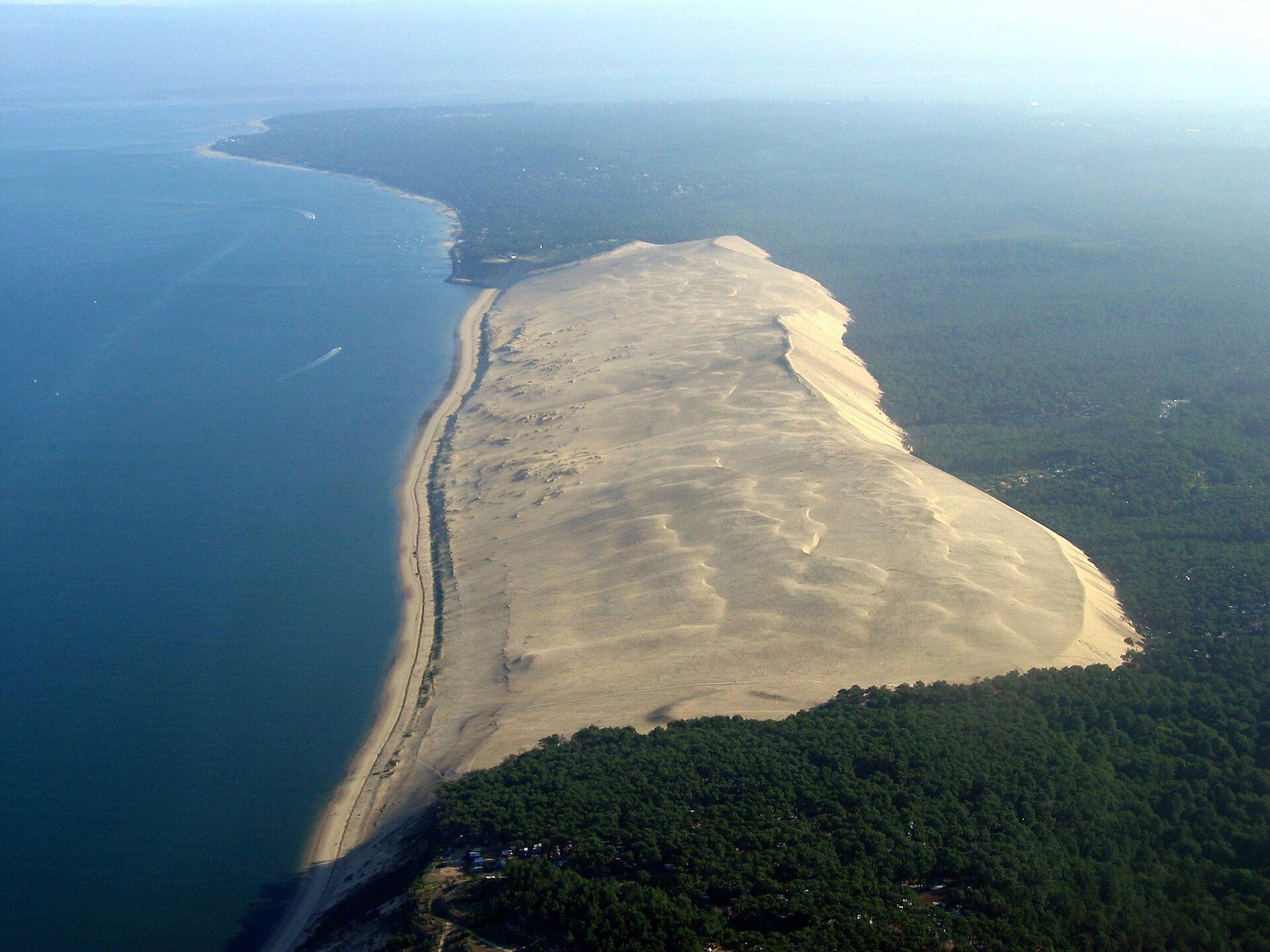
The tallest sand dune in Europe — a vast wave of pale sand over 100 metres high, poised between a great pine forest and the Atlantic on France's southwest coast.
What makes it marvelous
The Dune du Pilat is the highest sand dune in Europe, rising more than 100 metres above the Atlantic shore at the mouth of Arcachon Bay and stretching nearly three kilometres along the coast. Built and endlessly reshaped by wind and tide from sand swept in from the sea and the bay, it is a genuinely mobile mountain of sand, creeping slowly inland and burying the edge of the great pine forest of the Landes behind it. From its crest, forest lies on one side and sea, sandbanks, and the bay on the other.
Why visit
Climbing the dune — a breathless slog up soft sand, often by a seasonal staircase — delivers a sweeping panorama: the dark green forest inland, the blue Atlantic and its shifting sandbanks seaward, and the oyster beds of Arcachon Bay below. It is a favourite spot for paragliding off the seaward face, for watching the sunset from the ridge, and simply for the strange thrill of a desert-scale dune on a European coast.
What to know before you go
🗓️ Best time
Late spring to early autumn (roughly May–September) for warm weather and beach days; summer is busy, so early morning and evening are best for climbing and light.
🧭 Getting there & access
On the coast just south of Arcachon in the Gironde, about an hour by road or train-and-bus from Bordeaux. A short walk from the car park leads to the foot of the dune; a seasonal staircase eases the climb.
Good to know
- Climb early or late to avoid the midday crowds and heat on the sand.
- Go barefoot on the hot sand, but carry shoes for the car park and forest.
- Stay for sunset from the ridge — it's the dune's finest hour.
Plan your visit
Easy🧭 Getting there
From Bordeaux (BOD), southwestern France
- Fly or take the train to Bordeaux
- Road or train-and-bus to Arcachon and the dune — about 1h
- Short walk from the car park to the foot of the dune, then climb
- Total travel
- A half-day trip from Bordeaux
- Time at site
- 1–2 hours to climb, enjoy the view, and descend
- Access
- The site is open access; parking and the seasonal staircase carry small fees. The climb is a strenuous slog up soft sand (a staircase helps in season). Very busy in summer.
🎒 What to bring & consider
- Water and sun protection — the sand is hot and shadeless
- Something to carry sandy shoes in for the climb
- A light layer for breezy evenings on the ridge
- Cash or card for parking and the staircase
👁️ What to expect
- Crowds
- Extremely popular in summer; early morning and evening, and the shoulder seasons, are far calmer.
- Conditions
- A steep, tiring climb up soft sand to an exposed, windy ridge; easy beach and forest below.
- Facilities
- Car park, snack kiosks, and toilets at the base in season; nothing on the dune.
- The view
- The pale dune between dark forest and blue sea, or a paraglider and sunset from the ridge. Low, golden light and fewer crowds reward an early or late visit.
Times and requirements are approximate and change with season, weather, and local rules — confirm permits, fares, and schedules with operators before you travel.
Natural riches of the area
- Europe's tallest sand dune, over 100 m high
- Wind- and tide-built sand, slowly migrating inland
- The pine forest of the Landes behind it
- Arcachon Bay's sandbanks, oyster beds, and birdlife
Local food
- Arcachon oysters
- Fresh oysters farmed in the bay at the dune's foot, eaten with lemon.
- Cannelés
- Small caramelised rum-and-vanilla cakes, a specialty of nearby Bordeaux.
The Dune du Pilat is a mountain of sand on the edge of the Atlantic — the tallest dune in Europe, rising more than 100 metres above the sea at the mouth of Arcachon Bay in southwestern France and running nearly three kilometres along the coast. Wind and tide constantly build and reshape it from sand carried in off the sea and the bay, and the whole vast mass creeps slowly inland, gradually swallowing the edge of the great pine forest of the Landes behind it. It is, in effect, a slow-moving desert on a green European shore.
Climbing it is a breathless haul up soft, shifting sand, but the summit rewards you with an extraordinary contrast: dark forest stretching inland on one side, and on the other the blue Atlantic, its ever-changing sandbanks, and the oyster beds of Arcachon Bay far below. Paragliders launch from the seaward face, families slide down the slopes, and at sunset the whole ridge glows gold. Strange, spectacular, and surprisingly wild, it is one of France’s most-loved natural landmarks.
Dune du Pilat: common questions
How do you get to Dune du Pilat?
From Bordeaux (BOD), southwestern France: Fly or take the train to Bordeaux; Road or train-and-bus to Arcachon and the dune — about 1h; Short walk from the car park to the foot of the dune, then climb. Allow a half-day trip from bordeaux.
When is the best time to visit Dune du Pilat?
Late spring to early autumn (roughly May–September) for warm weather and beach days; summer is busy, so early morning and evening are best for climbing and light.
How long should you spend at Dune du Pilat?
1–2 hours to climb, enjoy the view, and descend. A half-day trip from Bordeaux of travel from Bordeaux (BOD), southwestern France.
What should you bring to Dune du Pilat?
Water and sun protection — the sand is hot and shadeless Something to carry sandy shoes in for the climb A light layer for breezy evenings on the ridge Cash or card for parking and the staircase
Do you need a permit or guide for Dune du Pilat?
The site is open access; parking and the seasonal staircase carry small fees. The climb is a strenuous slog up soft sand (a staircase helps in season). Very busy in summer.
Is Dune du Pilat crowded, and what are conditions like?
Extremely popular in summer; early morning and evening, and the shoulder seasons, are far calmer. A steep, tiring climb up soft sand to an exposed, windy ridge; easy beach and forest below. Facilities: car park, snack kiosks, and toilets at the base in season; nothing on the dune.
Added
More wonders to explore