Geirangerfjord
📍 Sunnmøre, Western Norway
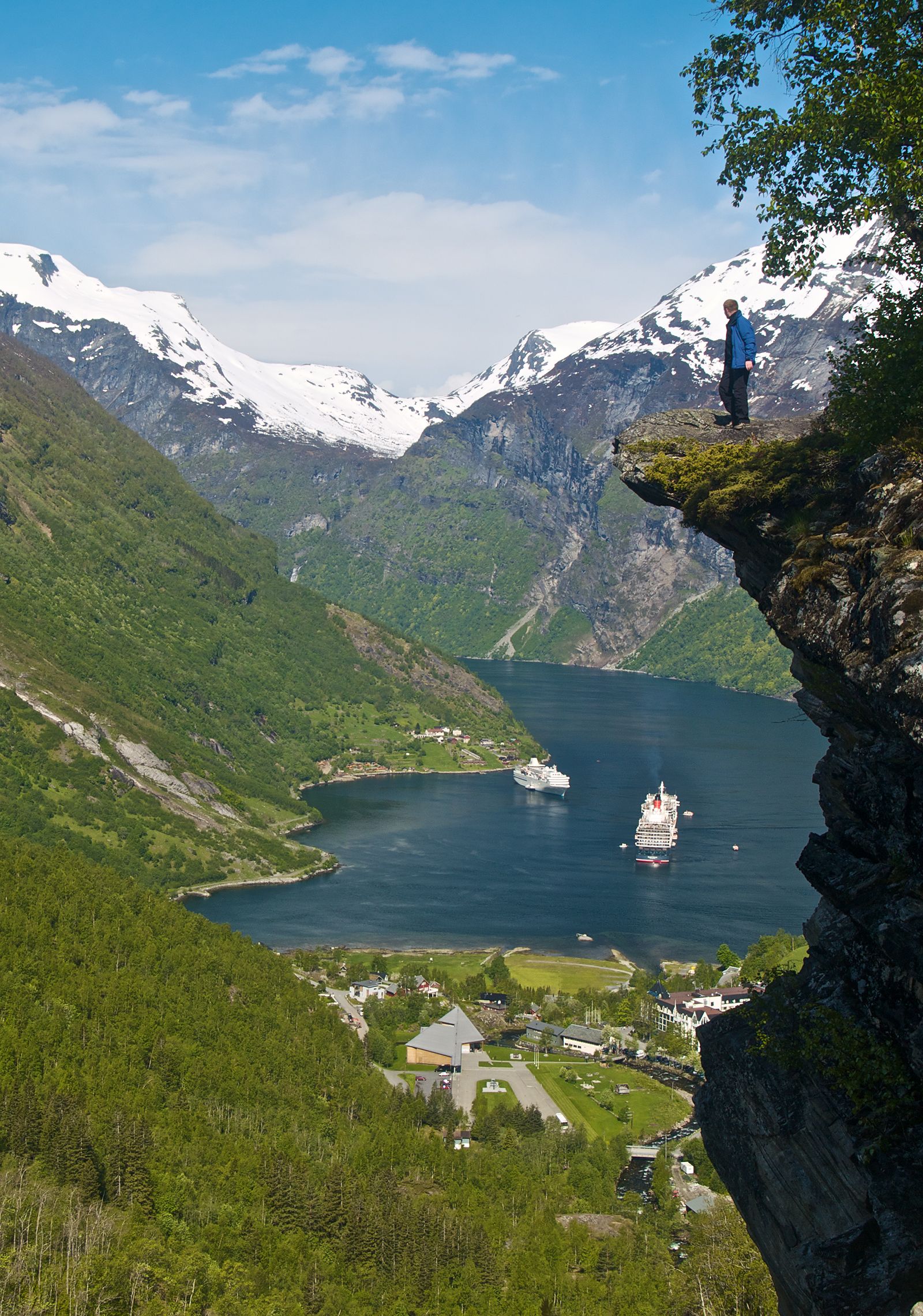
One of the world's most celebrated fjords — a deep, narrow arm of the sea winding between sheer 1,000-metre cliffs laced with waterfalls like the Seven Sisters, with abandoned farms clinging to impossible ledges.
What makes it marvelous
Geirangerfjord was carved by glaciers gouging a valley below sea level; when the ice retreated, the sea flooded in, leaving a fjord over 250 metres deep hemmed by near-vertical walls. Meltwater and rain pour off the heights as dozens of waterfalls — the Seven Sisters, the Suitor, the Bridal Veil — and on ledges high above the water sit the ruins of farms that were worked until the early twentieth century.
Why visit
Sailing its length is one of Europe's great scenic experiences: mirror-still water, cliffs streaked white with falls, and the sheer improbable scale of it. Viewpoints like Dalsnibba and the Eagle Road look down on the whole emerald channel.
What to know before you go
🗓️ Best time
May to September for cruises, hiking, and full waterfalls (fed by snowmelt); the road passes over the mountains are typically snow-closed in winter.
🧭 Getting there & access
Reached by the scenic road over Trollstigen or by ferry/cruise from Hellesylt or Ålesund. The village of Geiranger sits at the fjord's head.
Good to know
- Take the ferry between Geiranger and Hellesylt for the best waterfall views from the water.
- Drive up to the Dalsnibba viewpoint (weather permitting) for the aerial-style panorama.
- Go early or late in the season to avoid peak cruise-ship crowds.
Natural riches of the area
- Glacier-carved fjord geology and steep alpine watersheds
- Dozens of high waterfalls fed by snowmelt
- Cold, deep marine waters rich in fish
- Steep-slope farming heritage and birch/pine forest
Local food
- Fresh Norwegian salmon & trout
- Cold-water fish from the fjords and rivers, served cured (gravlaks) or grilled.
- Fjord goat cheese (geitost)
- Sweet caramel-brown whey cheese from mountain-grazed goats.
- Wild berries
- Bilberries and cloudberries gathered on the high slopes in late summer.
Geirangerfjord is the fjord that ends up on the postcards, and rightly so. Glaciers carved a valley far below today’s sea level; when they melted, the ocean flooded in, leaving a deep, sinuous channel walled by cliffs that rise a thousand metres almost straight from the water. Waterfalls pour down those walls in ribbons — the Seven Sisters cascading in parallel, the Suitor ‘courting’ them from across the fjord.
Look up as you sail and you’ll spot the reason people speak of it with awe: tiny abandoned farmsteads perched on ledges high above the water, worked by families who once climbed ropes to reach their own fields. It is a landscape of extremes — depth, height, and sheer verticality — and one of the crown jewels of Norway’s UNESCO-listed western fjords.
More wonders to explore