Lofoten Islands
📍 Nordland, Arctic Norway
A chain of dramatic Arctic islands where jagged granite peaks rise straight from the sea above white beaches and red fishing villages — improbably mild for its latitude, and lit by the midnight sun and the northern lights.
What makes it marvelous
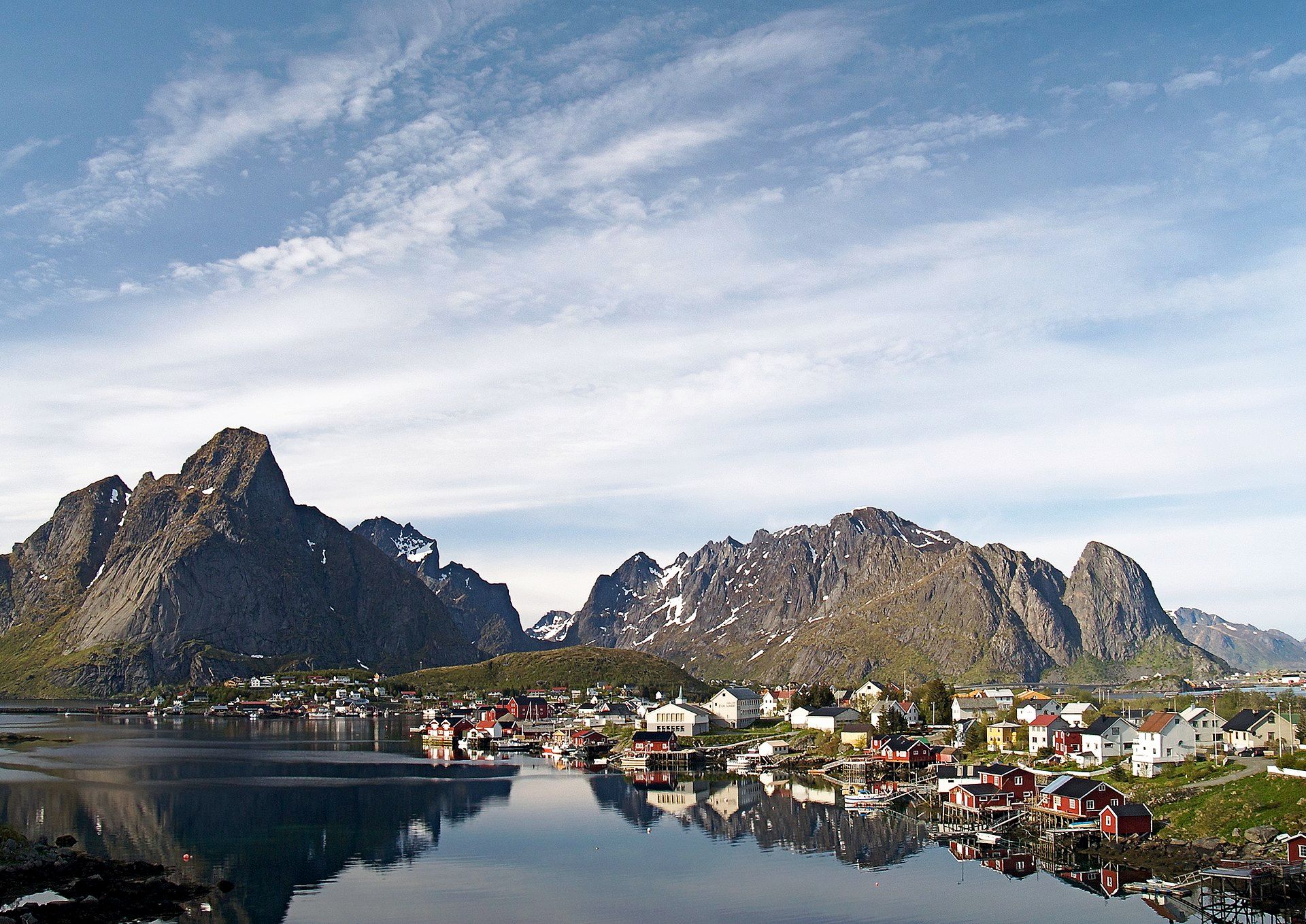
Lofoten's peaks are ancient, hard granite and gneiss, sharpened by glaciers into serrated ridges that plunge to turquoise water and surprisingly white, fine-sand beaches. Though it lies well inside the Arctic Circle, the Gulf Stream keeps it far milder than its latitude suggests, and the surrounding seas host one of the world's great cod fisheries — the basis of the islands' iconic stockfish trade for over a thousand years.
Why visit
The scenery is relentless: sheer mountains, sheltered coves, and photogenic villages of red rorbuer (fishermen's cabins) on stilts over the water. In summer the sun never sets; in winter the aurora dances over the peaks. It's a paradise for hikers, surfers, and photographers.
What to know before you go
🗓️ Best time
June to August for the midnight sun, hiking, and mild weather; September to March for northern lights (and dramatic, colder seas).
🧭 Getting there & access
Reached by air to Leknes/Svolvær, by ferry, or by the scenic E10 road across the islands from the mainland near Narvik.
Good to know
- Drive the E10 slowly — the whole route is a viewpoint; stop at Haukland and Kvalvika beaches.
- Dress for fast-changing Arctic weather even in summer.
- Respect private land around the rorbuer villages and pack out all litter.
Natural riches of the area
- Ancient glacier-sculpted granite and gneiss peaks
- One of the world's richest cod fisheries (skrei)
- White-sand Arctic beaches and clear coastal waters
- Seabird colonies, sea eagles, and orca/whale-rich seas
Local food
- Stockfish (tørrfisk)
- Cod air-dried on wooden racks for centuries — Lofoten's signature export and dish.
- Fresh skrei cod
- The winter-spawning Arctic cod, poached with liver and roe in the traditional way.
- Cloudberries
- Amber Arctic berries gathered in late summer, served with cream.
Lofoten looks almost invented: a wall of sharp granite peaks rising straight out of the Norwegian Sea, with white-sand beaches and turquoise coves tucked beneath them, and clusters of red cabins on stilts over the water. The mountains are some of Earth’s oldest rock, ground to serrated ridges by Ice Age glaciers, and the contrast between their severity and the soft beaches at their feet is what makes the islands so striking.
For all its Arctic drama, Lofoten is surprisingly liveable, thanks to the Gulf Stream that keeps its winters mild. That warmth, and the rich cod fishery offshore, built a thousand-year culture around stockfish — cod air-dried on wooden racks and traded across Europe. Come in summer for the midnight sun and hiking, or in the dark months for the aurora over the peaks; either way, few coastlines on the planet are this concentrated in beauty.
More wonders to explore