Glacier National Park
📍 Montana, USA
The 'Crown of the Continent' — a wilderness of knife-edged peaks, hanging valleys, turquoise glacial lakes, and alpine meadows in the northern Rockies, crossed by one of the world's great mountain roads.
What makes it marvelous
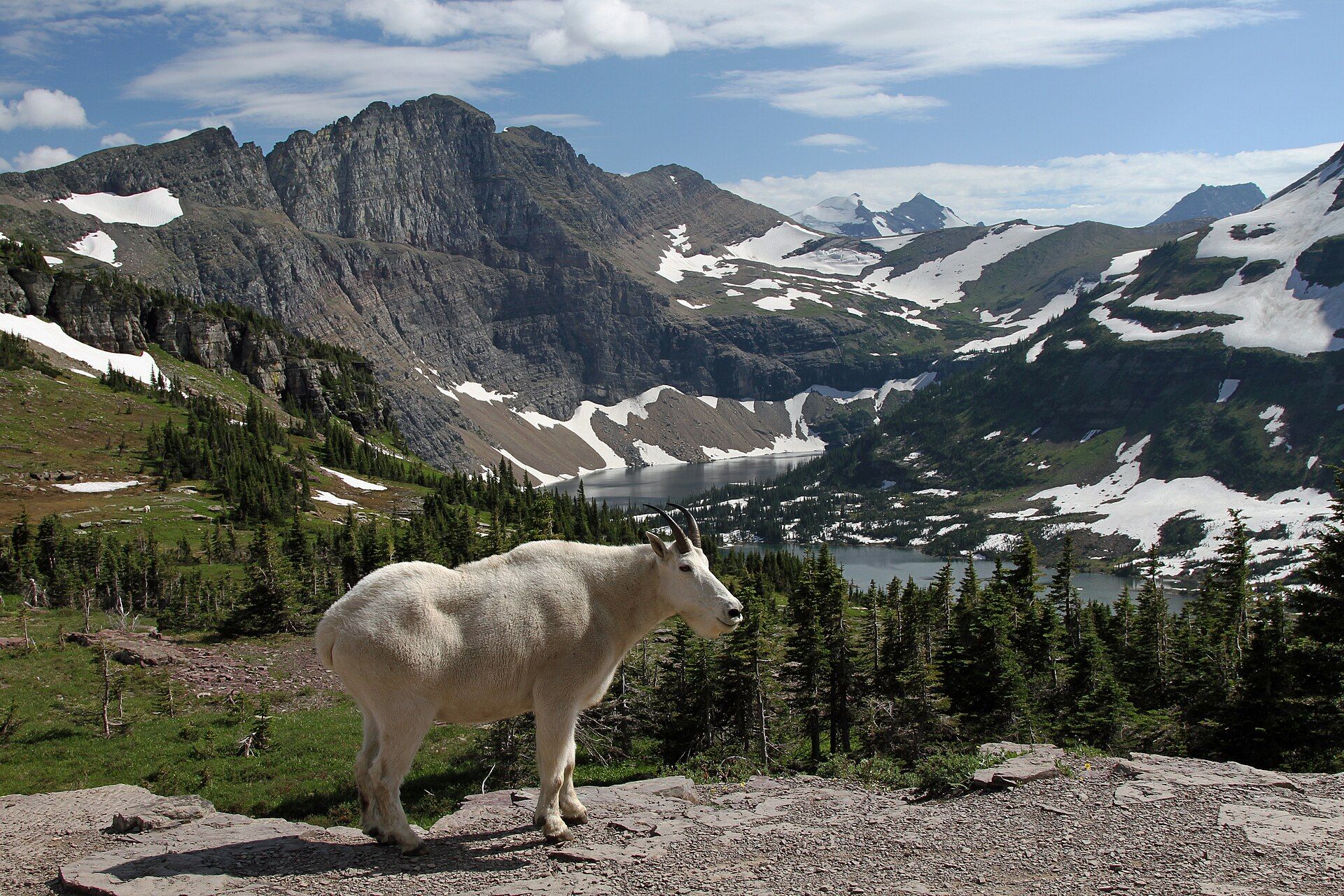
Glacier National Park protects a million acres of the northern Rocky Mountains in Montana — a landscape sculpted by Ice Age glaciers into serrated ridges, horn peaks, U-shaped valleys, and cirques cradling water of vivid turquoise. Its lakes and streams run glacier-milk blue and green; wildflower meadows blaze in the brief summer; and the terrain shelters grizzly and black bears, mountain goats, bighorn sheep, wolverines, and lynx. Straddling the Continental Divide, it is called the 'Crown of the Continent' for the rivers that radiate from it toward three different oceans. Threading through the heart of it is the Going-to-the-Sun Road, an engineering marvel that climbs over Logan Pass with staggering views — one of the most spectacular mountain drives on Earth. With its Canadian neighbour it forms the world's first International Peace Park, a UNESCO World Heritage Site.
Why visit
Driving the Going-to-the-Sun Road past hanging glaciers and turquoise lakes, then hiking into meadows alive with wildflowers and mountain goats, makes Glacier one of the most beautiful and rewarding mountain wildernesses in North America.
What to know before you go
🗓️ Best time
Summer (roughly July–September), when the high Going-to-the-Sun Road is fully open, trails are clear of snow, and the alpine meadows bloom; much of the park is snowbound the rest of the year.
🧭 Getting there & access
In northwestern Montana, reached via Kalispell or the park's gateway towns; the Going-to-the-Sun Road crosses the park in summer, with a shuttle system, trailheads, and historic lodges along the way.
Good to know
- Drive the Going-to-the-Sun Road — but note it's only fully open in summer.
- Start hikes early and carry bear spray; this is grizzly country.
- Use the park shuttle in peak season, when parking fills fast.
Plan your visit
Moderate🧭 Getting there
From Kalispell (FCA) or Whitefish, Montana
- Fly → Kalispell (FCA)
- Drive Kalispell → West Glacier — roughly 40 minutes
- Drive the Going-to-the-Sun Road → Logan Pass — about 1h from West Glacier when the road is fully open
- Or approach the east side via St Mary — roughly 3h round the park
- Total travel
- Under an hour from the airport to the west entrance
- Time at site
- Three to four days for both sides of the divide
- Access
- National park entry fee. The two things that actually govern a visit are the road and the season. The Going-to-the-Sun Road is only fully open for a few months, typically from around late June or early July until the first serious autumn snow, and plowing dates vary by weeks year to year. The park has also operated vehicle reservation requirements for the corridor in recent seasons, with the details revised annually — do not rely on last year's arrangement. Check the National Park Service for current road status and entry requirements.
🎒 What to bring & consider
- Bear spray on your person, not in the pack — this is grizzly country, the park says so at every trailhead, and you cannot fly with it so buy or rent locally
- A very early start for Logan Pass, where the car park is routinely full before seven in the morning
- Layers for a place that can deliver sun, hail and freezing wind on the same afternoon at the pass
- A vehicle within the size limits for the Going-to-the-Sun Road, which restricts length and width on the alpine section
- A flexible plan, since the road, the shuttle and the trails all open and close on snow and fire
👁️ What to expect
- Crowds
- Concentrated into July and August, and concentrated further onto one road. Hike a mile and it thins out sharply.
- Conditions
- Alpine — snow lingers on high trails into July, and afternoon storms are common. The road itself is narrow and exposed.
- Facilities
- Lodges, campgrounds, shuttles and visitor centres, mostly seasonal. Limited services in winter.
- The view
- The Garden Wall from the Highline Trail, or Wild Goose Island in St Mary Lake at sunrise. Both are best in the first hour of light, which is also the only hour with parking.
Times and requirements are approximate and change with season, weather, and local rules — confirm permits, fares, and schedules with operators before you travel.
Natural riches of the area
- Glacier-carved peaks, cirques, and turquoise alpine lakes
- Wildflower meadows and old-growth forest
- Grizzlies, mountain goats, bighorn sheep, and wolverines
- The Continental Divide — 'Crown of the Continent'
Local food
- Montana bison & beef
- Ranch-raised bison and beef from the surrounding high plains.
- Freshwater trout
- Trout from the park's cold rivers and lakes.
- Huckleberries
- Wild mountain huckleberries in pies, jams, and everything else come summer.
Glacier National Park is the ‘Crown of the Continent.’ Across a million acres of Montana’s northern Rockies, Ice Age glaciers have carved a landscape of knife-edged ridges, horn peaks, hanging valleys, and cirques cradling lakes of vivid turquoise. Straddling the Continental Divide, its waters radiate toward three different oceans, and its brief, brilliant summers bring meadows ablaze with wildflowers and slopes roamed by grizzlies, mountain goats, and bighorn sheep.
Threading through the heart of it is the Going-to-the-Sun Road, an engineering marvel that climbs over Logan Pass with views that stop the breath — one of the great mountain drives anywhere. Hike from its high points into alpine meadows, or paddle a glacier-fed lake beneath the peaks, and it’s clear why Glacier — which joins its Canadian neighbour as the world’s first International Peace Park and a UNESCO World Heritage Site — ranks among the most beautiful mountain wildernesses in North America.
Glacier National Park: common questions
How do you get to Glacier National Park?
From Kalispell (FCA) or Whitefish, Montana: Fly → Kalispell (FCA); Drive Kalispell → West Glacier — roughly 40 minutes; Drive the Going-to-the-Sun Road → Logan Pass — about 1h from West Glacier when the road is fully open; Or approach the east side via St Mary — roughly 3h round the park. Allow Under an hour from the airport to the west entrance.
When is the best time to visit Glacier National Park?
Summer (roughly July–September), when the high Going-to-the-Sun Road is fully open, trails are clear of snow, and the alpine meadows bloom; much of the park is snowbound the rest of the year.
How long should you spend at Glacier National Park?
Three to four days for both sides of the divide. Under an hour from the airport to the west entrance of travel from Kalispell (FCA) or Whitefish, Montana.
What should you bring to Glacier National Park?
Bear spray on your person, not in the pack — this is grizzly country, the park says so at every trailhead, and you cannot fly with it so buy or rent locally A very early start for Logan Pass, where the car park is routinely full before seven in the morning Layers for a place that can deliver sun, hail and freezing wind on the same afternoon at the pass A vehicle within the size limits for the Going-to-the-Sun Road, which restricts length and width on the alpine section A flexible plan, since the road, the shuttle and the trails all open and close on snow and fire
Do you need a permit or guide for Glacier National Park?
National park entry fee. The two things that actually govern a visit are the road and the season. The Going-to-the-Sun Road is only fully open for a few months, typically from around late June or early July until the first serious autumn snow, and plowing dates vary by weeks year to year. The park has also operated vehicle reservation requirements for the corridor in recent seasons, with the details revised annually — do not rely on last year's arrangement. Check the National Park Service for current road status and entry requirements.
Is Glacier National Park crowded, and what are conditions like?
Concentrated into July and August, and concentrated further onto one road. Hike a mile and it thins out sharply. Alpine — snow lingers on high trails into July, and afternoon storms are common. The road itself is narrow and exposed. Facilities: lodges, campgrounds, shuttles and visitor centres, mostly seasonal. Limited services in winter.
Added
More wonders to explore