Grand Teton
📍 Wyoming, USA
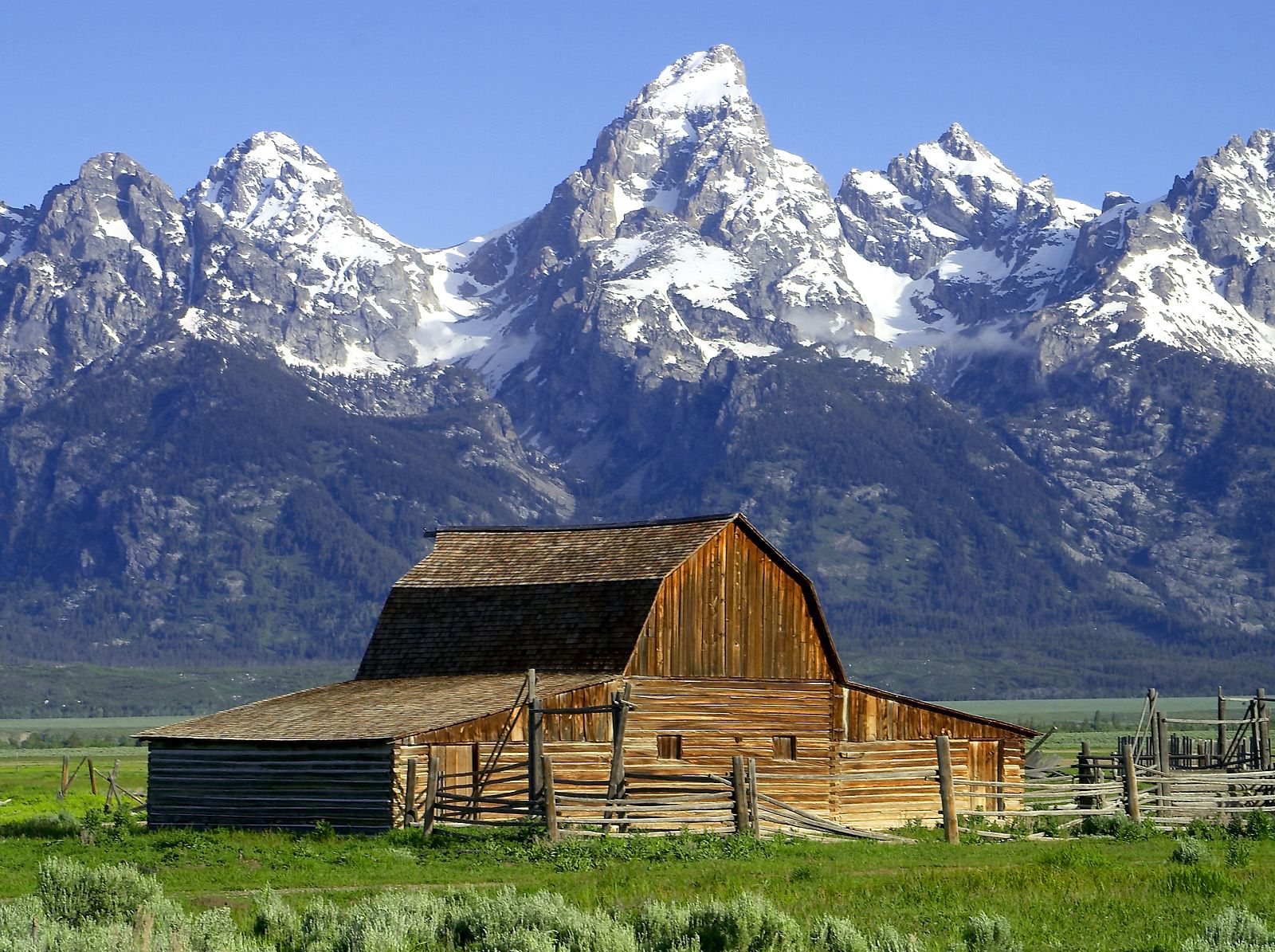
A wall of jagged granite peaks erupting straight from a flat valley floor with no foothills — the most abruptly dramatic mountain front in North America, mirrored in glacial lakes.
What makes it marvelous
The Teton Range is a geological rarity: a young fault-block range that rises in a sheer 2,000-metre wall directly from the flat sagebrush plain of Jackson Hole, with almost no foothills to soften the transition. The effect is startling — a serrated skyline of granite spires, crowned by the 4,199-metre Grand Teton, that seems to erupt out of nowhere. At their feet, a string of glacier-carved lakes, Jenny and Jackson among them, hold perfect reflections of the peaks, while the Snake River winds through the valley. The range is still actively growing along its fault. Moose, bison, elk, bears, and pronghorn move across the valley below, making it one of the finest combinations of mountain drama and accessible wildlife in the American West.
Why visit
Few mountain views on Earth hit as hard as the first sight of the Tetons rising sheer from the valley — and you can take it in from a lakeshore, a canoe, or an easy trail, with moose and bison grazing nearby.
What to know before you go
🗓️ Best time
Summer and early autumn (roughly June–September) for open roads, trails, and wildflowers; September brings elk rut and golden aspens, while winter buries the park in deep snow.
🧭 Getting there & access
In northwestern Wyoming, just south of Yellowstone and beside the town of Jackson; a scenic park road runs along the range, with trailheads, lakeshores, and boat access at Jenny Lake.
Good to know
- Catch sunrise at Schwabacher Landing or Oxbow Bend for the classic reflections.
- Take the Jenny Lake shuttle boat to shortcut into Cascade Canyon.
- Carry bear spray — this is grizzly and black bear country.
Plan your visit
Moderate🧭 Getting there
From Jackson, Wyoming (JAC — the airport is inside the park)
- Fly → Jackson Hole (JAC), or drive from Salt Lake City — roughly 4h30–5h
- Drive Jackson → Moose entrance — about 20 minutes
- Drive Moose → Jenny Lake — a further 15–20 minutes
- Total travel
- Under an hour from the airport to the range
- Time at site
- Three days to combine viewpoints, a canyon hike and the wildlife hours
- Access
- National park entry fee, or an annual pass shared with Yellowstone just to the north. The season is the real gate: the interior Teton Park Road closes to vehicles through winter and becomes a ski and bike route, and high trails hold snow well into summer. Backcountry camping needs a permit. Boat shuttle operation on Jenny Lake is seasonal. Confirm road, trail and shuttle status with the National Park Service before relying on any of it.
🎒 What to bring & consider
- Bear spray, carried on your hip and not in your pack — this is grizzly country and the park says so at every trailhead. Rent or buy it in Jackson; you cannot fly with it
- Layers for a 20-degree swing between a frozen dawn at Oxbow Bend and a hot afternoon in the sage
- An early alarm, because both the light and the wildlife are in the first two hours after sunrise and the wind picks up on the lakes by mid-morning
- Sun protection at around 2,000m, where the high-altitude sun burns faster than the temperature suggests
- A vehicle — the park is long and thin, distances between viewpoints are real, and public transport does not serve them
👁️ What to expect
- Crowds
- Heavy at Jenny Lake, Schwabacher Landing and the Mormon Row barns, especially at sunrise. Canyon trails thin out quickly past the first mile.
- Conditions
- Straightforward walking on maintained trails, with real altitude and afternoon thunderstorms in summer. Snow lingers in the canyons.
- Facilities
- Excellent — visitor centres, lodges, campgrounds, food and fuel, plus a full town at Jackson.
- The view
- The range rises straight out of flat sage with no foothills, so it photographs well from almost anywhere. The postcard is the Snake River Overlook or the barn at Mormon Row at first light, and both will have a line of tripods already there. Still water at Schwabacher Landing before the wind starts is the version worth getting up for.
Times and requirements are approximate and change with season, weather, and local rules — confirm permits, fares, and schedules with operators before you travel.
Natural riches of the area
- A fault-block range rising ~2,000 m with no foothills
- The Grand Teton (4,199 m) and a skyline of granite spires
- Glacier-carved lakes and the Snake River valley
- Moose, bison, elk, pronghorn, and grizzly bears
Local food
- Wyoming bison & elk
- Game meats are a staple of the northern Rockies table.
- Mountain trout
- Trout from the Snake River and alpine lakes.
- Huckleberries
- Wild huckleberries in jams, pies, and drinks come late summer.
Nothing prepares you for the Tetons. Most mountain ranges rise gradually through foothills; this one does not. The Teton Range is a young fault-block range that lifts in a sheer wall some 2,000 metres straight out of the flat sagebrush floor of Jackson Hole, a serrated skyline of granite spires crowned by the 4,199-metre Grand Teton. The abruptness is the whole drama — the peaks seem to erupt from nowhere.
At their feet lies a string of glacier-carved lakes, Jenny and Jackson among them, holding mirror reflections of the range on still mornings, while the Snake River loops through the valley. The mountains are still growing along their fault. And below them, moose, bison, elk, pronghorn, and bears move across the flats, making Grand Teton one of the finest places in the American West to combine staggering mountain scenery with genuinely accessible wildlife.
Grand Teton: common questions
How do you get to Grand Teton?
From Jackson, Wyoming (JAC — the airport is inside the park): Fly → Jackson Hole (JAC), or drive from Salt Lake City — roughly 4h30–5h; Drive Jackson → Moose entrance — about 20 minutes; Drive Moose → Jenny Lake — a further 15–20 minutes. Allow Under an hour from the airport to the range.
When is the best time to visit Grand Teton?
Summer and early autumn (roughly June–September) for open roads, trails, and wildflowers; September brings elk rut and golden aspens, while winter buries the park in deep snow.
How long should you spend at Grand Teton?
Three days to combine viewpoints, a canyon hike and the wildlife hours. Under an hour from the airport to the range of travel from Jackson, Wyoming (JAC — the airport is inside the park).
What should you bring to Grand Teton?
Bear spray, carried on your hip and not in your pack — this is grizzly country and the park says so at every trailhead. Rent or buy it in Jackson; you cannot fly with it Layers for a 20-degree swing between a frozen dawn at Oxbow Bend and a hot afternoon in the sage An early alarm, because both the light and the wildlife are in the first two hours after sunrise and the wind picks up on the lakes by mid-morning Sun protection at around 2,000m, where the high-altitude sun burns faster than the temperature suggests A vehicle — the park is long and thin, distances between viewpoints are real, and public transport does not serve them
Do you need a permit or guide for Grand Teton?
National park entry fee, or an annual pass shared with Yellowstone just to the north. The season is the real gate: the interior Teton Park Road closes to vehicles through winter and becomes a ski and bike route, and high trails hold snow well into summer. Backcountry camping needs a permit. Boat shuttle operation on Jenny Lake is seasonal. Confirm road, trail and shuttle status with the National Park Service before relying on any of it.
Is Grand Teton crowded, and what are conditions like?
Heavy at Jenny Lake, Schwabacher Landing and the Mormon Row barns, especially at sunrise. Canyon trails thin out quickly past the first mile. Straightforward walking on maintained trails, with real altitude and afternoon thunderstorms in summer. Snow lingers in the canyons. Facilities: excellent — visitor centres, lodges, campgrounds, food and fuel, plus a full town at Jackson.
Added
More wonders to explore