Huangshan
📍 Anhui Province, China
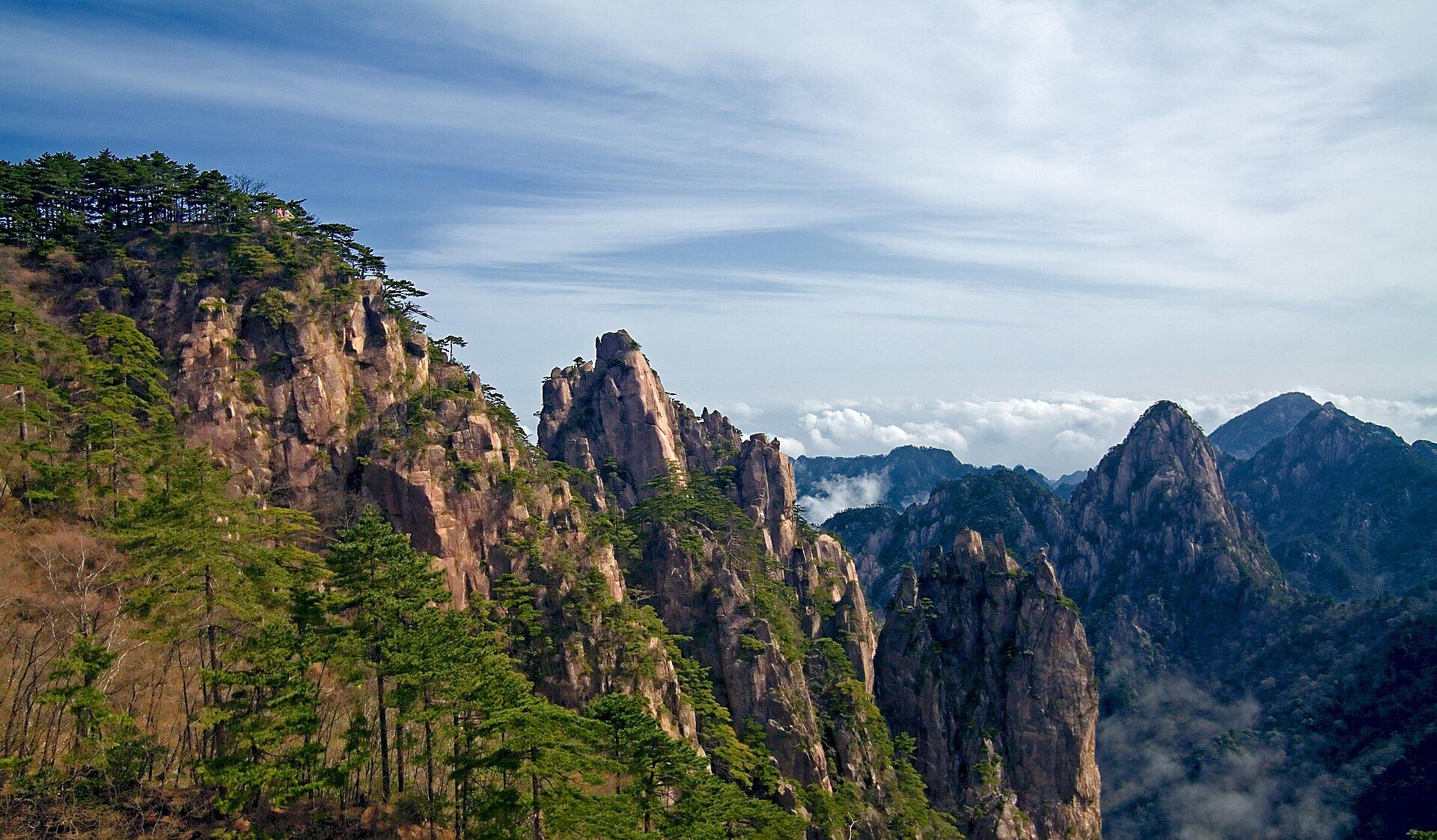
The 'Yellow Mountains' — a range of granite peaks and wind-sculpted pines that rise from seas of cloud, the landscape that inspired centuries of Chinese painting and poetry.
What makes it marvelous
Huangshan is the quintessential Chinese mountain scene made real: sharp granite spires, gnarled pines clinging to bare rock, and oceans of cloud that lap at the summits at dawn. Its 'four wonders' — oddly shaped pines, grotesque rocks, seas of cloud, and hot springs — have drawn painters, poets, and pilgrims for well over a thousand years, and the range is often called the model for the vertical landscapes of classical Chinese art. Sunrise from the high ridges, with peaks floating as islands above the cloud, is one of the most iconic sights in all of China. It is a UNESCO World Heritage Site for both its beauty and its biodiversity.
Why visit
Climbing (or riding the cable car) into a world of granite spires, twisted pines, and rolling cloud seas — and catching sunrise from a summit ridge — is a landscape experience unlike any other, steeped in the aesthetics of Chinese art.
What to know before you go
🗓️ Best time
Spring and autumn (roughly April–May and September–November) for clear light and cloud seas; winter offers snow-frosted pines. Summer is green but crowded and often hazy.
🧭 Getting there & access
In southern Anhui Province, reached via Huangshan City and Tangkou. Cable cars carry visitors up to the peak trails; summit hotels allow sunrise viewing. Extensive stone paths link the viewpoints.
Good to know
- Stay overnight on the summit to catch sunrise above the clouds.
- Come in spring or autumn for the clearest cloud seas.
- Use the cable cars to save energy for the ridge trails.
Plan your visit
Strenuous🧭 Getting there
From Huangshan (TXN), or Huangshan North on the high-speed rail
- High-speed rail Shanghai or Hangzhou → Huangshan North — roughly 2h30–3h from Shanghai
- Bus to Tangkou at the mountain base — about 1h
- Cable car to the summit area, or a climb of roughly 3–4h on foot
- Total travel
- Half a day from Shanghai
- Time at site
- Two days with a night on the summit, which is rather the point
- Access
- Park entrance ticket plus separate cable car tickets, priced differently in peak and off-peak seasons. Summit hotels are the only way to be up there for sunrise and must be booked far ahead. Some trails close for maintenance, and for ice in winter.
🎒 What to bring & consider
- Layers and a windproof — the summit is markedly colder and wetter than the valley, and ices over in winter
- Shoes with grip for tens of thousands of stone steps, polished smooth and slick in rain
- Much less luggage than you would like; porters charge by weight and you carry whatever they do not
- Water bought at the base, since prices climb steadily with the altitude
- A local payment app or cash, because foreign cards are widely useless here
👁️ What to expect
- Crowds
- Extremely busy during Chinese public holidays, when cable car queues run to hours. Weekdays outside holiday season are a different mountain.
- Conditions
- Relentless stone staircases — thousands of steps, steep and exposed in places, with narrow sections that bottleneck badly.
- Facilities
- Hotels, restaurants and toilets along the summit ridge, and frequent kiosks on the main routes.
- The view
- The sea of clouds is the famous image and it depends on humidity and a temperature inversion — most likely after rain and in the cooler months. It cannot be scheduled.
Times and requirements are approximate and change with season, weather, and local rules — confirm permits, fares, and schedules with operators before you travel.
Natural riches of the area
- Granite peaks and wind-sculpted Huangshan pines
- Seas of cloud and dramatic sunrises
- Hot springs at the mountain's base
- Rich montane forest and biodiversity
Local food
- Huangshan stone frog & bamboo shoots
- Local mountain specialities of the Anhui highlands.
- Anhui (Hui) cuisine
- Known for wild herbs, stewed dishes, and the region's famous braised mandarin fish.
- Maofeng green tea
- A celebrated tea grown on the slopes of Huangshan.
Huangshan is the mountain that Chinese art has been painting for a thousand years. Rising from southern Anhui, the ‘Yellow Mountains’ lift a forest of sharp granite spires into the sky, their ledges gripped by gnarled, wind-bent pines, while seas of cloud pool between the peaks and lap at the ridges. At dawn the summits float like islands above the mist — one of the most iconic images in all of China.
The mountain’s ‘four wonders’ — its strange pines, grotesque rocks, cloud seas, and hot springs — have drawn poets, painters, and pilgrims for centuries, and Huangshan is often called the very model for the vertical, misty landscapes of classical Chinese painting. A UNESCO World Heritage Site treasured for both beauty and biodiversity, it rewards those who climb (or ride the cable car) to its high ridges, and especially those who stay to watch the sun rise over the clouds.
Huangshan: common questions
How do you get to Huangshan?
From Huangshan (TXN), or Huangshan North on the high-speed rail: High-speed rail Shanghai or Hangzhou → Huangshan North — roughly 2h30–3h from Shanghai; Bus to Tangkou at the mountain base — about 1h; Cable car to the summit area, or a climb of roughly 3–4h on foot. Allow Half a day from Shanghai.
When is the best time to visit Huangshan?
Spring and autumn (roughly April–May and September–November) for clear light and cloud seas; winter offers snow-frosted pines. Summer is green but crowded and often hazy.
How long should you spend at Huangshan?
Two days with a night on the summit, which is rather the point. Half a day from Shanghai of travel from Huangshan (TXN), or Huangshan North on the high-speed rail.
What should you bring to Huangshan?
Layers and a windproof — the summit is markedly colder and wetter than the valley, and ices over in winter Shoes with grip for tens of thousands of stone steps, polished smooth and slick in rain Much less luggage than you would like; porters charge by weight and you carry whatever they do not Water bought at the base, since prices climb steadily with the altitude A local payment app or cash, because foreign cards are widely useless here
Do you need a permit or guide for Huangshan?
Park entrance ticket plus separate cable car tickets, priced differently in peak and off-peak seasons. Summit hotels are the only way to be up there for sunrise and must be booked far ahead. Some trails close for maintenance, and for ice in winter.
Is Huangshan crowded, and what are conditions like?
Extremely busy during Chinese public holidays, when cable car queues run to hours. Weekdays outside holiday season are a different mountain. Relentless stone staircases — thousands of steps, steep and exposed in places, with narrow sections that bottleneck badly. Facilities: hotels, restaurants and toilets along the summit ridge, and frequent kiosks on the main routes.
Added
More wonders to explore