Lake Natron
📍 Arusha Region, northern Tanzania
A caustic soda lake that burns blood-red with salt-loving microbes — lethal to most life, yet the single most important breeding ground on Earth for lesser flamingos.
What makes it marvelous
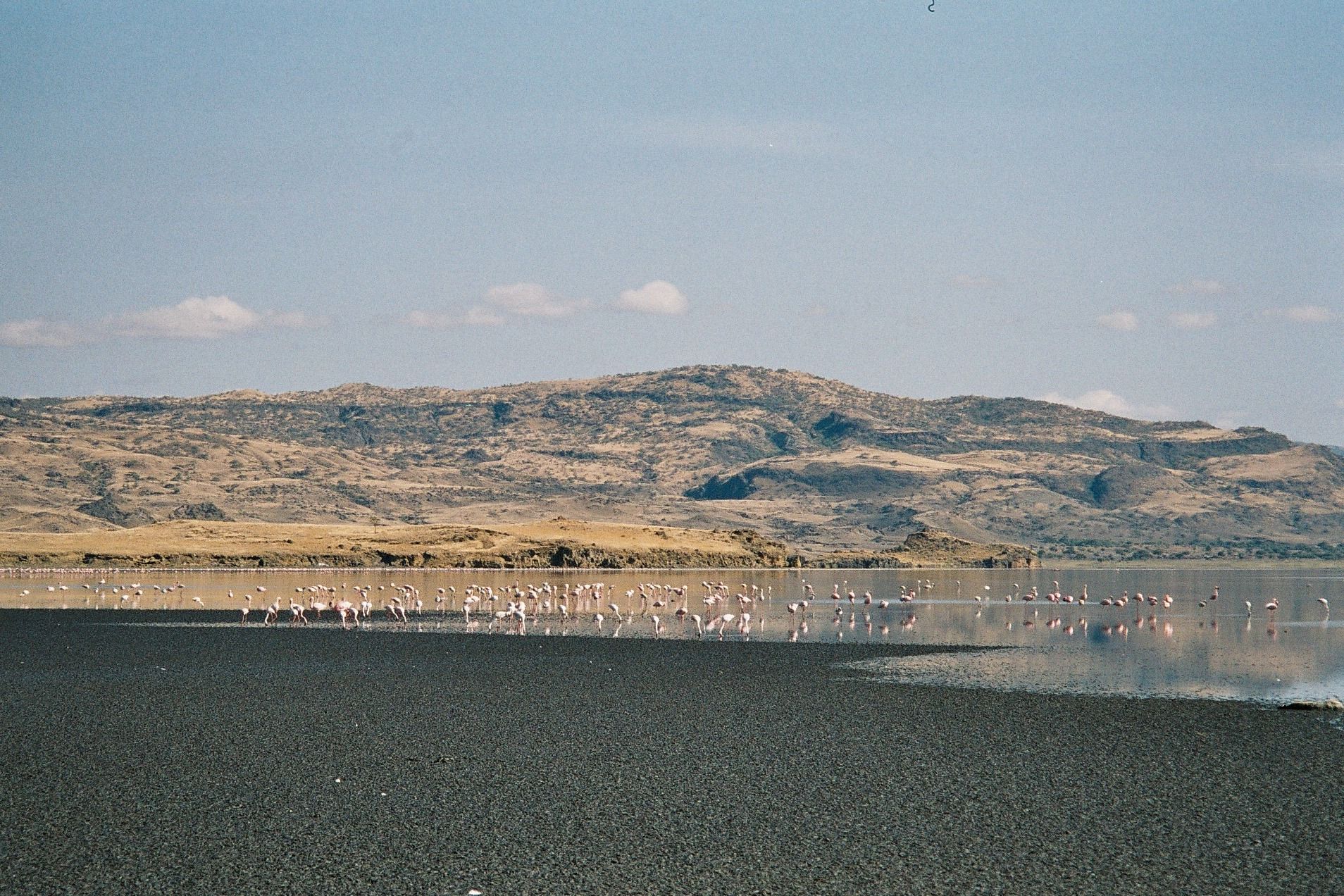
Lake Natron is one of the most extreme bodies of water on the planet. Fed by mineral-rich hot springs and with no outlet, it concentrates sodium carbonate until the water turns strongly alkaline — at times approaching the pH of ammonia — and can reach scalding temperatures in the shallows. Salt-loving cyanobacteria thrive in these conditions and stain the shallows vivid red and orange, so that from the air the lake looks like spilled blood. It is deadly to most creatures, and yet that hostility is precisely its value: because so little can survive there, the lake's caustic crust makes an ideal predator-free nursery, and around three-quarters of the world's lesser flamingos are born here, nesting on salt islands in the shimmering shallows. Above it looms Ol Doinyo Lengai, the only volcano on Earth that erupts carbonatite lava.
Why visit
Seeing a blood-red lake framed by an active volcano, with hundreds of thousands of flamingos massing on the salt flats, is one of the most surreal and unforgettable sights in all of Africa.
What to know before you go
🗓️ Best time
The dry season (roughly June–October) for accessible tracks and concentrated wildlife; flamingo breeding depends on water levels and shifts year to year.
🧭 Getting there & access
In northern Tanzania near the Kenyan border, reached by rough 4x4 tracks from Arusha or the Serengeti area; guides are essential, and Ol Doinyo Lengai is climbed on demanding overnight ascents.
Good to know
- Come in the dry season; the access tracks are rough and flood easily.
- Never wade in the water — it is caustic and can be scalding.
- Keep well back from nesting flamingos; disturbance can cost a whole colony.
Plan your visit
Strenuous🧭 Getting there
From Arusha, Tanzania, then Engare Sero
- Fly into Kilimanjaro (JRO) and overnight in Arusha
- Road Arusha → Lake Natron — roughly 4–6h on rough track, often folded into a Serengeti or Ngorongoro circuit
- The lakeshore and Ol Doinyo Lengai are reached by 4x4 and then on foot
- Total travel
- Most of a day from Arusha
- Time at site
- 1–2 nights; longer if you intend to climb Ol Doinyo Lengai
- Access
- Community and conservation fees are collected locally, and a local guide is required for the waterfall walk and the lakeshore. Ol Doinyo Lengai is an active volcano — climbs go overnight and depend entirely on current activity, so check the status before committing. Access near the flamingo breeding grounds is restricted, and properly so; approaching a colony disturbs the birds off their nests.
🎒 What to bring & consider
- Considerably more water than you expect — this is among the hottest inhabited places in the region and there is no shade at all
- Sun protection and a broad hat
- Closed shoes for volcanic rock and a salt crust that cuts bare feet
- The knowledge that the lake is a caustic soda-rich brine, not swimming water — it burns skin and destroys footwear
- A 4x4 and a driver who knows the track, which is rough and floods without warning
👁️ What to expect
- Crowds
- Very few visitors. This is a remote and physically uncomfortable place, and that filters people out.
- Conditions
- Extreme heat, rough roads, and a steep loose overnight climb if you take on Lengai.
- Facilities
- A handful of simple camps at Engare Sero. Nothing else.
- The view
- The flamingos are a distant, heat-hazed mass rather than a close encounter, and their numbers swing enormously with water level and season. The red and white salt patterns read best from the air or under low sun.
Times and requirements are approximate and change with season, weather, and local rules — confirm permits, fares, and schedules with operators before you travel.
Natural riches of the area
- An extreme alkaline soda lake stained red by salt-loving microbes
- The breeding ground for ~75% of the world's lesser flamingos
- Ol Doinyo Lengai, the only carbonatite-erupting volcano on Earth
- Hot springs and mineral flats of the East African Rift
Local food
- Maasai staples
- Milk, maize meal, and meat — the traditional diet of the Maasai herders here.
- Nyama choma
- Tanzanian grilled meat, usually goat or beef.
- Ugali & greens
- Stiff maize porridge with vegetables, the everyday East African meal.
Lake Natron is one of the harshest bodies of water on Earth — and, paradoxically, one of the most vital. Fed by mineral-rich hot springs with no outlet to drain it, the lake concentrates sodium carbonate until the water turns fiercely alkaline, at times approaching the pH of ammonia, and can run scalding in the shallows. Salt-loving cyanobacteria flourish in exactly those conditions, staining the water vivid red and orange until, seen from above, the lake looks like spilled blood.
Almost nothing can live in it. That is precisely the point. Because the caustic crust keeps predators away, Natron has become the single most important nursery for lesser flamingos anywhere — around three-quarters of the world’s population is born here, nesting on salt islands in the shimmering shallows. Above it all looms Ol Doinyo Lengai, the only volcano on the planet that erupts carbonatite lava. Few landscapes anywhere are so hostile, so strange, and so essential at once.
Lake Natron: common questions
How do you get to Lake Natron?
From Arusha, Tanzania, then Engare Sero: Fly into Kilimanjaro (JRO) and overnight in Arusha; Road Arusha → Lake Natron — roughly 4–6h on rough track, often folded into a Serengeti or Ngorongoro circuit; The lakeshore and Ol Doinyo Lengai are reached by 4x4 and then on foot. Allow Most of a day from Arusha.
When is the best time to visit Lake Natron?
The dry season (roughly June–October) for accessible tracks and concentrated wildlife; flamingo breeding depends on water levels and shifts year to year.
How long should you spend at Lake Natron?
1–2 nights; longer if you intend to climb Ol Doinyo Lengai. Most of a day from Arusha of travel from Arusha, Tanzania, then Engare Sero.
What should you bring to Lake Natron?
Considerably more water than you expect — this is among the hottest inhabited places in the region and there is no shade at all Sun protection and a broad hat Closed shoes for volcanic rock and a salt crust that cuts bare feet The knowledge that the lake is a caustic soda-rich brine, not swimming water — it burns skin and destroys footwear A 4x4 and a driver who knows the track, which is rough and floods without warning
Do you need a permit or guide for Lake Natron?
Community and conservation fees are collected locally, and a local guide is required for the waterfall walk and the lakeshore. Ol Doinyo Lengai is an active volcano — climbs go overnight and depend entirely on current activity, so check the status before committing. Access near the flamingo breeding grounds is restricted, and properly so; approaching a colony disturbs the birds off their nests.
Is Lake Natron crowded, and what are conditions like?
Very few visitors. This is a remote and physically uncomfortable place, and that filters people out. Extreme heat, rough roads, and a steep loose overnight climb if you take on Lengai. Facilities: a handful of simple camps at Engare Sero. Nothing else.
Added
More wonders to explore