Siwa Oasis
📍 Western Desert, near the Libyan border, Egypt
A remote desert oasis of palm groves, freshwater springs, and turquoise salt lakes in Egypt's far west — an ancient island of green ringed by the dunes of the Great Sand Sea.
What makes it marvelous
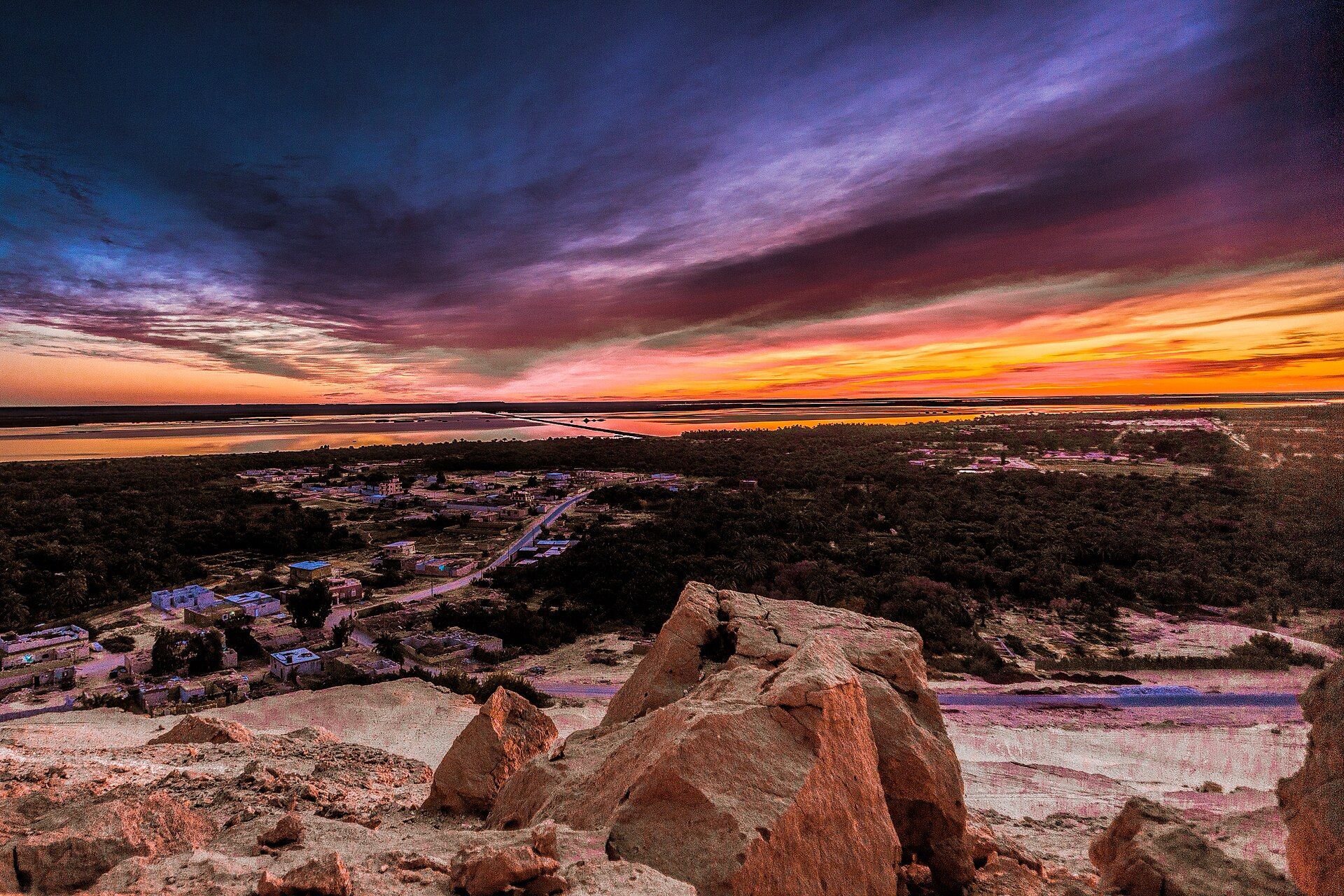
Siwa lies in a deep depression of the Western Desert, where groundwater rising through the sands feeds hundreds of springs and pools that make the desert bloom. Thick groves of date palms and olives surround shimmering salt lakes so dense with minerals that swimmers float effortlessly, their shores crusted white with salt crystals. On the horizon roll the immense dunes of the Great Sand Sea. Isolated for millennia, Siwa developed its own Amazigh (Berber) culture and language, and the mud-brick ruins of the old Shali fortress still rise above the palms.
Why visit
Siwa is one of Egypt's most atmospheric places: floating in a hypersaline lake, bathing in the spring pool traditionally linked to Cleopatra, watching the sun set over the salt flats and dunes, and wandering the crumbling Shali citadel. Sandboarding and camping in the Great Sand Sea, and the deep quiet of a genuine desert oasis far from the Nile, make it feel like another world.
What to know before you go
🗓️ Best time
October to April is the comfortable season for the desert oasis; summer is intensely hot. Spring water and lakes are pleasant in the cooler months, and desert nights can be cold.
🧭 Getting there & access
Siwa is remote — roughly 8–10 hours by road from Cairo, or several hours from the Mediterranean coast at Marsa Matruh. Getting around the oasis is by bicycle, tuk-tuk, or hired 4x4 for the salt lakes and dunes.
Good to know
- Float in a salt lake, but rinse off after — the brine stings any cut or graze.
- Hire a local guide with a 4x4 for the Great Sand Sea and desert springs.
- Respect Siwa's conservative Amazigh culture in dress and behaviour.
Plan your visit
Easy🧭 Getting there
From Cairo (CAI) or Marsa Matruh, then Siwa
- Road from Cairo to Marsa Matruh on the coast — about 4–5h
- Marsa Matruh south to Siwa across the desert — roughly 3–4h
- Around the oasis by bicycle, tuk-tuk, or 4x4 for the lakes and dunes
- Total travel
- A long travel day from Cairo; best as a multi-day stay
- Time at site
- 2–3 days for the springs, salt lakes, Shali, and a desert night
- Access
- No permit for the oasis itself; a 4x4 and local guide are needed for the Great Sand Sea, and some desert areas near the border are restricted. Check current travel advice before planning the long desert drive.
🎒 What to bring & consider
- Sun protection, a hat, and plenty of water
- Something to rinse off salt after floating in the lakes
- Warm layers for cold desert nights
- Modest clothing in keeping with local custom; cash, as facilities are limited
👁️ What to expect
- Crowds
- Quiet and off the main tourist trail; busier in the cool-season peak but never crowded.
- Conditions
- Hot days and cool nights, easy cycling around the oasis, and soft dunes needing a 4x4.
- Facilities
- Guesthouses, eco-lodges, and simple eateries in Siwa town; little in the surrounding desert.
- The view
- Palm groves and the Shali ruins at sunset, or salt lakes turning pink and gold over the dunes. The cool season makes the long trip and the exploring worthwhile.
Times and requirements are approximate and change with season, weather, and local rules — confirm permits, fares, and schedules with operators before you travel.
Natural riches of the area
- Hundreds of natural freshwater and mineral springs
- Hypersaline salt lakes ringed with salt crystals
- Extensive date-palm and olive groves
- The dunes of the Great Sand Sea on the oasis edge
Local food
- Siwa dates & olive oil
- The oasis is renowned for its dates and cold-pressed olive oil.
- Bedouin lamb
- Slow-cooked lamb dishes central to Siwan and desert hospitality.
Siwa is a world apart — a deep pocket of green in Egypt’s far Western Desert, hundreds of kilometres from the Nile and close to the Libyan border. Groundwater rising through the sand feeds hundreds of springs and pools that sustain vast groves of date palms and olives, and gathers into salt lakes so mineral-dense that swimmers bob on the surface, their edges rimmed with white crystal. Beyond the palms, the dunes of the Great Sand Sea roll away to the horizon.
That isolation shaped Siwa’s culture as much as its landscape: the oasis kept its own Amazigh language and traditions for millennia, and the mud-brick ruins of the old Shali fortress still crown the town above the greenery. Travellers come to float in the salt lakes, bathe in spring-fed pools, sandboard the dunes, and feel the profound quiet of a true desert oasis — one of the most singular and atmospheric corners of Egypt.
Siwa Oasis: common questions
How do you get to Siwa Oasis?
From Cairo (CAI) or Marsa Matruh, then Siwa: Road from Cairo to Marsa Matruh on the coast — about 4–5h; Marsa Matruh south to Siwa across the desert — roughly 3–4h; Around the oasis by bicycle, tuk-tuk, or 4x4 for the lakes and dunes. Allow a long travel day from cairo; best as a multi-day stay.
When is the best time to visit Siwa Oasis?
October to April is the comfortable season for the desert oasis; summer is intensely hot. Spring water and lakes are pleasant in the cooler months, and desert nights can be cold.
How long should you spend at Siwa Oasis?
2–3 days for the springs, salt lakes, Shali, and a desert night. A long travel day from Cairo; best as a multi-day stay of travel from Cairo (CAI) or Marsa Matruh, then Siwa.
What should you bring to Siwa Oasis?
Sun protection, a hat, and plenty of water Something to rinse off salt after floating in the lakes Warm layers for cold desert nights Modest clothing in keeping with local custom; cash, as facilities are limited
Do you need a permit or guide for Siwa Oasis?
No permit for the oasis itself; a 4x4 and local guide are needed for the Great Sand Sea, and some desert areas near the border are restricted. Check current travel advice before planning the long desert drive.
Is Siwa Oasis crowded, and what are conditions like?
Quiet and off the main tourist trail; busier in the cool-season peak but never crowded. Hot days and cool nights, easy cycling around the oasis, and soft dunes needing a 4x4. Facilities: guesthouses, eco-lodges, and simple eateries in Siwa town; little in the surrounding desert.
Added
More wonders to explore