Nyiragongo
📍 Virunga, eastern DR Congo
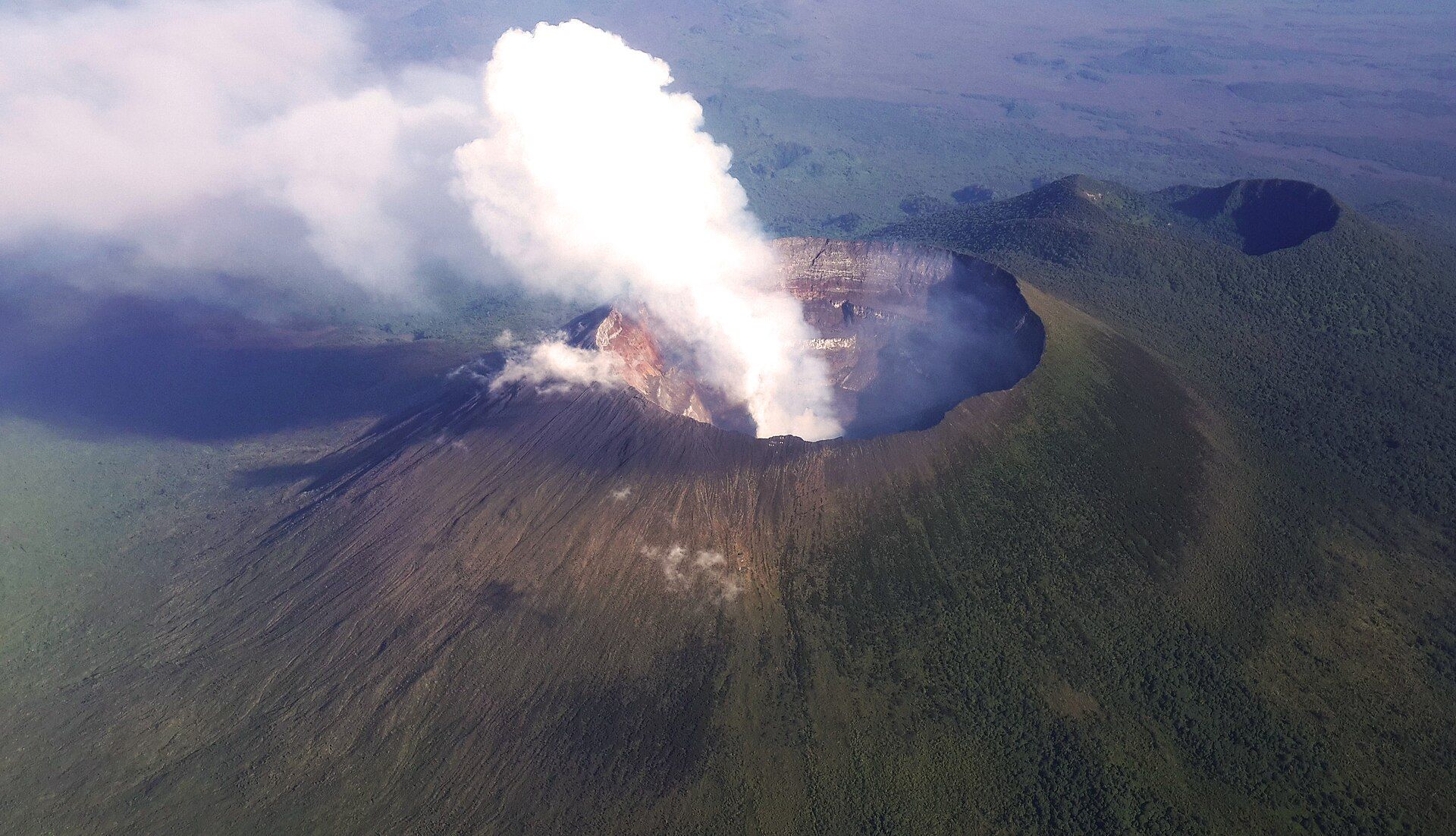
A volcano cradling one of the world's largest and most active lava lakes — a churning pool of molten rock that glows red against the night sky over the Virunga mountains.
What makes it marvelous
Nyiragongo holds one of the largest persistent lava lakes on Earth: a churning, incandescent pool of molten rock sitting in its summit crater, roiling and crusting and breaking open again in slow orange waves. Its lava is unusually fluid — low in silica, so it flows with startling speed rather than piling into a steep cone — which is what makes the volcano so dangerous to the city of Goma below, where eruptions in 1977, 2002, and 2021 sent lava racing down at speeds few volcanoes can match. It stands in the Virunga range along the Albertine Rift, part of Africa's oldest national park, a landscape that also shelters mountain gorillas. In the years when the security situation and volcanic activity allow, trekkers can climb to the crater rim and spend the night looking down into the glowing lake — one of the most extraordinary sights on the planet.
Why visit
Standing on a crater rim at night, looking down into a churning lake of molten rock, is about as close as anyone can get to the raw engine of the Earth — a genuinely unforgettable and rare experience.
What to know before you go
🗓️ Best time
The drier seasons (roughly June–August and December–February) for the safest climbing conditions; access depends entirely on current volcanic activity and regional security.
🧭 Getting there & access
In Virunga National Park, eastern DR Congo, reached via Goma; the summit is a demanding day trek with overnight shelters at the rim. Access opens and closes with security and volcanic conditions — check carefully.
Good to know
- Check current security and volcanic-activity status before planning anything.
- Go only with official Virunga National Park guides and permits.
- Nights on the rim are freezing at 3,470 m — bring serious warm gear.
Plan your visit
Expedition🧭 Getting there
From Goma, DR Congo, usually via Kigali, Rwanda
- Fly into Kigali
- Road Kigali → the border at Gisenyi and Goma — roughly 3h–3h30
- Goma → the Kibati trailhead — about 45min–1h
- Climb to the crater rim — roughly 4–6h with a pack
- Total travel
- Most of a day from Kigali
- Time at site
- Two days: up and overnight at the rim huts, down the following morning
- Access
- Virunga National Park permit plus a mandatory guide and armed ranger escort. This is the point that matters more than any other: Virunga's security situation and the volcano itself have both forced complete closures to tourism for extended periods, and Nyiragongo has erupted destructively in recent years. Do not plan from older accounts — check Virunga National Park's current status directly, and read your government's travel advice for eastern DRC, which has frequently been "do not travel".
🎒 What to bring & consider
- Genuinely warm and waterproof clothing — the rim is above 3,400m, cold, wet and windy, and the huts are unheated
- A sleeping bag rated for freezing; what is provided up there is minimal
- A headtorch, because the lava lake is worth seeing after dark and that is the whole reason to sleep on the rim
- A porter — inexpensive, expected, and the climb is far harder without one
- A hard look at your insurance and your government's advice, either of which may exclude this trip outright
👁️ What to expect
- Crowds
- Small permitted groups; the rim huts hold limited numbers.
- Conditions
- A steep, loose volcanic climb of several hours at altitude, often in rain, ending at a basic unheated hut on an exposed rim.
- Facilities
- Simple A-frame huts and a toilet at the summit. Nothing on the way up.
- The view
- The lava lake glows best after dark and before dawn. Cloud and volcanic gas frequently fill the crater, and there is no guarantee you will see the lake at all after making the climb.
Times and requirements are approximate and change with season, weather, and local rules — confirm permits, fares, and schedules with operators before you travel.
Natural riches of the area
- One of the world's largest persistent lava lakes
- Unusually fluid, fast-flowing low-silica lava
- Part of the Virunga range along the Albertine Rift
- Africa's oldest national park, also home to mountain gorillas
Local food
- Fufu & cassava leaves
- Pounded starch staple with rich greens, the Congolese everyday meal.
- Lake Kivu fish
- Tilapia and small sambaza fish from the nearby lake, fried or grilled.
- Plantain & groundnut stews
- Common dishes across the eastern Congo.
Nyiragongo cradles one of the largest persistent lava lakes on Earth — a churning, incandescent pool of molten rock in its summit crater, crusting over and breaking open again in slow orange waves. Its lava is unusually fluid, low in silica, which means it runs rather than piles up, and that is exactly what makes the mountain so dangerous to the city of Goma below: eruptions in 1977, 2002, and 2021 sent lava racing downhill faster than almost any volcano on the planet can manage.
It rises in the Virunga range along the Albertine Rift, within Africa’s oldest national park — a landscape that also shelters mountain gorillas. When volcanic activity and the regional security situation allow, trekkers can climb to the crater rim and spend a night there, looking down into the glowing lake. Few sights anywhere bring you so close to the raw engine of the Earth.
Nyiragongo: common questions
How do you get to Nyiragongo?
From Goma, DR Congo, usually via Kigali, Rwanda: Fly into Kigali; Road Kigali → the border at Gisenyi and Goma — roughly 3h–3h30; Goma → the Kibati trailhead — about 45min–1h; Climb to the crater rim — roughly 4–6h with a pack. Allow Most of a day from Kigali.
When is the best time to visit Nyiragongo?
The drier seasons (roughly June–August and December–February) for the safest climbing conditions; access depends entirely on current volcanic activity and regional security.
How long should you spend at Nyiragongo?
Two days: up and overnight at the rim huts, down the following morning. Most of a day from Kigali of travel from Goma, DR Congo, usually via Kigali, Rwanda.
What should you bring to Nyiragongo?
Genuinely warm and waterproof clothing — the rim is above 3,400m, cold, wet and windy, and the huts are unheated A sleeping bag rated for freezing; what is provided up there is minimal A headtorch, because the lava lake is worth seeing after dark and that is the whole reason to sleep on the rim A porter — inexpensive, expected, and the climb is far harder without one A hard look at your insurance and your government's advice, either of which may exclude this trip outright
Do you need a permit or guide for Nyiragongo?
Virunga National Park permit plus a mandatory guide and armed ranger escort. This is the point that matters more than any other: Virunga's security situation and the volcano itself have both forced complete closures to tourism for extended periods, and Nyiragongo has erupted destructively in recent years. Do not plan from older accounts — check Virunga National Park's current status directly, and read your government's travel advice for eastern DRC, which has frequently been "do not travel".
Is Nyiragongo crowded, and what are conditions like?
Small permitted groups; the rim huts hold limited numbers. A steep, loose volcanic climb of several hours at altitude, often in rain, ending at a basic unheated hut on an exposed rim. Facilities: simple A-frame huts and a toilet at the summit. Nothing on the way up.
Added
More wonders to explore