Raja Ampat
📍 West Papua, Indonesia
An archipelago of jungle-clad karst islands scattered across turquoise seas — the most biodiverse marine environment on Earth, at the very heart of the Coral Triangle.
What makes it marvelous
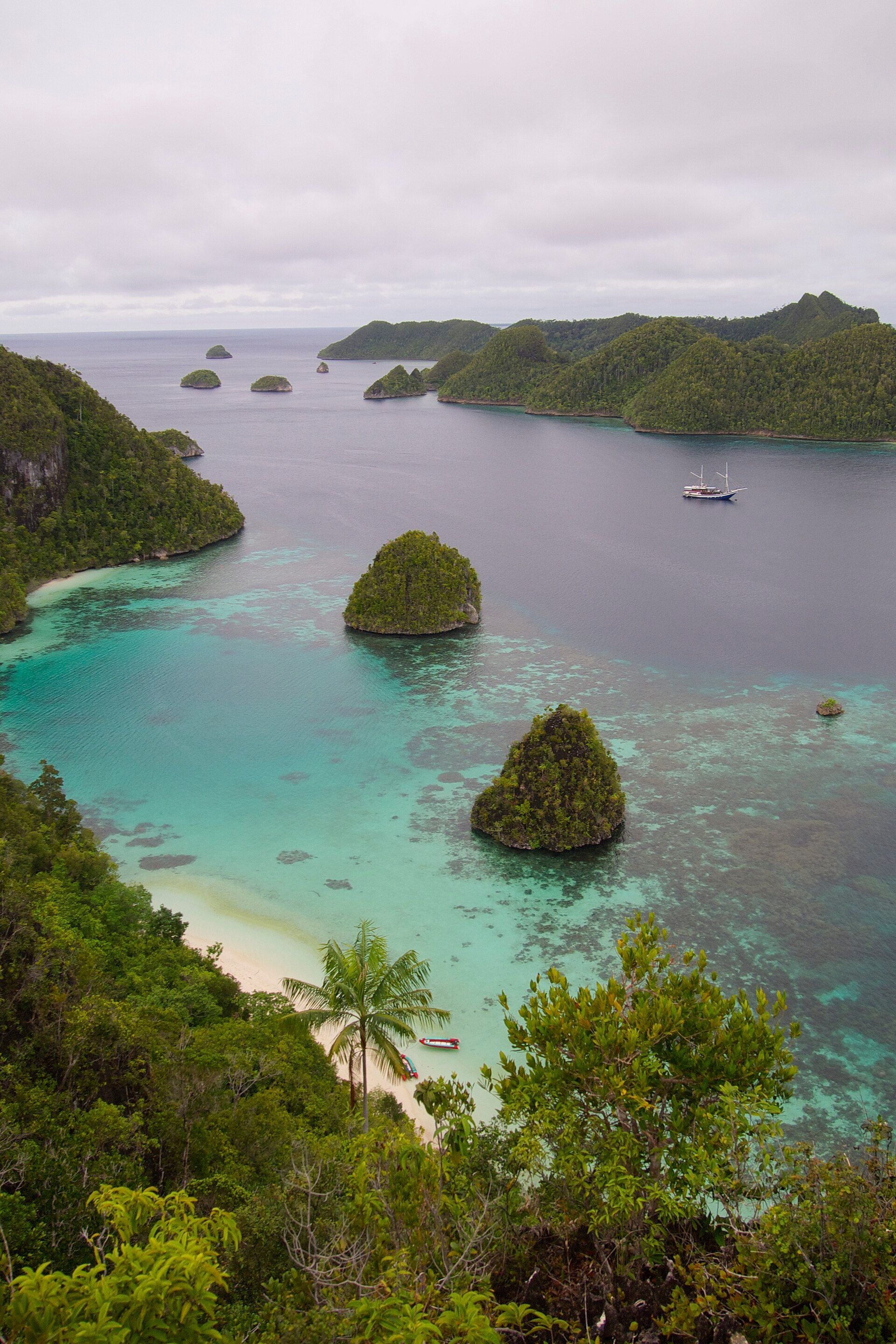
Raja Ampat — the 'Four Kings' — is a maze of more than 1,500 small islands, cays, and mushroom-shaped karst islets rising from impossibly clear turquoise water off the northwest tip of Indonesian Papua. Sitting at the centre of the Coral Triangle, its reefs hold the richest marine biodiversity ever recorded: more than 550 species of coral (around three-quarters of all known coral species) and over 1,700 species of reef fish, from tiny pygmy seahorses to manta rays and reef sharks. Above the water, jungle-covered islands hide hidden lagoons and endemic birds of paradise. The now-classic view over the pinnacle islands of Wayag or Piaynemo is one of the most beautiful seascapes on the planet, and the reefs beneath are a diver's paradise without equal.
Why visit
Diving or snorkelling over the world's most abundant reefs, then climbing a karst viewpoint above a labyrinth of jungle islands and turquoise lagoons, makes Raja Ampat a bucket-list destination for anyone who loves the sea.
What to know before you go
🗓️ Best time
October to April generally offers the calmest seas and best diving conditions; manta aggregations and specific sites vary by season. Conditions are warm year-round.
🧭 Getting there & access
In West Papua, far eastern Indonesia, reached by flight to Sorong then boat to the islands. Liveaboard dive boats and island homestays/resorts are the main ways to explore.
Good to know
- Come between roughly October and April for the calmest diving conditions.
- Choose a liveaboard or eco-homestay; the islands are spread far apart.
- Pay the marine park conservation fee and follow reef-safe practices.
Plan your visit
Moderate🧭 Getting there
From Sorong (SOQ), West Papua
- Fly Jakarta → Sorong via Makassar or Manado — roughly 6h–8h all in with the connection
- Ferry Sorong → Waisai — about 2h–2h30, on a limited daily schedule
- Small boat from Waisai to your homestay or resort — 30min–2h
- Total travel
- The best part of two days from Jakarta
- Time at site
- 7–10 days; liveaboards run 7–12 nights
- Access
- A marine park entry permit is required and is checked, bought in Sorong or Waisai, with the fee funding local conservation. The process has changed more than once — confirm the current arrangement with the marine park authority rather than an old blog post. Diving requires certification, and many sites demand real experience in current.
🎒 What to bring & consider
- Advanced certification and genuine comfort in strong current — the current that makes Raja Ampat spectacular is also unforgiving, and a reef hook is standard kit here
- A surface marker buoy; drift dives routinely end a long way from the boat
- Dive insurance covering evacuation, because the nearest chamber is very far away
- Reef booties for coral and jetty ladders, plus reef-safe sunscreen and a rash guard
- A great deal of cash — ATMs stop at Sorong and Waisai, and homestays take nothing else
👁️ What to expect
- Crowds
- Very few people for the size of the area, though liveaboards do cluster on the famous sites.
- Conditions
- Remote and humid, with boat transfers exposed to weather. Homestays are simple stilt huts with limited power and no hot water.
- Facilities
- Full in Sorong; minimal once you leave it. Bring anything you actually need with you.
- The view
- The biodiversity is the point, and much of it is small — nudibranchs, pygmy seahorses, dense soft coral. Manta aggregations are seasonal and current-dependent, so ask your operator rather than assuming.
Times and requirements are approximate and change with season, weather, and local rules — confirm permits, fares, and schedules with operators before you travel.
Natural riches of the area
- The richest marine biodiversity on Earth (Coral Triangle heart)
- 550+ coral species and 1,700+ reef fish species
- Jungle-clad karst islands, lagoons, and pinnacles
- Manta rays, reef sharks, and endemic birds of paradise
Local food
- Papuan grilled fish
- Fresh reef and pelagic fish, simply grilled — the local staple.
- Papeda
- A sago-starch porridge traditional to Papua, eaten with fish in yellow broth.
- Tropical fruit & sago
- Sago and island fruit form the base of the Papuan diet.
Raja Ampat is the beating heart of the ocean’s diversity. Scattered across turquoise seas off the northwest tip of Indonesian Papua, this archipelago of more than 1,500 jungle-clad karst islands and mushroom-shaped islets sits at the very centre of the Coral Triangle — and beneath its clear water lie the richest reefs ever recorded, with more than 550 coral species (around three-quarters of all known corals) and over 1,700 kinds of reef fish.
That abundance makes it a diver’s paradise without equal: pygmy seahorses and dazzling reef fish, manta rays gliding through cleaning stations, reef sharks patrolling the drop-offs. Above the surface, the islands hide secret lagoons and endemic birds of paradise, and the view over the pinnacle islets of Wayag and Piaynemo — a labyrinth of green domes in luminous water — is one of the most beautiful seascapes on Earth. Remote and hard-won, Raja Ampat rewards the journey like almost nowhere else.
Raja Ampat: common questions
How do you get to Raja Ampat?
From Sorong (SOQ), West Papua: Fly Jakarta → Sorong via Makassar or Manado — roughly 6h–8h all in with the connection; Ferry Sorong → Waisai — about 2h–2h30, on a limited daily schedule; Small boat from Waisai to your homestay or resort — 30min–2h. Allow The best part of two days from Jakarta.
When is the best time to visit Raja Ampat?
October to April generally offers the calmest seas and best diving conditions; manta aggregations and specific sites vary by season. Conditions are warm year-round.
How long should you spend at Raja Ampat?
7–10 days; liveaboards run 7–12 nights. The best part of two days from Jakarta of travel from Sorong (SOQ), West Papua.
What should you bring to Raja Ampat?
Advanced certification and genuine comfort in strong current — the current that makes Raja Ampat spectacular is also unforgiving, and a reef hook is standard kit here A surface marker buoy; drift dives routinely end a long way from the boat Dive insurance covering evacuation, because the nearest chamber is very far away Reef booties for coral and jetty ladders, plus reef-safe sunscreen and a rash guard A great deal of cash — ATMs stop at Sorong and Waisai, and homestays take nothing else
Do you need a permit or guide for Raja Ampat?
A marine park entry permit is required and is checked, bought in Sorong or Waisai, with the fee funding local conservation. The process has changed more than once — confirm the current arrangement with the marine park authority rather than an old blog post. Diving requires certification, and many sites demand real experience in current.
Is Raja Ampat crowded, and what are conditions like?
Very few people for the size of the area, though liveaboards do cluster on the famous sites. Remote and humid, with boat transfers exposed to weather. Homestays are simple stilt huts with limited power and no hot water. Facilities: full in Sorong; minimal once you leave it. Bring anything you actually need with you.
Added
More wonders to explore