Head to head · the Alps' icon vs the highest point on Earth
Matterhorn vs Everest: How Do They Compare?
Short answer: Everest is far higher — 8,849 m above sea level against the Matterhorn's 4,478 m, close to double. They are very different mountains, though. The Matterhorn is a lone four-faced rock pyramid above Zermatt whose classic views are a cog-railway ride away; Everest is the highest point on Earth, reached on foot over about two weeks through the Khumbu.
Neither summit is for a casual visitor. The Matterhorn's is a serious technical climb for guided alpinists; Everest's needs an expedition permit, months of acclimatisation and experienced Sherpa support. Both, though, can be seen properly without climbing at all.
Here is how they compare on height, climbing, the view and the trip.
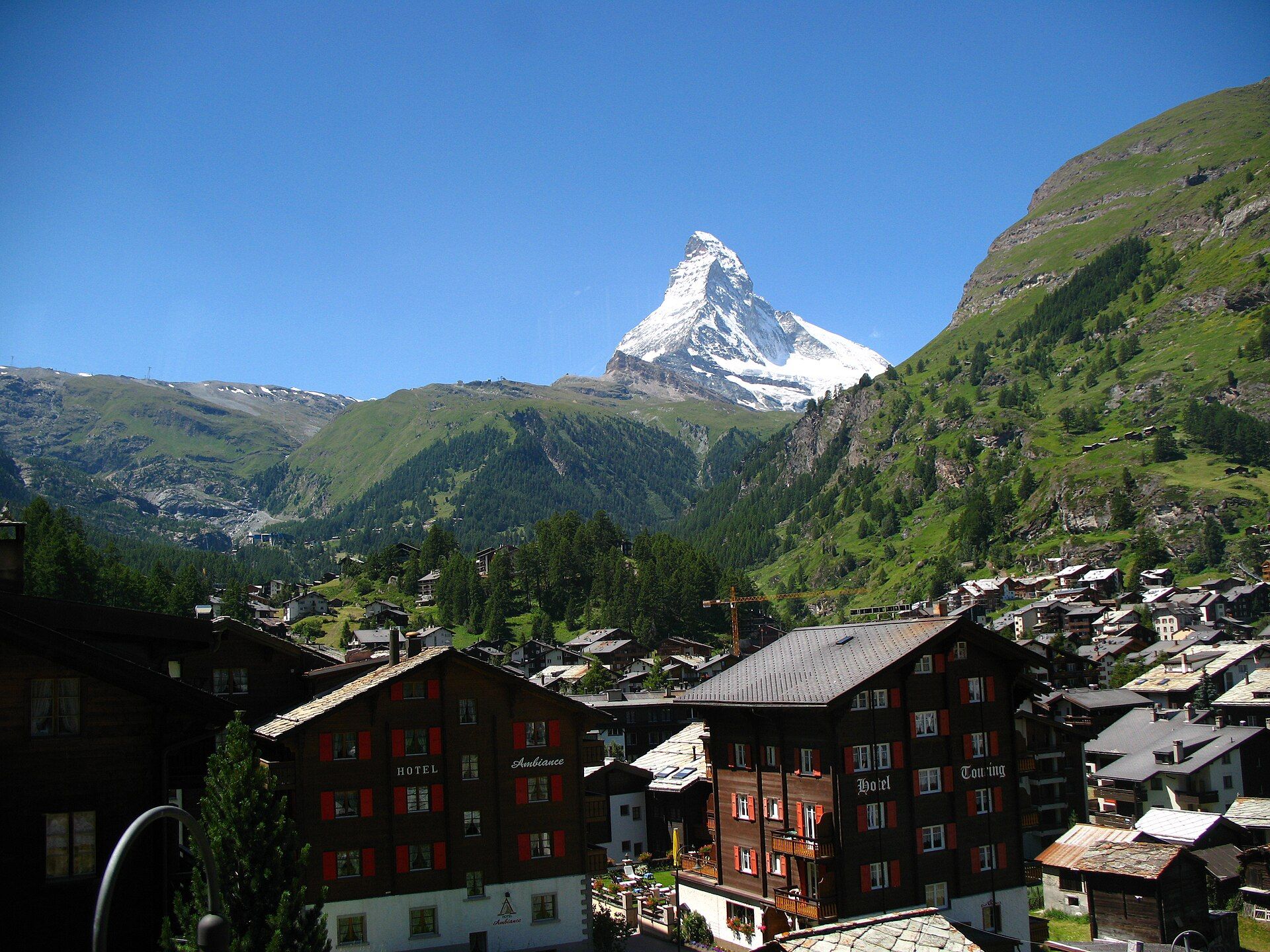
The Matterhorn
The most recognisable peak in the Alps
A near-perfect rock pyramid, 4,478 metres high, standing alone on the Swiss–Italian border above Zermatt. Glaciers carved it into a 'horn' with four steep faces aligned almost to the compass points, and its summit rock originated on the African plate, thrust over European rock as the Alps were built. Its first ascent, in 1865, is mountaineering's best-known tragedy. The classic views — from the Gornergrat railway and the Riffelsee — need no climbing at all.
- One unmistakable, photogenic pyramid
- Classic viewpoints by cog railway and cable car from Zermatt
- Day hikes between lift stations with the peak in view
- A car-free resort town a train ride from Zurich or Geneva
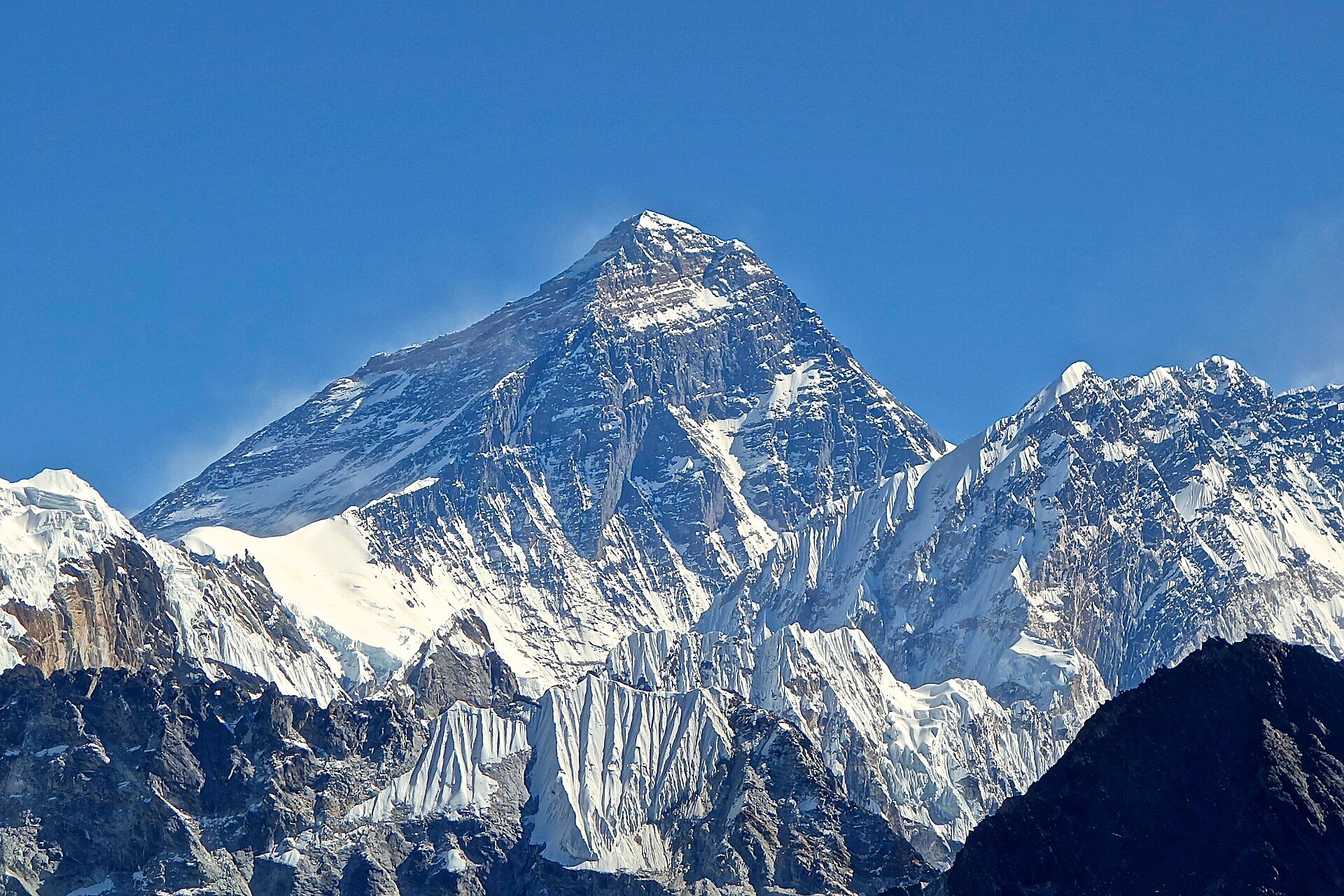
Mount Everest
The highest point on Earth
The highest point on the planet at 8,849 metres, on the Nepal–Tibet border, its summit made of marine limestone from an ancient seabed. Above about 8,000 metres lies the 'death zone', where there is too little oxygen to sustain life for long. It anchors Sagarmatha National Park, a UNESCO World Heritage Site and the homeland of the Sherpa people, and the trek to Everest Base Camp is one of the world's classic walks.
- The highest elevation on Earth
- The Base Camp trek needs no technical climbing
- Sherpa villages and monasteries along the Khumbu valley
- A UNESCO World Heritage national park
Head to head
| What matters | The Matterhorn | Mount Everest |
|---|---|---|
| Height above sea level Edge: Mount Everest | 4,478 m — tall for the Alps, but about half Everest's height. | 8,849 m — the highest point on the planet. |
| What kind of climb Edge: Toss-up | A serious technical rock-and-ice climb. From the Hörnli hut at 3,260 m the summit push is usually 4–5 hours up and about as long down; you need a certified guide and real alpine experience. | An expedition: a permit from Nepal's Department of Tourism, months of acclimatisation and experienced Sherpa support. Above about 8,000 m is the death zone. |
| Seeing it without climbing Edge: The Matterhorn | The Gornergrat cog railway and the cable cars to Rothorn and Matterhorn Glacier Paradise reach the classic views within an hour of Zermatt — all ticketed and seasonal. | The Everest Base Camp trek, 12–16 days round trip from Lukla, through the Khumbu valley — a walk, not a climb, but at altitude. |
| The view Edge: The Matterhorn | One isolated, four-faced pyramid — the reflection in the Riffelsee at dawn is the classic. It makes its own cloud and is often hidden by midday. | The giants of the Himalaya crowding the sky; Everest itself is partly hidden behind its neighbours from much of the trail. |
| Best time Edge: Toss-up | July to September for hiking and clear views; December to April for skiing. | Pre-monsoon, roughly March–May, and post-monsoon, roughly late September–November. |
| Getting there Edge: The Matterhorn | Train from Zurich or Geneva to Visp (roughly 2h30–3h30), then about 1h15 up to car-free Zermatt — most of a day from either airport. | Fly to Kathmandu, then the mountain airstrip at Lukla — two days to the trailhead if the Lukla flight goes. |
Which should you choose?
Choose The Matterhorn if…
Anyone who wants to see one of the most beautiful mountains on Earth on a normal holiday — trains, lifts and day hikes from a car-free village, with the summit left to guided alpinists.
Choose Mount Everest if…
Anyone drawn by the highest ground on the planet who can give two to three weeks to walk into it properly, with altitude as the main challenge.
The honest verdict
Everest is the bigger mountain by any measure of height — 8,849 m against 4,478 m. The Matterhorn's claim is shape: a lone pyramid that is arguably the most recognisable single peak anywhere.
For a trip they hardly overlap. The Matterhorn's viewpoints are a train ride from Zermatt and can fill a long weekend; seeing Everest properly means the 12–16-day Base Camp trek.
Neither summit is a casual goal. The Matterhorn is a technical guided climb; Everest is a months-long expedition with a permit.
Wonders mentioned here
Added