Mont Blanc
📍 French Alps (France–Italy border)
The highest peak in the Alps and western Europe — a great dome of snow and ice above Chamonix, ringed by glaciers, granite spires, and the birthplace of mountaineering.
What makes it marvelous
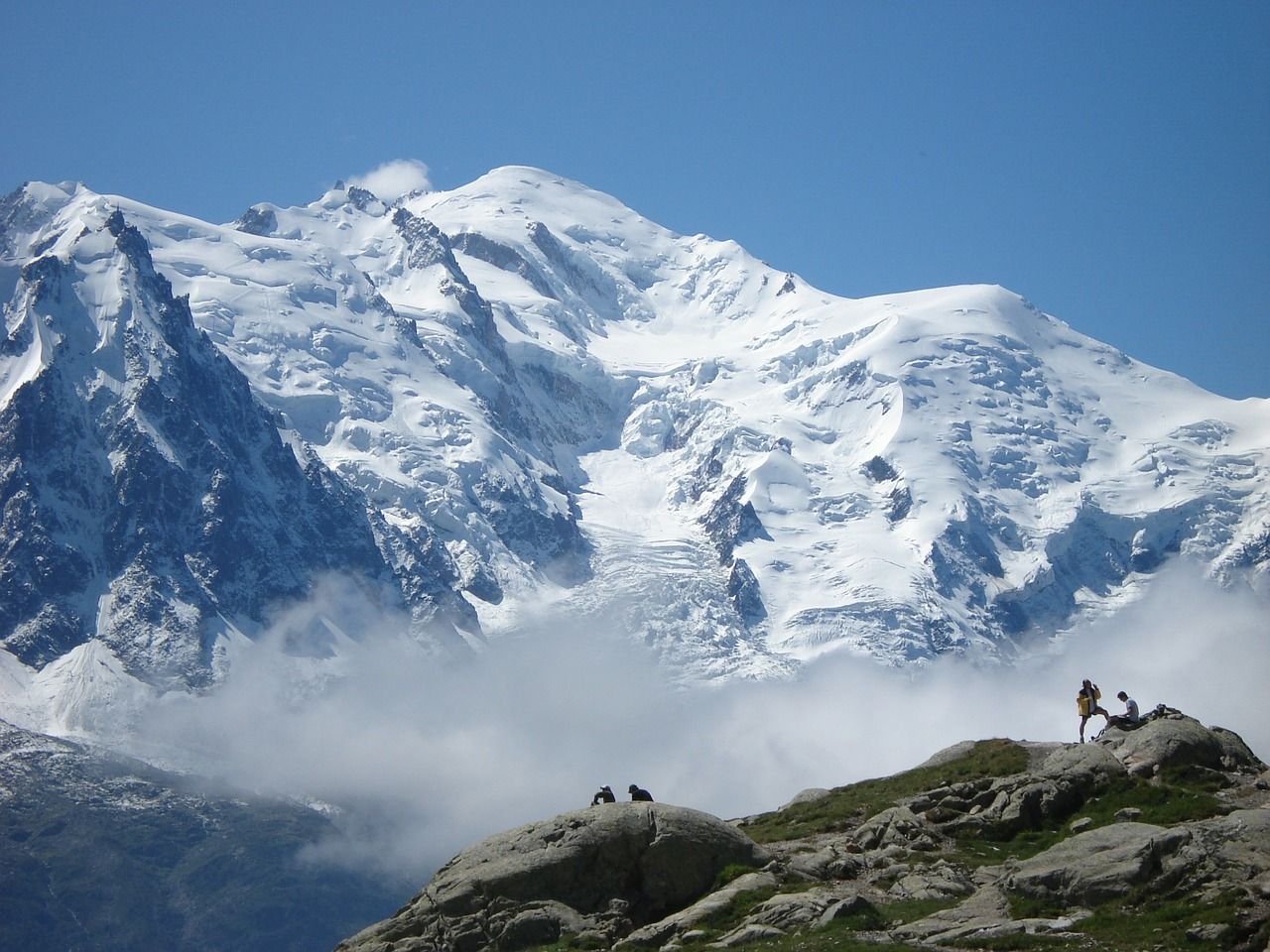
Mont Blanc — 'the White Mountain' — rises 4,808 metres on the French–Italian border, the highest summit in the Alps and in western Europe. Its rounded, permanently snow-capped dome crowns a massif of staggering alpine drama: sheer granite spires like the Aiguille du Midi and the Drus, some of Europe's largest glaciers such as the Mer de Glace, and deep valleys carved by ice. Beneath it sits Chamonix, the cradle of modern mountaineering, where the sport was effectively born in the 18th century. Cable cars climb dizzyingly to over 3,800 metres for close-up views of the summit and a panorama across the Alps, and the massif draws climbers, skiers, and walkers from around the world. Few mountains combine such height, beauty, and human history.
Why visit
Riding a cable car into the high alpine world beneath Mont Blanc's icy dome — surrounded by spires, glaciers, and a sea of peaks — offers one of Europe's most spectacular and accessible mountain experiences, in the historic heart of the Alps.
What to know before you go
🗓️ Best time
Summer (roughly June–September) for hiking, cable cars, and clear high-mountain views; winter (December–April) for world-class skiing around Chamonix.
🧭 Getting there & access
Above Chamonix in the French Alps, easily reached by road or rail from Geneva; the Aiguille du Midi cable car and the Montenvers railway to the Mer de Glace open up the high massif without climbing.
Good to know
- Ride the Aiguille du Midi cable car for jaw-dropping close views of the summit.
- Come in summer for hiking and lifts, winter for skiing.
- High-altitude lifts are cold and thin-aired — bring layers and take it slow.
Plan your visit
Moderate🧭 Getting there
From Geneva (GVA), then Chamonix
- Fly into Geneva
- Shuttle or train Geneva → Chamonix — roughly 1h15–1h45
- The Aiguille du Midi cable car lifts you from the town to 3,842m in about 20 minutes
- Total travel
- Half a day from Geneva
- Time at site
- 3–4 days for the valley, the lifts and the walks; the Tour du Mont Blanc runs 7–11 days
- Access
- Valley trails are open access. Lifts are ticketed on seasonal timetables, with the Aiguille du Midi closing for maintenance periods. Climbing Mont Blanc itself demands real alpine competence and, for most people, a guide — and the normal route via the Gouter operates a compulsory hut reservation system with limited places, brought in to control dangerous overcrowding. Check the current rules with the local authorities and the hut booking system, not an older account. Tour du Mont Blanc refuges book out months ahead.
🎒 What to bring & consider
- Warm layers and strong sun protection for the Aiguille du Midi — you go from a warm valley to nearly 3,900m in twenty minutes, into sub-zero air and fierce UV
- Awareness that gaining altitude that fast makes some people genuinely ill; the station keeps oxygen on hand for a reason
- Boots with grip for valley trails that are steeper and rockier than they look from town
- A helmet, rope and the skills to use them before setting foot on a glacier, which is not a walking surface
- A weather check every morning, because afternoon storms are routine in summer
👁️ What to expect
- Crowds
- The Aiguille du Midi and the Mer de Glace are busy all day in season, with timed queues for the cable car. The trail network absorbs people quickly.
- Conditions
- Easy in the valley and serious above it. The gap between a lift-served viewpoint and glaciated terrain is a single step past a rope, and people die making it every year.
- Facilities
- Excellent — Chamonix is a full alpine town, with refuges and restaurants throughout the massif.
- The view
- The massif is clearest in the morning; cloud builds on the summits through the afternoon. The Mer de Glace has retreated dramatically and the stairway down to it lengthens year on year — that retreat is arguably the honest photograph here.
Times and requirements are approximate and change with season, weather, and local rules — confirm permits, fares, and schedules with operators before you travel.
Natural riches of the area
- The highest peak in the Alps and western Europe (4,808 m)
- Great glaciers including the Mer de Glace
- Granite spires and the classic high-alpine landscape
- The historic birthplace of mountaineering at Chamonix
Local food
- Savoyard cheese dishes
- Fondue, raclette, and tartiflette — hearty melted-cheese fare of the French Alps.
- Mountain charcuterie
- Cured hams and sausages of the Savoie region.
- Génépi
- A traditional alpine herbal liqueur made from mountain plants.
Mont Blanc is the roof of the Alps. Rising 4,808 metres on the French–Italian border, ‘the White Mountain’ is the highest summit in western Europe, its rounded, permanently snow-capped dome crowning a massif of staggering drama — sheer granite spires like the Aiguille du Midi, some of Europe’s largest glaciers, and deep ice-carved valleys. At its foot sits Chamonix, where modern mountaineering was effectively born in the 18th century.
What makes it so special is how close you can get. Cable cars climb dizzyingly to over 3,800 metres, delivering you into a world of ice and rock beneath the summit, with the Mer de Glace glacier and a sea of alpine peaks spread all around. Climbers, skiers, and walkers have been drawn here for centuries. Few mountains anywhere combine such height, such beauty, and such a place in the human story of the mountains.
Mont Blanc: common questions
How do you get to Mont Blanc?
From Geneva (GVA), then Chamonix: Fly into Geneva; Shuttle or train Geneva → Chamonix — roughly 1h15–1h45; The Aiguille du Midi cable car lifts you from the town to 3,842m in about 20 minutes. Allow Half a day from Geneva.
When is the best time to visit Mont Blanc?
Summer (roughly June–September) for hiking, cable cars, and clear high-mountain views; winter (December–April) for world-class skiing around Chamonix.
How long should you spend at Mont Blanc?
3–4 days for the valley, the lifts and the walks; the Tour du Mont Blanc runs 7–11 days. Half a day from Geneva of travel from Geneva (GVA), then Chamonix.
What should you bring to Mont Blanc?
Warm layers and strong sun protection for the Aiguille du Midi — you go from a warm valley to nearly 3,900m in twenty minutes, into sub-zero air and fierce UV Awareness that gaining altitude that fast makes some people genuinely ill; the station keeps oxygen on hand for a reason Boots with grip for valley trails that are steeper and rockier than they look from town A helmet, rope and the skills to use them before setting foot on a glacier, which is not a walking surface A weather check every morning, because afternoon storms are routine in summer
Do you need a permit or guide for Mont Blanc?
Valley trails are open access. Lifts are ticketed on seasonal timetables, with the Aiguille du Midi closing for maintenance periods. Climbing Mont Blanc itself demands real alpine competence and, for most people, a guide — and the normal route via the Gouter operates a compulsory hut reservation system with limited places, brought in to control dangerous overcrowding. Check the current rules with the local authorities and the hut booking system, not an older account. Tour du Mont Blanc refuges book out months ahead.
Is Mont Blanc crowded, and what are conditions like?
The Aiguille du Midi and the Mer de Glace are busy all day in season, with timed queues for the cable car. The trail network absorbs people quickly. Easy in the valley and serious above it. The gap between a lift-served viewpoint and glaciated terrain is a single step past a rope, and people die making it every year. Facilities: excellent — Chamonix is a full alpine town, with refuges and restaurants throughout the massif.
Added
More wonders to explore