Head to head · The Alps' highest vs Africa's highest
Mont Blanc vs Kilimanjaro: Is the Lower Mountain the Harder Climb?
Short answer: Kilimanjaro is roughly 1,100 metres higher — 5,895 m against a little over 4,800 m for Mont Blanc — but Mont Blanc is the more technical mountain. Climbing it demands real alpine competence and, for most people, a guide, and the normal route via the Goûter has a compulsory hut reservation system with limited places. Kilimanjaro's routes need no technical climbing; altitude is the challenge, not the terrain.
They suit different people. Kilimanjaro is a six-to-nine-day trek with a licensed operator, guides and porters, through five climate zones from rainforest to an arctic summit. Mont Blanc is a serious alpine ascent above Chamonix — and the one of the two you can enjoy without climbing at all, from the Aiguille du Midi cable car or the trails of the Tour du Mont Blanc.
Mont Blanc
The roof of the Alps
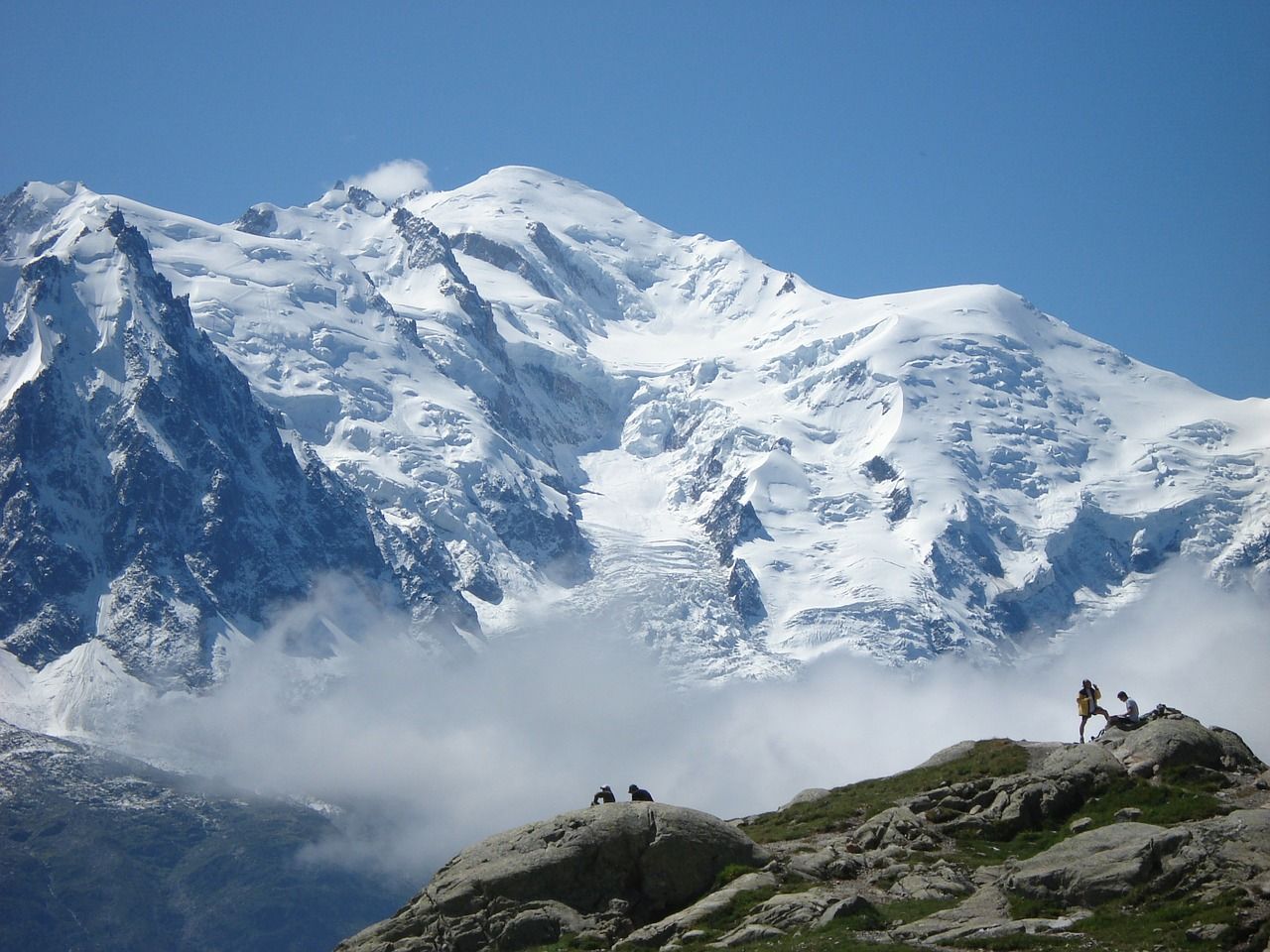
The highest peak in the Alps and western Europe, a little over 4,800 metres on the French–Italian border: a rounded, permanently snow-capped dome above Chamonix, the cradle of modern mountaineering, ringed by granite spires and glaciers such as the Mer de Glace.
- Cable cars to over 3,800 m for close-up high-mountain views
- The Tour du Mont Blanc, a 7–11 day trek around the massif
- About 1h15–1h45 from Geneva
- Summer hiking and winter skiing from the same valley
Mount Kilimanjaro
Africa's highest, a walk-up summit
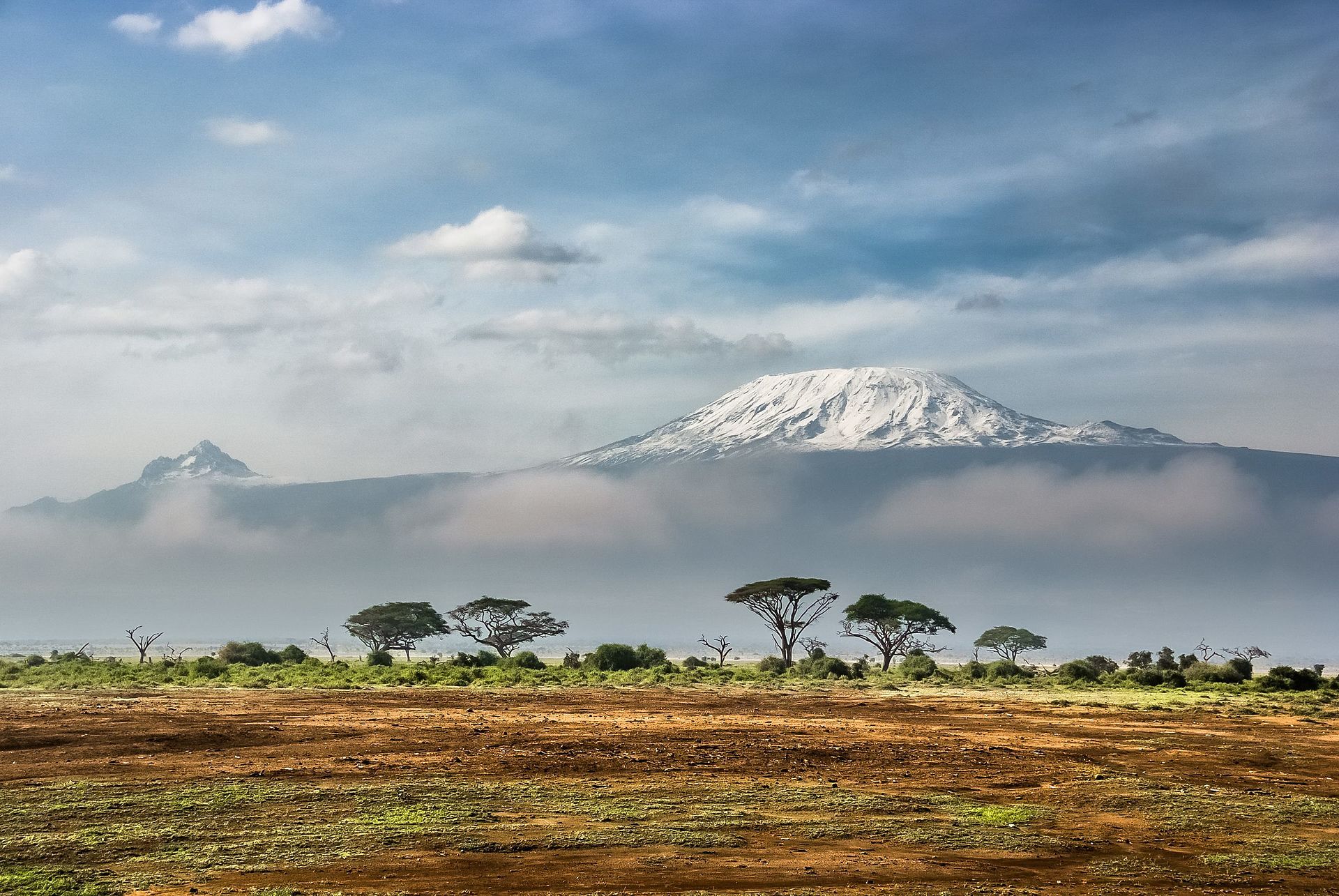
Africa's highest mountain and the tallest free-standing mountain on Earth: a dormant volcano of three centres — Kibo, Mawenzi and Shira — rising alone from the Tanzanian plains to 5,895 metres, through five climate zones to shrinking summit glaciers.
- The higher summit, with no technical climbing
- Five climate zones in under a week
- Two dry windows a year
- Pairs with a safari in the Serengeti or Ngorongoro Crater
Head to head
| What matters | Mont Blanc | Mount Kilimanjaro |
|---|---|---|
| Height Edge: Mount Kilimanjaro | A little over 4,800 m — the surveyed height of the snow cap shifts by a metre or two between surveys. | 5,895 m — roughly 1,100 m higher. |
| Technical difficulty Edge: Mount Kilimanjaro | Glaciated alpine terrain that demands real alpine competence; most people climb with a guide. | Non-technical on every main route; altitude sickness, not terrain, is what turns people back. |
| Rules Edge: Toss-up | The normal route via the Goûter operates a compulsory hut reservation system with limited places. Check the current rules with the local authorities and the hut booking system. | Independent climbing is not permitted: every ascent goes through a licensed operator with registered guides and porters, who collect the park fees. |
| Time needed Edge: Mont Blanc | 3–4 days in the valley for the lifts and walks; the Tour du Mont Blanc takes 7–11 days. | 6–9 days on the mountain; eight or nine-day routes succeed far more often than five or six-day ones. |
| Seeing it without climbing Edge: Mont Blanc | The Aiguille du Midi cable car rises to over 3,800 m; the Montenvers railway reaches the Mer de Glace. | From the plains below, most famously the view of the snow cap above the savanna. |
| Season Edge: Toss-up | Roughly June–September for hiking, cable cars and clear high-mountain views; December–April for skiing. | Dry windows roughly January–March and June–October. |
Which should you choose?
Choose Mont Blanc if…
Experienced alpinists, or anyone willing to hire a guide and book the hut system early, for a serious glaciated ascent — and anyone who wants high-mountain views from a cable car or the Tour du Mont Blanc without climbing at all.
Choose Mount Kilimanjaro if…
Fit trekkers without technical skills who want the higher summit: choose an eight or nine-day route with a licensed operator, accept the altitude and cold, and add a safari.
The honest verdict
Height and difficulty point in opposite directions. Kilimanjaro is about 1,100 metres higher but asks for stamina and acclimatisation, not technique; Mont Blanc is lower but is real alpine terrain where a guide and a hut booking are the norm.
If you have no mountaineering experience and want a big summit, Kilimanjaro is the realistic one. If you want the Alps, go to Chamonix in summer — and climb Mont Blanc only with the skills or a guide.
Wonders mentioned here
Added