Badab-e Surt
📍 Mazandaran Province, northern Iran
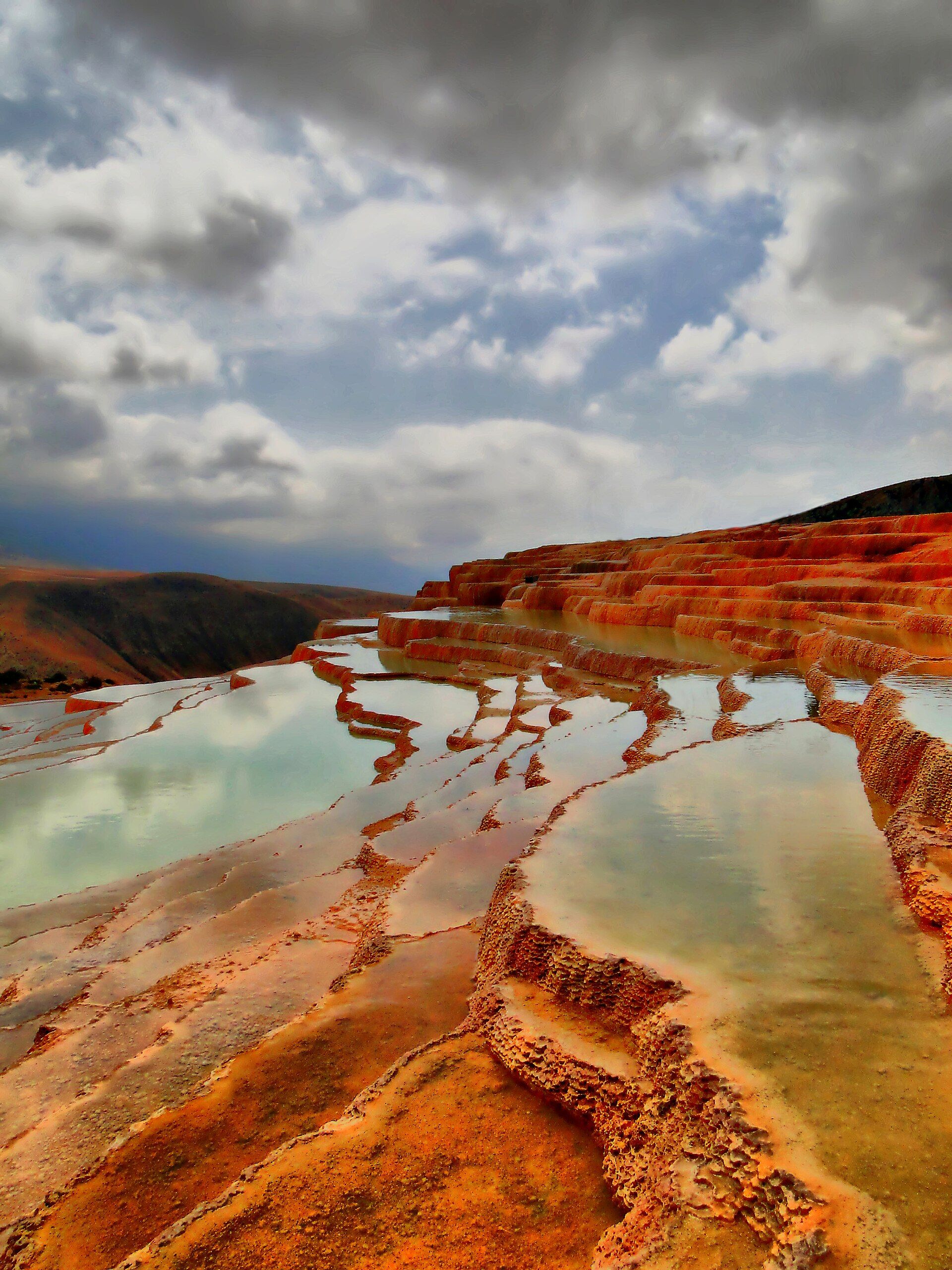
A hillside staircase of terraced mineral pools in northern Iran, stained deep orange and red by iron-rich spring water and built up over thousands of years into stepped basins of travertine.
What makes it marvelous
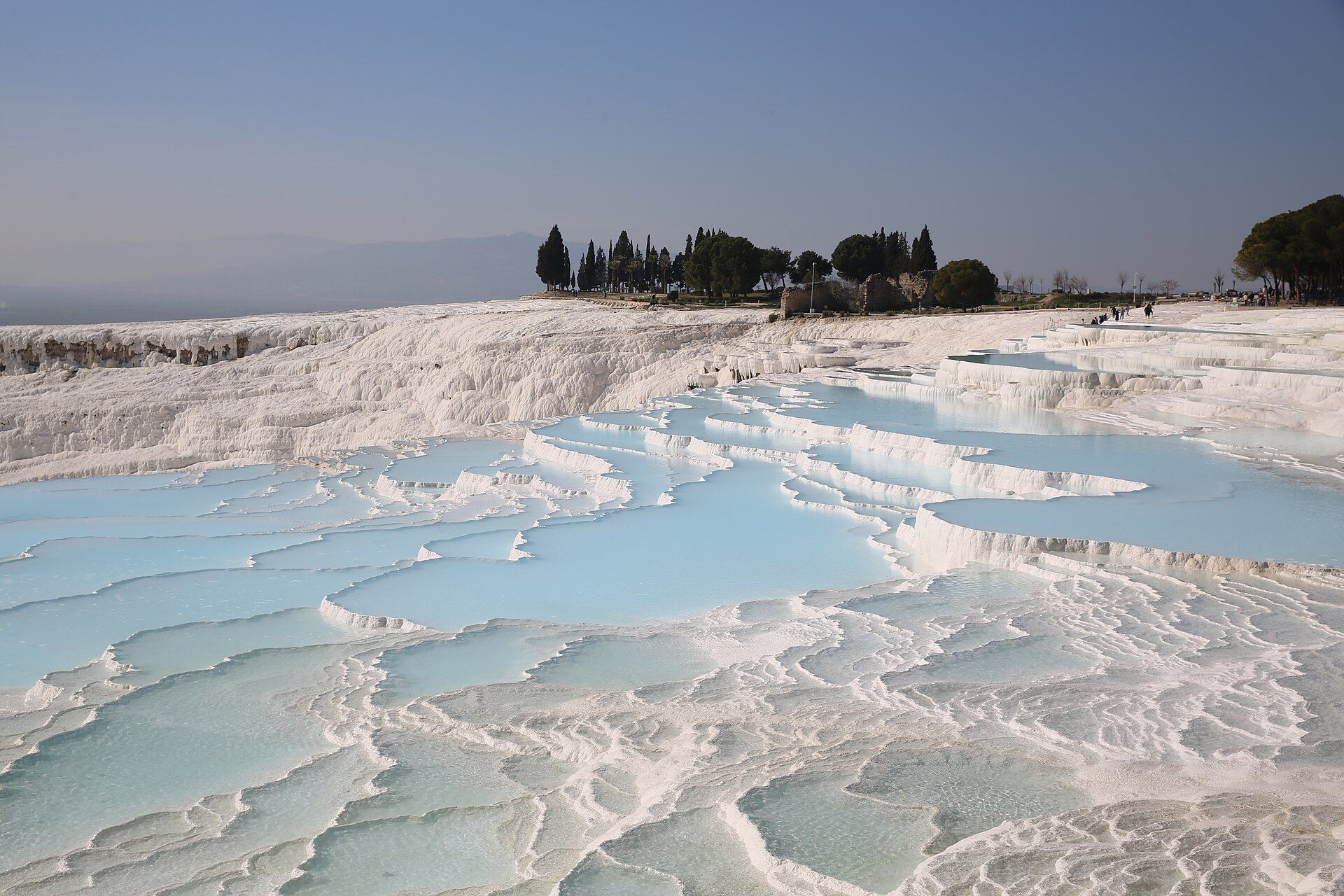
Badab-e Surt is a rare travertine terrace formed by two mineral springs rising side by side in the Alborz foothills. Over thousands of years the calcium-rich water has deposited layer upon layer of stone, building a cascade of stepped, curved pools. One spring is heavily charged with iron, which oxidises to stain the terraces vivid orange, red, and ochre — a warmer cousin to the white terraces of Pamukkale — while the other is intensely salty. The pools change colour with the season and the light.
Why visit
The terraces glow most intensely in the low sun of morning and late afternoon, when the rust-red and orange basins step down the green hillside like a natural staircase. It is a quiet, little-visited wonder in the forested mountains of northern Iran, reached through pretty highland countryside, and one of the country's most striking and photogenic natural sites.
What to know before you go
🗓️ Best time
Spring and autumn are most pleasant and the terraces most colourful; the mountain setting can be cold and snowy in winter and hazy in high summer.
🧭 Getting there & access
In the highlands of Mazandaran province, reached by road from the town of Sari or the village of Orost. A short walk from the parking area leads up to the terraces; the site is small and best combined with a wider trip through northern Iran.
Good to know
- Come early or late for the warmest colour and the softest light.
- Tread carefully and stay off the fragile terrace rims, which damage easily.
- Combine it with the forests and villages of the Alborz for a fuller day.
Plan your visit
Easy🧭 Getting there
From Sari (SRY) or Tehran, then Mazandaran highlands
- Fly to Sari, or drive north from Tehran over the Alborz
- Road up into the highlands toward Orost village — winding mountain roads
- Short walk from the parking area up to the terraces
- Total travel
- A half-day trip from Sari; a long day from Tehran
- Time at site
- 1–2 hours at the terraces
- Access
- A small ticketed natural monument. The mountain access road is winding and can be affected by snow or landslides in bad weather; the terraces themselves are a short, easy walk but fragile.
🎒 What to bring & consider
- Grippy shoes for the short walk and slippery mineral rock
- A warm layer; the highland air is cool even in summer
- Sun protection and water
- Care to stay on paths and off the delicate terrace edges
👁️ What to expect
- Crowds
- Quiet, with a small trickle of mostly domestic visitors; weekends and holidays are busier.
- Conditions
- A short uphill walk to a compact site; the terrace surfaces are slick and easily damaged.
- Facilities
- Basic — parking, a few stalls; services in the nearest towns.
- The view
- The rust-orange terraces stepping down the green hillside in low morning or evening light. Midday flattens the colour, so aim for the golden hours.
Times and requirements are approximate and change with season, weather, and local rules — confirm permits, fares, and schedules with operators before you travel.
Natural riches of the area
- Travertine terraces built by mineral-rich springs
- Iron-stained orange and red pools, plus a saline spring
- Surrounding Alborz highland forest and pasture
- Clean mountain water and highland biodiversity
Local food
- Mirza ghasemi
- A smoky Caspian dish of grilled eggplant, tomato, garlic, and egg.
- Baghali ghatogh
- A Gilan/Mazandaran stew of broad beans, dill, and egg.
Badab-e Surt is Iran’s answer to a travertine terrace — and a more colourful one than most. In the forested foothills of the Alborz Mountains, two mineral springs rise close together and, over thousands of years, their calcium-laden water has laid down stone in curved, stepped basins that spill down the hillside like a frozen staircase. What sets it apart is the colour: one of the springs is rich in iron, which rusts as it meets the air and stains the pools in deep oranges, reds, and ochres.
Set against the green highland slopes, the terraces glow most vividly in the raking light of early morning and late afternoon. It is a small, quiet wonder, far from Iran’s famous cities and little known abroad, reached through the pretty mountain country of Mazandaran. Fragile and slowly still growing, it rewards a careful, unhurried visit — one of the most beautiful and least-crowded natural sites in the country.
Badab-e Surt: common questions
How do you get to Badab-e Surt?
From Sari (SRY) or Tehran, then Mazandaran highlands: Fly to Sari, or drive north from Tehran over the Alborz; Road up into the highlands toward Orost village — winding mountain roads; Short walk from the parking area up to the terraces. Allow a half-day trip from sari; a long day from tehran.
When is the best time to visit Badab-e Surt?
Spring and autumn are most pleasant and the terraces most colourful; the mountain setting can be cold and snowy in winter and hazy in high summer.
How long should you spend at Badab-e Surt?
1–2 hours at the terraces. A half-day trip from Sari; a long day from Tehran of travel from Sari (SRY) or Tehran, then Mazandaran highlands.
What should you bring to Badab-e Surt?
Grippy shoes for the short walk and slippery mineral rock A warm layer; the highland air is cool even in summer Sun protection and water Care to stay on paths and off the delicate terrace edges
Do you need a permit or guide for Badab-e Surt?
A small ticketed natural monument. The mountain access road is winding and can be affected by snow or landslides in bad weather; the terraces themselves are a short, easy walk but fragile.
Is Badab-e Surt crowded, and what are conditions like?
Quiet, with a small trickle of mostly domestic visitors; weekends and holidays are busier. A short uphill walk to a compact site; the terrace surfaces are slick and easily damaged. Facilities: basic — parking, a few stalls; services in the nearest towns.
Added
More wonders to explore