Pamukkale
📍 Denizli Province, southwestern Turkey
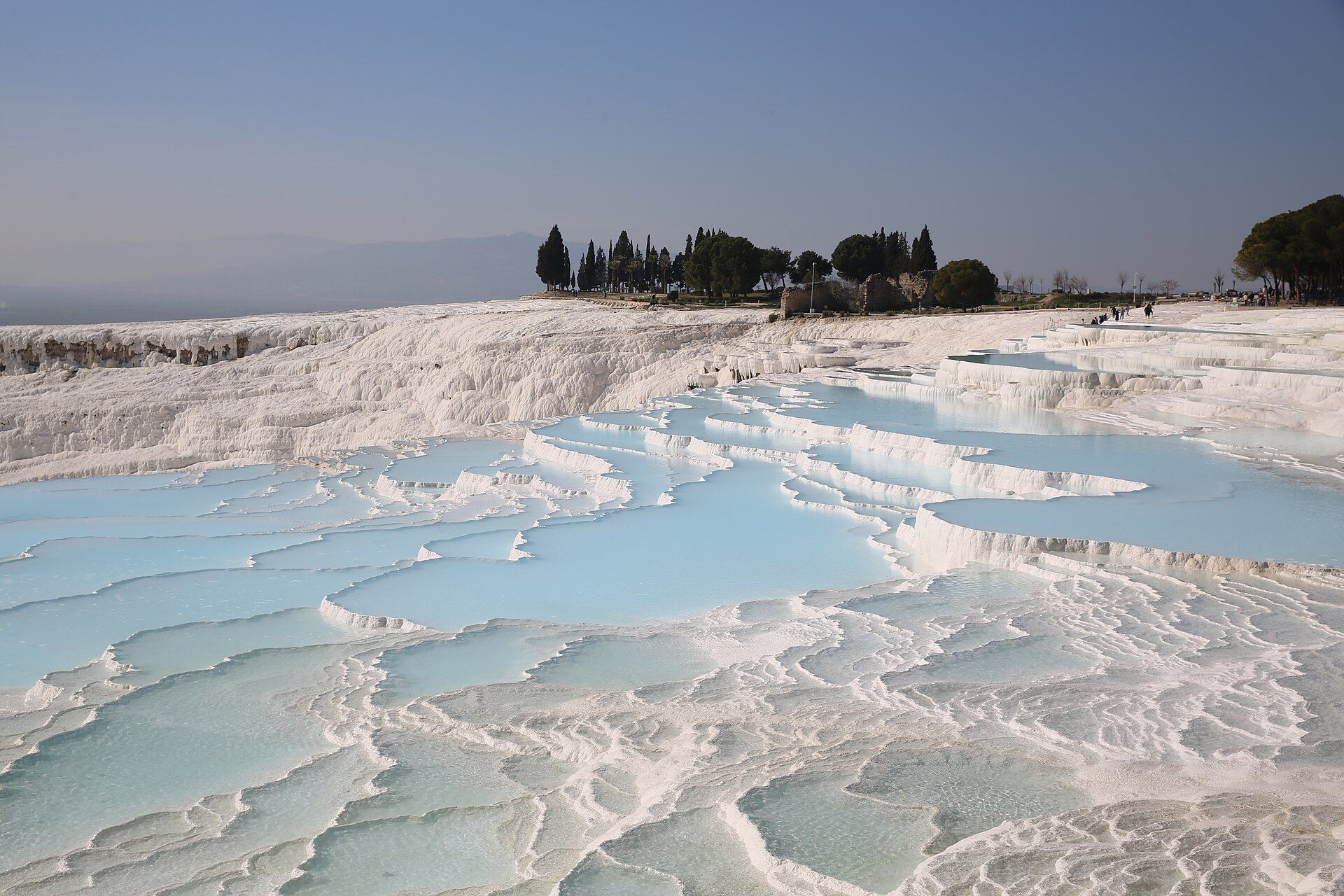
The 'Cotton Castle' — a dazzling white hillside of terraced travertine pools formed by mineral-rich hot springs, where warm turquoise water spills over blindingly white stone terraces.
What makes it marvelous
For thousands of years, warm calcium-rich water has bubbled up from springs at the top of the hill and cascaded down the slope. As it flows and cools, it deposits calcium carbonate, which builds up into brilliant white travertine terraces and shallow scalloped pools — the same living-rock process seen at Plitvice, but here on an open, gleaming white hillside. Above the terraces stand the ruins of Hierapolis, an ancient spa city whose people came to bathe in these same thermal waters. Together they form a UNESCO World Heritage Site.
Why visit
Walking barefoot down the warm, white travertine terraces with turquoise water pooling around your feet, the whole hillside gleaming in the sun, is a surreal delight — and you can bathe among sunken Roman columns in the adjacent thermal pool at Hierapolis.
What to know before you go
🗓️ Best time
Spring (April–June) and autumn (September–October) for pleasant temperatures; the white terraces are dazzling in bright sun, and early or late in the day avoids the crowds.
🧭 Getting there & access
From Denizli in southwestern Turkey (with an airport), a short ride to the site. Visitors walk designated barefoot routes on the terraces to protect them; the Hierapolis ruins and thermal pool adjoin.
Good to know
- You must go barefoot on the terraces to protect the fragile travertine.
- Visit early or late for softer light and fewer crowds.
- Combine the terraces with the ruins and thermal pool of Hierapolis.
Plan your visit
Easy🧭 Getting there
From Denizli, Turkey
- Fly Istanbul → Denizli (DNZ) — roughly 1h15
- Drive or bus Denizli → Pamukkale village — about 20–30 minutes
- Enter the site and walk up the travertines barefoot to Hierapolis
- Total travel
- Under an hour from Denizli
- Time at site
- Half a day, with the ruins and the pool
- Access
- The white travertine terraces and the ruins of Hierapolis above them share one ticketed site. To protect the soft calcium surface you must take your shoes off and walk the terraces barefoot — this is enforced, not optional — and the authorities rotate the water between terraces to preserve them, so some pools you see in photographs may be dry when you visit. The antique thermal pool among the ruins costs extra to bathe in. Tour buses from the coast pour in over the middle of the day.
🎒 What to bring & consider
- The readiness to go barefoot on the travertines, which is compulsory to protect them — carry your shoes in a bag for the walk up
- A grip of the fact that the surface is slippery and uneven, and the water in the open pools is shallower and cooler than it looks
- Sun protection for a blindingly white, wholly unshaded slope that reflects the heat back at you
- A swimsuit if you want the antique pool, plus small notes for its separate entry
- Timing for early morning or late afternoon, to miss both the midday tour crush and the harshest light on the white terraces
👁️ What to expect
- Crowds
- Heavy in the middle of the day as coach tours arrive. Early and late are calmer and cooler.
- Conditions
- Warm, bright and slippery underfoot on the terraces; a large ancient site to wander above.
- Facilities
- Good — the village below has food and lodging, and there are facilities at the entrances.
- The view
- The tiered white pools stepping down the hillside with figures reflected in the water, best when the sun is low enough to give the terraces some shadow and depth. Check which terraces are watered that day before climbing for the classic frame.
Times and requirements are approximate and change with season, weather, and local rules — confirm permits, fares, and schedules with operators before you travel.
Natural riches of the area
- Mineral-rich thermal springs (calcium carbonate)
- Living, growing travertine terraces and pools
- Geothermal heat from the active regional geology
- An ancient spa heritage at Hierapolis
Local food
- Gözleme
- Thin Anatolian flatbread filled with cheese, spinach, or potato and griddled.
- Kebabs & mezze
- Grilled meats with shared small plates and salads.
- Turkish tea & baklava
- Sweet tea and layered honey-and-nut pastry.
Pamukkale — ‘Cotton Castle’ in Turkish — is a hillside that looks as though it were carved from snow or cloud. For thousands of years, warm, calcium-laden water has welled up from springs at the top and flowed down the slope; as it cools it leaves its minerals behind as brilliant white travertine, building terrace upon terrace of shallow, scalloped pools filled with turquoise water. It is the same rock-building process that shapes Plitvice’s dams, but here it gleams in the open sun.
The ancients understood the magic of the place. Above the terraces sprawl the ruins of Hierapolis, a spa city whose people bathed in these thermal waters, and where you can still swim among toppled Roman columns in a warm pool. Walking barefoot down the warm, white terraces with the water pooling at your feet, you feel like you’re descending a frozen waterfall that never freezes — one of the most surreal and beautiful sights in Turkey.
Pamukkale: common questions
How do you get to Pamukkale?
From Denizli, Turkey: Fly Istanbul → Denizli (DNZ) — roughly 1h15; Drive or bus Denizli → Pamukkale village — about 20–30 minutes; Enter the site and walk up the travertines barefoot to Hierapolis. Allow Under an hour from Denizli.
When is the best time to visit Pamukkale?
Spring (April–June) and autumn (September–October) for pleasant temperatures; the white terraces are dazzling in bright sun, and early or late in the day avoids the crowds.
How long should you spend at Pamukkale?
Half a day, with the ruins and the pool. Under an hour from Denizli of travel from Denizli, Turkey.
What should you bring to Pamukkale?
The readiness to go barefoot on the travertines, which is compulsory to protect them — carry your shoes in a bag for the walk up A grip of the fact that the surface is slippery and uneven, and the water in the open pools is shallower and cooler than it looks Sun protection for a blindingly white, wholly unshaded slope that reflects the heat back at you A swimsuit if you want the antique pool, plus small notes for its separate entry Timing for early morning or late afternoon, to miss both the midday tour crush and the harshest light on the white terraces
Do you need a permit or guide for Pamukkale?
The white travertine terraces and the ruins of Hierapolis above them share one ticketed site. To protect the soft calcium surface you must take your shoes off and walk the terraces barefoot — this is enforced, not optional — and the authorities rotate the water between terraces to preserve them, so some pools you see in photographs may be dry when you visit. The antique thermal pool among the ruins costs extra to bathe in. Tour buses from the coast pour in over the middle of the day.
Is Pamukkale crowded, and what are conditions like?
Heavy in the middle of the day as coach tours arrive. Early and late are calmer and cooler. Warm, bright and slippery underfoot on the terraces; a large ancient site to wander above. Facilities: good — the village below has food and lodging, and there are facilities at the entrances.
Added Updated
More wonders to explore