Gros Morne
📍 Newfoundland, Canada
A dramatic Newfoundland wilderness of landlocked fjords and bare orange mountains — where a slice of the Earth's mantle lies exposed at the surface, helping prove the theory of plate tectonics.
What makes it marvelous
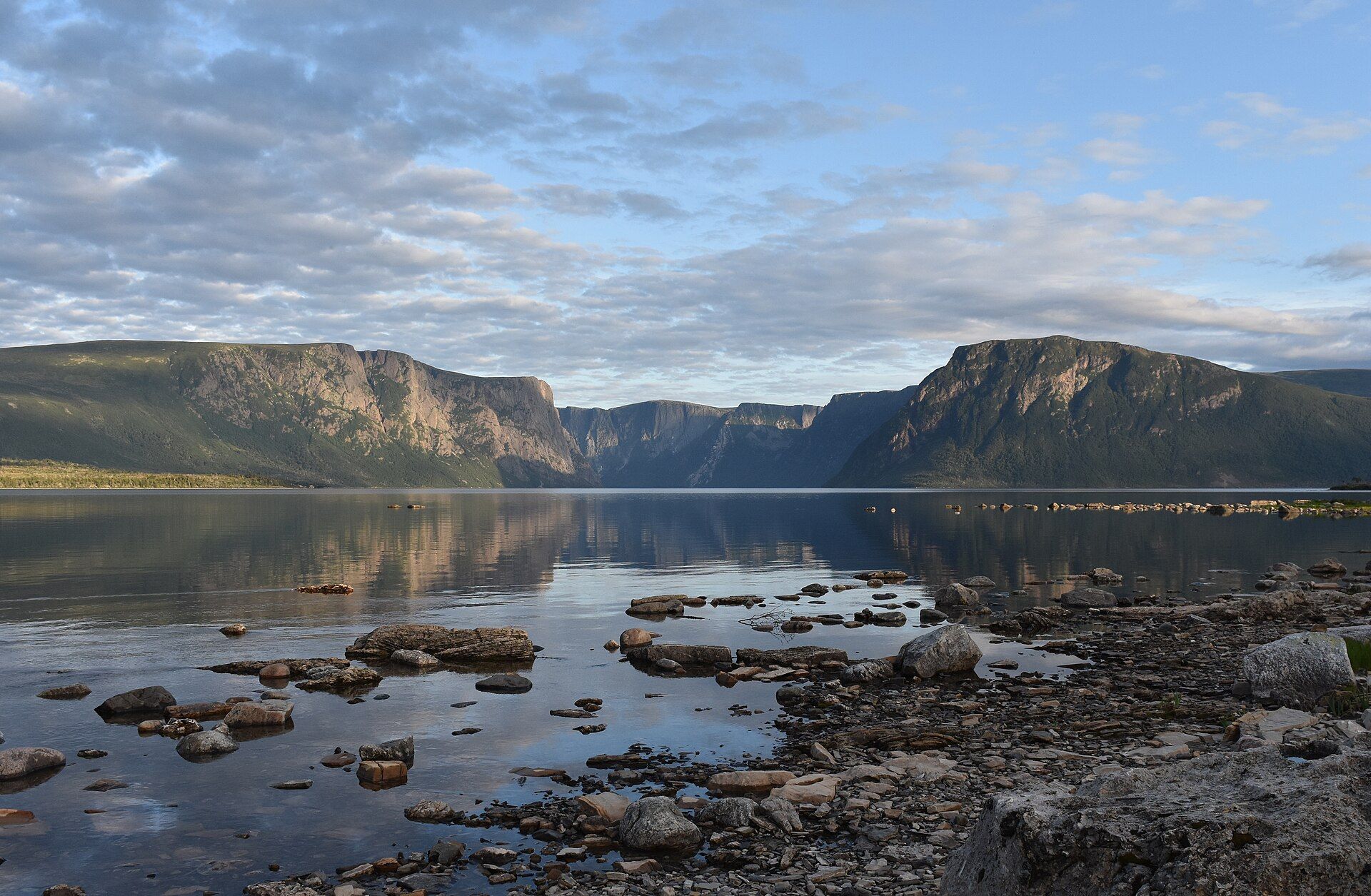
Gros Morne is a geologist's holy grail. Its bizarre, barren 'Tablelands' are made of peridotite — rock from deep in the Earth's mantle, normally kilometres down, thrust to the surface when ancient continents collided and an ocean closed. So toxic to most plants that it stays orange and bare, this exposed mantle offered key evidence for plate tectonics. Alongside it, glaciers carved deep U-shaped valleys later cut off from the sea to form landlocked fjords like Western Brook Pond, where cliffs plunge 600 metres to still, pure water. It is a UNESCO World Heritage Site.
Why visit
Cruising beneath the towering cliffs of a landlocked fjord, hiking the otherworldly mantle rock of the Tablelands, and taking in the boreal wilderness, moose, and rugged coast make Gros Morne one of the most striking and scientifically important parks in North America.
What to know before you go
🗓️ Best time
Summer to early autumn (roughly June–September), when the park roads, trails, and boat tours are open and the weather is mildest; winters are long and snowy.
🧭 Getting there & access
On the west coast of Newfoundland, reached via Deer Lake airport. Trails, the Tablelands, and boat tours on Western Brook Pond are the highlights; the fjord cruise involves a walk in to the boat.
Good to know
- Take the Western Brook Pond boat tour for the landlocked-fjord cliffs.
- Walk the Tablelands to stand on exposed mantle rock.
- Watch for moose, especially at dawn and dusk on the roads.
Plan your visit
Moderate🧭 Getting there
From Rocky Harbour, Newfoundland, Canada
- Fly → Deer Lake (YDF), Newfoundland
- Drive Deer Lake → Rocky Harbour in Gros Morne National Park — roughly 45 minutes to an hour
- Reach the Western Brook Pond boat tour, the Tablelands and the Gros Morne Mountain trail from there
- Total travel
- Under an hour from Deer Lake airport
- Time at site
- Three or four days
- Access
- Gros Morne needs a Parks Canada pass, and its headline experiences each have their own catch. The Western Brook Pond boat tour into the landlocked fjord starts with a roughly 3km walk to the dock and books up in summer, so reserve ahead. The Tablelands, a slab of the Earth's mantle pushed to the surface, is an easy and extraordinary walk. The tough Gros Morne Mountain trail is long, exposed and closed each spring into early summer to protect calving caribou and moulting ptarmigan — check the opening date before counting on it. Newfoundland weather is famously changeable.
🎒 What to bring & consider
- A Parks Canada pass and a booked Western Brook Pond boat tour, which fills in summer and needs a 3km walk in to the dock
- A check of the Gros Morne Mountain trail's opening date, since it is closed spring into early summer for wildlife
- Layers and waterproofs for genuinely changeable Newfoundland weather, cold and wet even in summer
- Sturdy boots for the barren Tablelands rock and the long, steep mountain trail
- Insect repellent for the black flies and mosquitoes of the Newfoundland summer
👁️ What to expect
- Crowds
- Modest. The boat tour and main trailheads gather people; the park at large stays quiet and wild.
- Conditions
- Cool, wet and windswept, from an easy mantle-rock walk to a hard exposed mountain climb.
- Facilities
- Rocky Harbour and nearby towns have lodging and food; visitor centres in the park. Little on the trails.
- The view
- The sheer cliffs of Western Brook Pond rising from the still water from the tour boat, and the strange orange barrens of the Tablelands. Overcast light suits the fjord; the boat gets you the walls no roadside view can.
Times and requirements are approximate and change with season, weather, and local rules — confirm permits, fares, and schedules with operators before you travel.
Natural riches of the area
- Exposed mantle rock (peridotite) — evidence for plate tectonics
- Glacier-carved landlocked fjords and U-shaped valleys
- Boreal forest, barrens, and rugged Atlantic coast
- Moose, caribou, seabirds, and Atlantic marine life
Local food
- Fresh cod & seafood
- Newfoundland's iconic fish, plus lobster and snow crab.
- Jiggs dinner
- A traditional Newfoundland boiled dinner of salt beef and vegetables.
- Partridgeberries & bakeapples
- Wild northern berries used in jams and desserts.
Gros Morne is a place where the inside of the planet has been turned out. Its strange, barren Tablelands are peridotite — rock from the Earth’s mantle, normally buried kilometres deep, heaved to the surface when ancient continents collided and an ocean vanished between them. The rock is so hostile to plant life that the plateau stays a bare, rusty orange, and its very presence at the surface gave scientists crucial evidence for the theory of plate tectonics.
Beside this geological marvel lies a landscape of glacier-carved beauty: deep U-shaped valleys, and landlocked fjords like Western Brook Pond, where sheer cliffs drop 600 metres into water so pure it is nearly distilled. A UNESCO World Heritage Site on the wild west coast of Newfoundland, Gros Morne pairs boreal wilderness, moose, and rugged Atlantic coast with a rock story that helped rewrite our understanding of how the Earth works.
Gros Morne: common questions
How do you get to Gros Morne?
From Rocky Harbour, Newfoundland, Canada: Fly → Deer Lake (YDF), Newfoundland; Drive Deer Lake → Rocky Harbour in Gros Morne National Park — roughly 45 minutes to an hour; Reach the Western Brook Pond boat tour, the Tablelands and the Gros Morne Mountain trail from there. Allow Under an hour from Deer Lake airport.
When is the best time to visit Gros Morne?
Summer to early autumn (roughly June–September), when the park roads, trails, and boat tours are open and the weather is mildest; winters are long and snowy.
How long should you spend at Gros Morne?
Three or four days. Under an hour from Deer Lake airport of travel from Rocky Harbour, Newfoundland, Canada.
What should you bring to Gros Morne?
A Parks Canada pass and a booked Western Brook Pond boat tour, which fills in summer and needs a 3km walk in to the dock A check of the Gros Morne Mountain trail's opening date, since it is closed spring into early summer for wildlife Layers and waterproofs for genuinely changeable Newfoundland weather, cold and wet even in summer Sturdy boots for the barren Tablelands rock and the long, steep mountain trail Insect repellent for the black flies and mosquitoes of the Newfoundland summer
Do you need a permit or guide for Gros Morne?
Gros Morne needs a Parks Canada pass, and its headline experiences each have their own catch. The Western Brook Pond boat tour into the landlocked fjord starts with a roughly 3km walk to the dock and books up in summer, so reserve ahead. The Tablelands, a slab of the Earth's mantle pushed to the surface, is an easy and extraordinary walk. The tough Gros Morne Mountain trail is long, exposed and closed each spring into early summer to protect calving caribou and moulting ptarmigan — check the opening date before counting on it. Newfoundland weather is famously changeable.
Is Gros Morne crowded, and what are conditions like?
Modest. The boat tour and main trailheads gather people; the park at large stays quiet and wild. Cool, wet and windswept, from an easy mantle-rock walk to a hard exposed mountain climb. Facilities: rocky Harbour and nearby towns have lodging and food; visitor centres in the park. Little on the trails.
Added Updated
More wonders to explore