Kaziranga
📍 Assam, India
A vast floodplain of tall grass and marsh on the Brahmaputra — home to two-thirds of the world's great one-horned rhinos, plus tigers, elephants, and wild buffalo in astonishing numbers.
What makes it marvelous
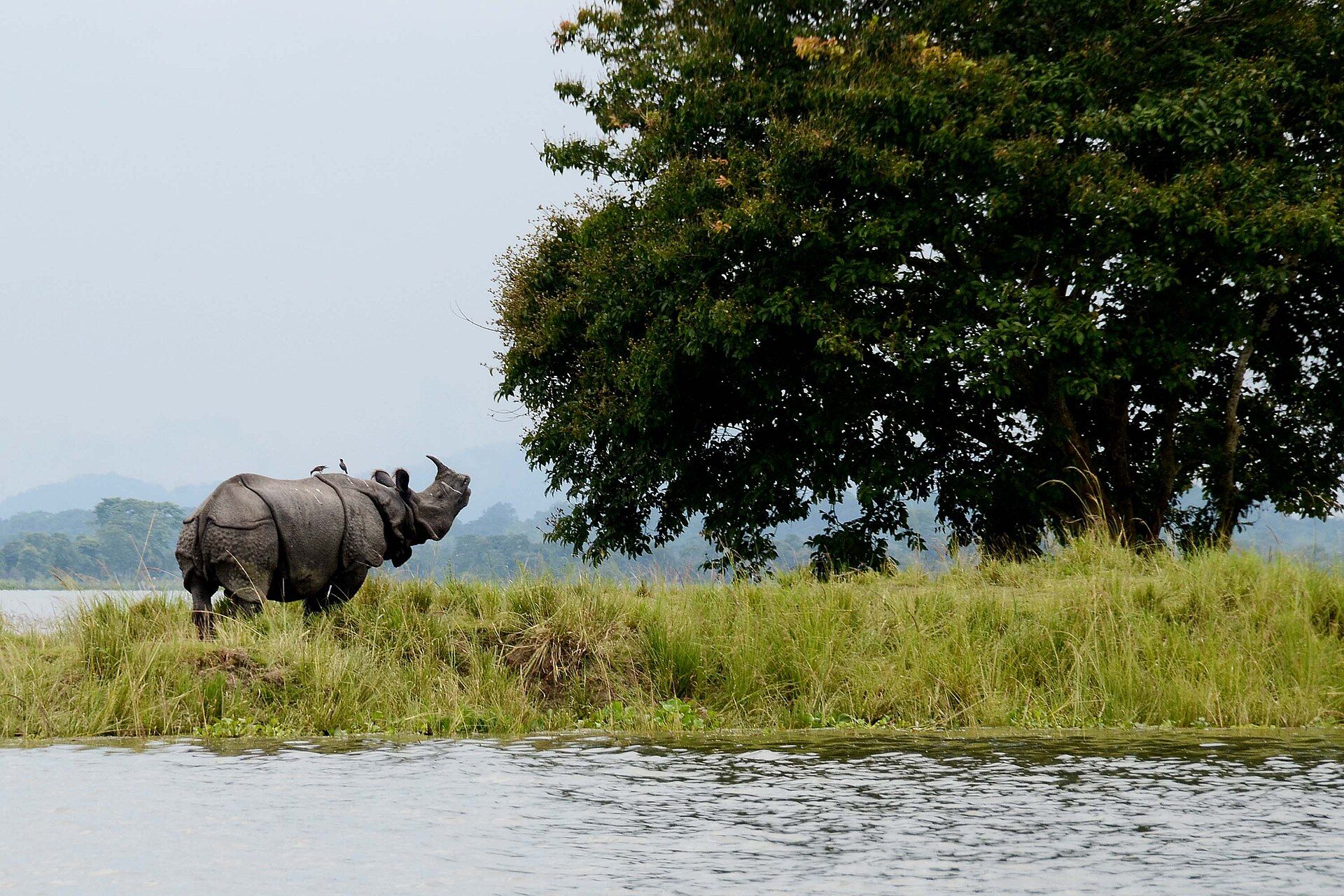
On the floodplain of the mighty Brahmaputra River in Assam, Kaziranga is one of Asia's greatest wildlife strongholds. Its wet grasslands, marshes, and forests — flooded and renewed each monsoon — support the largest population of the great one-horned rhinoceros on Earth, roughly two-thirds of the entire species, brought back from the brink of extinction here. The same rich habitat holds one of the highest densities of tigers of any protected area, along with herds of wild Asian elephants, swamp deer, and the wild water buffalo, while its wetlands teem with migratory birds. The annual flood pulse of the Brahmaputra is the engine of all this abundance. It is a UNESCO World Heritage Site and a conservation triumph.
Why visit
Riding out across the grasslands at dawn to watch rhinos, elephants, and wild buffalo graze the misty floodplain — with a real chance of a tiger — makes Kaziranga one of the finest and most rewarding safaris in Asia.
What to know before you go
🗓️ Best time
The dry, cool season (roughly November–April), when the park is open, wildlife gathers at water, and the weather is pleasant; the monsoon floods and closes the park.
🧭 Getting there & access
In Assam, northeastern India, reached via Guwahati or Jorhat by road; jeep and (seasonal) elephant-back safaris run in designated ranges with park guides.
Good to know
- Visit November–April; the park closes during the monsoon flood.
- Take an early-morning jeep safari for the best wildlife and light.
- Book safaris and permits through the park in advance.
Plan your visit
Easy🧭 Getting there
From Jorhat (JRH) or Guwahati (GAU), Assam
- Fly Delhi or Kolkata → Guwahati — roughly 2h30 from Delhi
- Road Guwahati → Kaziranga — about 4h30–5h30; from Jorhat it is only 2h–2h30
- Safaris leave from the range gates, most of them near Kohora on the highway
- Total travel
- Most of a day from Delhi
- Time at site
- 2–3 days, so you can cover more than one range
- Access
- Park entry plus separate jeep and elephant-back safari charges, booked through the Assam forest department or your lodge. The park closes for the monsoon, roughly mid-May to late October — this is not a partial closure but a genuine flooding of the park by the Brahmaputra, during which the animals move to higher ground. Opening dates shift with the water each year, so confirm with the forest department.
🎒 What to bring & consider
- Warm layers for winter dawn safaris — an open jeep in Assamese river fog before sunrise is properly cold
- Binoculars; much of the grassland viewing is at real distance
- Neutral clothing and dust protection for the tracks
- Mosquito precautions and travel-clinic advice on malaria for the region
- Cash, since gate formalities and local hire run on it
👁️ What to expect
- Crowds
- The central Kohora range is much the busiest. The western and eastern ranges are far quieter for comparable wildlife.
- Conditions
- Open jeep on rough tracks through elephant grass that stands taller than the vehicle. Cold and foggy at dawn, warm by mid-morning.
- Facilities
- Lodges and eateries strung along the highway at Kohora. Nothing inside the ranges.
- The view
- Rhinos are near-certain and often close. Tigers are present in real numbers, but the grass is tall and sightings are genuinely uncommon — plan for rhino, elephant and birds, and treat a tiger as a windfall.
Times and requirements are approximate and change with season, weather, and local rules — confirm permits, fares, and schedules with operators before you travel.
Natural riches of the area
- The world's largest population of one-horned rhinos
- High-density tigers, wild elephants, and swamp deer
- The rare wild water buffalo and rich birdlife
- Brahmaputra floodplain grasslands renewed each monsoon
Local food
- Assamese thali
- Rice with fish, greens, and tangy dishes tempered with local herbs.
- Masor tenga
- A light, sour Assamese fish curry, a regional specialty.
- Assam tea
- The famous robust black tea grown across the surrounding estates.
On the broad floodplain of the Brahmaputra in Assam, Kaziranga is one of Asia’s greatest wildlife strongholds. Its tall wet grasslands and marshes — flooded and renewed by the river every monsoon — shelter the largest population of the great one-horned rhinoceros on Earth, around two-thirds of the entire species, hauled back from the edge of extinction within this very park.
The same rich habitat brims with other giants: one of the densest tiger populations anywhere, herds of wild Asian elephants, swamp deer, and the rare wild water buffalo, with wetlands full of migratory birds. The engine of it all is the Brahmaputra’s annual flood, which keeps the grasslands lush and productive. To ride out across the misty floodplain at dawn among rhinos and elephants is one of the finest safaris in Asia — and the reason Kaziranga is a celebrated UNESCO World Heritage Site and a genuine conservation triumph.
Kaziranga: common questions
How do you get to Kaziranga?
From Jorhat (JRH) or Guwahati (GAU), Assam: Fly Delhi or Kolkata → Guwahati — roughly 2h30 from Delhi; Road Guwahati → Kaziranga — about 4h30–5h30; from Jorhat it is only 2h–2h30; Safaris leave from the range gates, most of them near Kohora on the highway. Allow Most of a day from Delhi.
When is the best time to visit Kaziranga?
The dry, cool season (roughly November–April), when the park is open, wildlife gathers at water, and the weather is pleasant; the monsoon floods and closes the park.
How long should you spend at Kaziranga?
2–3 days, so you can cover more than one range. Most of a day from Delhi of travel from Jorhat (JRH) or Guwahati (GAU), Assam.
What should you bring to Kaziranga?
Warm layers for winter dawn safaris — an open jeep in Assamese river fog before sunrise is properly cold Binoculars; much of the grassland viewing is at real distance Neutral clothing and dust protection for the tracks Mosquito precautions and travel-clinic advice on malaria for the region Cash, since gate formalities and local hire run on it
Do you need a permit or guide for Kaziranga?
Park entry plus separate jeep and elephant-back safari charges, booked through the Assam forest department or your lodge. The park closes for the monsoon, roughly mid-May to late October — this is not a partial closure but a genuine flooding of the park by the Brahmaputra, during which the animals move to higher ground. Opening dates shift with the water each year, so confirm with the forest department.
Is Kaziranga crowded, and what are conditions like?
The central Kohora range is much the busiest. The western and eastern ranges are far quieter for comparable wildlife. Open jeep on rough tracks through elephant grass that stands taller than the vehicle. Cold and foggy at dawn, warm by mid-morning. Facilities: lodges and eateries strung along the highway at Kohora. Nothing inside the ranges.
Added
More wonders to explore