Meteora
📍 Thessaly, central Greece
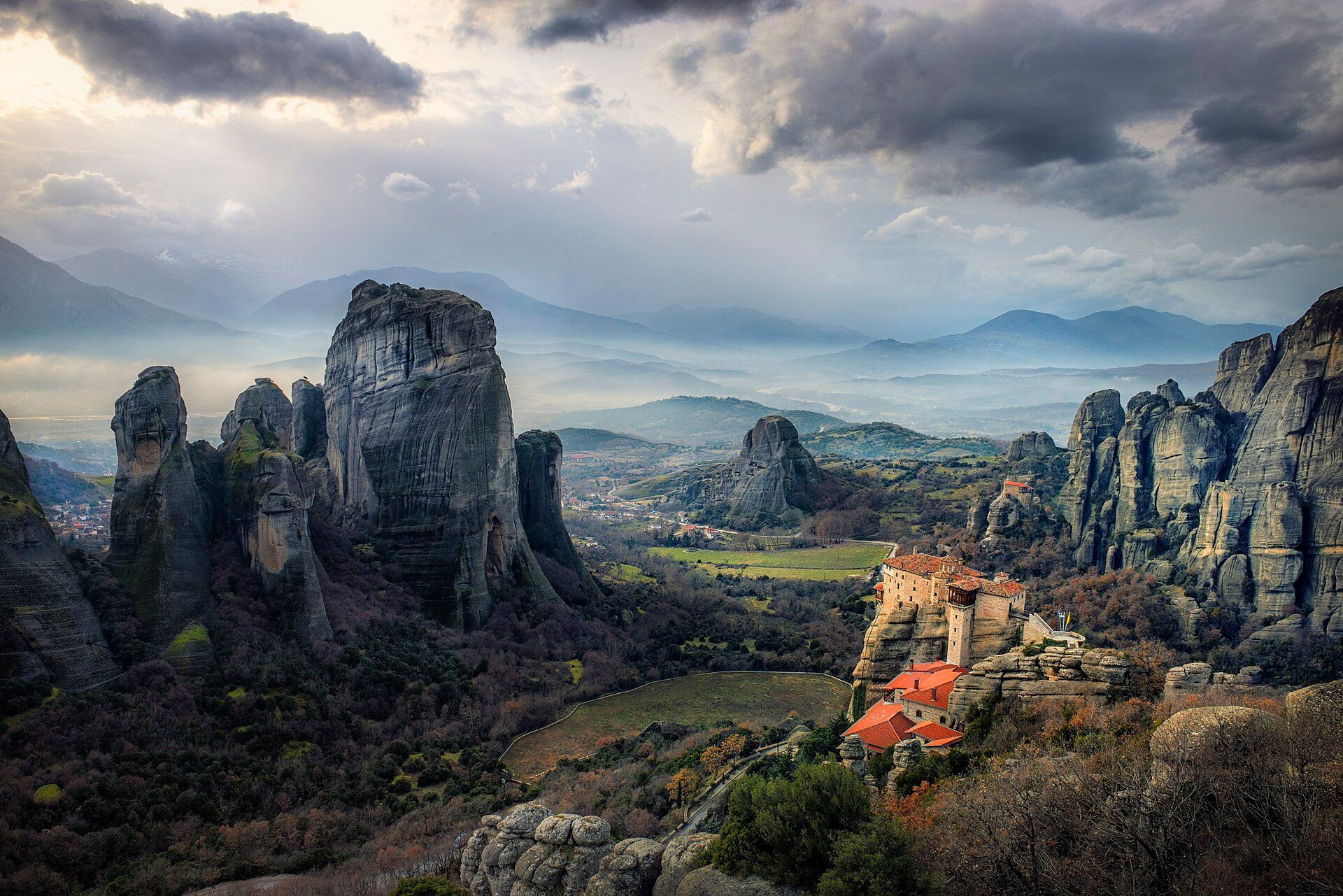
A cluster of colossal, sheer rock pillars soaring from the plains of Thessaly — a surreal geological forest of stone towers, several capped by centuries-old monasteries built where the cliffs seem to touch the sky.
What makes it marvelous
The name Meteora means 'suspended in the air', and the towers earn it: enormous pillars of sandstone and conglomerate rock, some rising 300–400 metres, formed from the compacted sediment of an ancient river delta and sea, then lifted and eroded over millions of years by water, wind, and earthquakes into isolated columns. From the 14th century, monks built monasteries atop the least accessible summits — reachable once only by ropes and ladders — creating one of the most extraordinary meetings of geology and human determination anywhere. It is a UNESCO World Heritage Site.
Why visit
Wandering or driving among the towers, watching them glow at sunset and mist gather in the valleys, is spellbinding, and the clifftop monasteries offer sweeping views and a sense of how remote these summits once were. It's a landscape that feels genuinely otherworldly.
What to know before you go
🗓️ Best time
Spring and autumn (roughly April–June and September–October) for mild weather, greenery, and atmospheric light; summer is hot and busy.
🧭 Getting there & access
From the town of Kalambaka/Kastraki in Thessaly, central Greece (reachable by train or road from Athens/Thessaloniki). Roads, trails, and steps lead among the rocks and up to the monasteries.
Good to know
- Catch sunrise or sunset, when the towers glow and the valleys fill with mist.
- Dress modestly if visiting the working monasteries, and check opening days.
- Hiking trails between the rocks give quieter, more dramatic views than the road.
Plan your visit
Moderate🧭 Getting there
From Kalambaka, Thessaly, Greece
- Take the train Athens → Kalambaka — roughly 4h30–5h, or drive
- Base in Kalambaka or Kastraki at the foot of the rocks
- Drive or walk the road that links the six monasteries on their pillars
- Total travel
- Around five hours from Athens by train
- Time at site
- A full day, or two to see all six monasteries
- Access
- Six monasteries still function on top of the rock pillars, each charging a small entrance fee and — crucially — each keeping its own closed day, so they are never all open at once; check the current opening days before you plan a route, or you will climb to a locked gate. A strict dress code is enforced: shoulders covered for everyone, long trousers for men and skirts below the knee for women, with wrap skirts usually lent at the door. Reaching each one means a climb of steep stone steps. Do not try to cram all six into one day.
🎒 What to bring & consider
- Modest dress that satisfies the code — covered shoulders, and long skirts for women and trousers for men — since it is enforced at every monastery door
- A check of which monasteries are open on your day, because each closes on a different day and none opens every day
- Legs and footwear for repeated flights of steep stone steps, one climb per monastery
- An early start to beat both the midday coach tours and the strong Thessalian summer heat
- Water and sun cover for the exposed clifftop road and viewpoints between monasteries
👁️ What to expect
- Crowds
- Coach tours fill the accessible monasteries and the sunset viewpoints midday. Early morning is quiet.
- Conditions
- Hot in summer, with a mix of easy driving and steep step-climbing at each monastery.
- Facilities
- Full in Kalambaka and Kastraki below. Basic at the monasteries — respect that they are working religious houses.
- The view
- A monastery perched on its pillar with the valley and other rocks behind, caught at sunset from the marked viewpoints on the loop road. Dawn light and mist rising between the pillars is the quieter, subtler alternative.
Times and requirements are approximate and change with season, weather, and local rules — confirm permits, fares, and schedules with operators before you travel.
Natural riches of the area
- Giant sandstone-and-conglomerate rock pillars
- Cliff ecosystems and raptors (including vultures and eagles)
- The fertile Thessalian plain below
- A dramatic meeting of geology and cultural heritage
Local food
- Greek roast lamb & moussaka
- Classic hearty dishes of the Greek interior.
- Feta & village salad
- Sheep's-milk cheese and fresh vegetables with olive oil.
- Local Thessalian wine
- Wines from the plains and hills around Meteora.
Meteora looks impossible. Out of the flat plains of Thessaly rise a cluster of colossal rock pillars — sheer towers of sandstone and conglomerate, some 300 to 400 metres tall — formed from the compacted sediment of an ancient delta and sea, then lifted and carved by water, wind, and earthquakes over millions of years until only the isolated columns remained. The name means ‘suspended in the air’, and standing among them, watching mist pool in the valleys below, you understand why.
The geology alone would make Meteora remarkable; human history makes it astonishing. From the 14th century, monks built monasteries on the least reachable summits, hauling themselves and their supplies up by rope and ladder to live above the world. Several still crown the towers today, a UNESCO-listed meeting of stone and determination. Come at sunrise or sunset, when the pillars glow gold and the whole scene tips into the surreal.
Meteora: common questions
How do you get to Meteora?
From Kalambaka, Thessaly, Greece: Take the train Athens → Kalambaka — roughly 4h30–5h, or drive; Base in Kalambaka or Kastraki at the foot of the rocks; Drive or walk the road that links the six monasteries on their pillars. Allow Around five hours from Athens by train.
When is the best time to visit Meteora?
Spring and autumn (roughly April–June and September–October) for mild weather, greenery, and atmospheric light; summer is hot and busy.
How long should you spend at Meteora?
A full day, or two to see all six monasteries. Around five hours from Athens by train of travel from Kalambaka, Thessaly, Greece.
What should you bring to Meteora?
Modest dress that satisfies the code — covered shoulders, and long skirts for women and trousers for men — since it is enforced at every monastery door A check of which monasteries are open on your day, because each closes on a different day and none opens every day Legs and footwear for repeated flights of steep stone steps, one climb per monastery An early start to beat both the midday coach tours and the strong Thessalian summer heat Water and sun cover for the exposed clifftop road and viewpoints between monasteries
Do you need a permit or guide for Meteora?
Six monasteries still function on top of the rock pillars, each charging a small entrance fee and — crucially — each keeping its own closed day, so they are never all open at once; check the current opening days before you plan a route, or you will climb to a locked gate. A strict dress code is enforced: shoulders covered for everyone, long trousers for men and skirts below the knee for women, with wrap skirts usually lent at the door. Reaching each one means a climb of steep stone steps. Do not try to cram all six into one day.
Is Meteora crowded, and what are conditions like?
Coach tours fill the accessible monasteries and the sunset viewpoints midday. Early morning is quiet. Hot in summer, with a mix of easy driving and steep step-climbing at each monastery. Facilities: full in Kalambaka and Kastraki below. Basic at the monasteries — respect that they are working religious houses.
Added Updated
More wonders to explore