Plitvice Lakes
📍 Lika, central Croatia
A staircase of sixteen turquoise lakes tumbling one into the next over natural travertine dams and countless waterfalls, threaded by boardwalks through lush forest — Croatia's oldest and most beloved national park.
What makes it marvelous
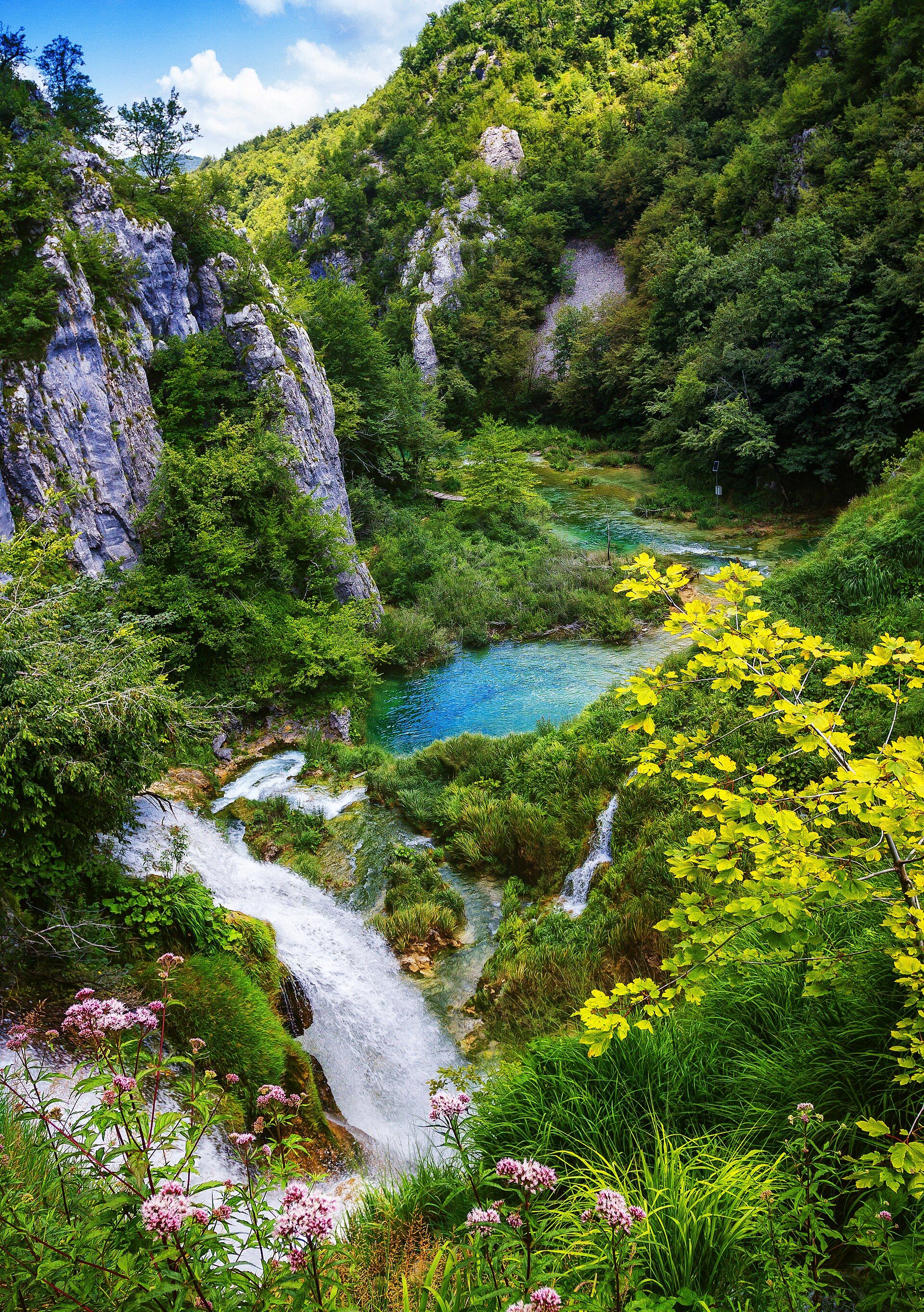
Plitvice's chain of lakes descends a forested valley, each held back by a natural dam of travertine — porous rock deposited by mineral-rich water reacting with moss, algae, and bacteria, which grows and shifts over time so the falls and dams are literally alive and changing. Dissolved minerals and the play of light give the water its extraordinary shifting colours, from azure to emerald to grey. It is a UNESCO World Heritage Site and a rare example of active travertine-building on this scale.
Why visit
Wooden walkways lead right across and beside the water, past waterfalls large and small, through beech-and-fir forest — an immersive, ever-changing water world. It's one of Europe's most photogenic parks, beautiful in every season.
More views of Plitvice Lakes
Additional photographs of the actual site — each freely licensed, with its photographer and licence credited.
What to know before you go
🗓️ Best time
Spring (April–June) for full waterfalls from snowmelt; autumn for colour and fewer crowds. Summer is busy; winter can freeze the falls into ice.
🧭 Getting there & access
In central Croatia, roughly midway between Zagreb and the Dalmatian coast (Zadar/Split). Marked trails, shuttle buses, and electric boats connect the upper and lower lakes; timed entry may apply in peak season.
Good to know
- Arrive at opening to walk the boardwalks before the crowds.
- Stay on the walkways — swimming is not permitted, to protect the fragile travertine.
- Spring snowmelt makes the waterfalls most powerful.
Plan your visit
Easy🧭 Getting there
From Zagreb or Zadar, Croatia
- Fly to Zagreb or Zadar
- Road or bus to the park — roughly 2h–2h30 from Zagreb, about 2h from Zadar
- Shuttle buses and an electric boat move you between sectors inside
- Total travel
- Half a day from either city
- Time at site
- 4–6 hours for a full circuit; a full day at a comfortable pace
- Access
- Timed-entry ticket bought online in advance. The park caps daily numbers in high season and walk-up tickets do sell out. Swimming is prohibited throughout, as is leaving the boardwalk; drones and dogs are restricted.
🎒 What to bring & consider
- Shoes with real grip — the wooden boardwalks are wet with spray and several stretches have no handrail beside deep water
- A rain layer; this is a wet karst forest and showers are frequent
- Water and food, since the few cafes inside are queued and limited
- Your ticket downloaded or printed — signal inside the park is unreliable
- Winter layers and traction if you visit in the cold months, when sections close for ice
👁️ What to expect
- Crowds
- Genuinely congested on the lower-lake boardwalks through midsummer, with slow single-file queues. First entry and the shoulder seasons transform the visit.
- Conditions
- Several kilometres of flat boardwalk and gravel path with stairs — easy, but long, and unforgiving of poor footwear.
- Facilities
- Toilets, cafes and shuttle stops at the entrances; sparse in between.
- The view
- The water colour reads better under bright overcast than harsh midday sun. Autumn colour and high spring flow are the two strongest windows.
Times and requirements are approximate and change with season, weather, and local rules — confirm permits, fares, and schedules with operators before you travel.
Natural riches of the area
- Active travertine dams (living, growing rock)
- Sixteen terraced lakes and countless waterfalls
- Beech and fir forest rich in wildlife (bears, wolves, birds)
- Clean karst spring water and caves
Local food
- Roast lamb & peka
- Meat and vegetables slow-cooked under a bell-shaped lid with embers.
- Freshwater trout
- From the park's clear rivers and lakes.
- Štrukli
- A Croatian pastry of dough and fresh cheese, baked or boiled.
Plitvice is a landscape that builds itself. Sixteen turquoise lakes step down a forested valley, each held back by a natural dam — but these dams are not ordinary rock. They are travertine, laid down as mineral-rich water reacts with moss and microbes, growing slowly so that the falls and barriers actually shift and change over the years. It is one of the rare places where you can watch rock being made by living things, on a grand scale.
The water is the star: dissolved minerals and the angle of the light turn the lakes every shade from azure to emerald to slate grey, and waterfalls large and small link one lake to the next. Wooden boardwalks carry you right across and beside it all, through beech-and-fir forest alive with birds (and, unseen, bears and wolves). Croatia’s oldest national park and a UNESCO World Heritage Site, Plitvice is one of the loveliest water-worlds in Europe — and no two visits are quite the same.
The sixteen lakes fall into two groups: an upper set cradled in dolomite and forest, and a lower set cut into a limestone canyon that ends at Veliki Slap — the ‘Great Waterfall’, at about 78 metres the tallest in Croatia. Kozjak, the largest lake, is crossed by the park’s silent electric boats, which link the two halves of the walking route. The name itself comes from the Croatian plitko, ‘shallow’, for the shallow, terraced basins the travertine dams keep building — a reminder that the whole staircase is still, slowly, under construction.
Plitvice Lakes: common questions
How do you get to Plitvice Lakes?
From Zagreb or Zadar, Croatia: Fly to Zagreb or Zadar; Road or bus to the park — roughly 2h–2h30 from Zagreb, about 2h from Zadar; Shuttle buses and an electric boat move you between sectors inside. Allow Half a day from either city.
When is the best time to visit Plitvice Lakes?
Spring (April–June) for full waterfalls from snowmelt; autumn for colour and fewer crowds. Summer is busy; winter can freeze the falls into ice.
How long should you spend at Plitvice Lakes?
4–6 hours for a full circuit; a full day at a comfortable pace. Half a day from either city of travel from Zagreb or Zadar, Croatia.
What should you bring to Plitvice Lakes?
Shoes with real grip — the wooden boardwalks are wet with spray and several stretches have no handrail beside deep water A rain layer; this is a wet karst forest and showers are frequent Water and food, since the few cafes inside are queued and limited Your ticket downloaded or printed — signal inside the park is unreliable Winter layers and traction if you visit in the cold months, when sections close for ice
Do you need a permit or guide for Plitvice Lakes?
Timed-entry ticket bought online in advance. The park caps daily numbers in high season and walk-up tickets do sell out. Swimming is prohibited throughout, as is leaving the boardwalk; drones and dogs are restricted.
Is Plitvice Lakes crowded, and what are conditions like?
Genuinely congested on the lower-lake boardwalks through midsummer, with slow single-file queues. First entry and the shoulder seasons transform the visit. Several kilometres of flat boardwalk and gravel path with stairs — easy, but long, and unforgiving of poor footwear. Facilities: toilets, cafes and shuttle stops at the entrances; sparse in between.
Added Updated