Sigiriya
📍 Central Province, Sri Lanka
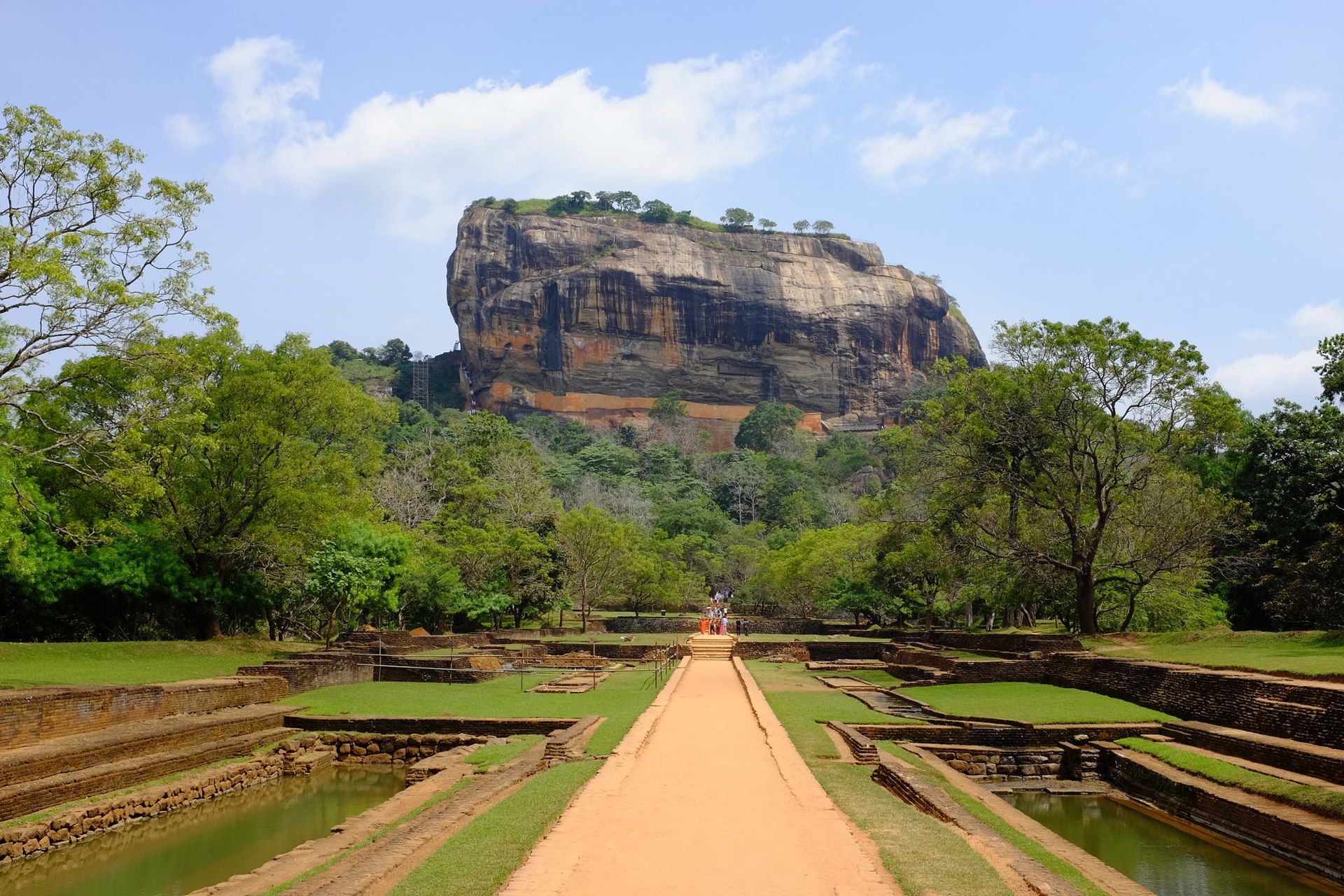
A sheer 200-metre column of ancient volcanic rock rising abruptly from the green plains of central Sri Lanka — a natural monolith crowned by the ruins of a 5th-century sky palace.
What makes it marvelous
Sigiriya, or Lion Rock, is a plug of hardened magma — the solidified throat of a long-vanished volcano — left standing some 200 metres above the surrounding plain after the softer rock around it eroded away. Its near-vertical walls of dark rock make it one of the most striking natural monoliths in Asia. In the 5th century a king turned the summit into a fortified palace, adding frescoes, a mirror-polished wall, and a gateway shaped like a giant lion; the rock and its water gardens are now a UNESCO World Heritage Site.
Why visit
Climbing Sigiriya is unforgettable: a stairway clings to the rock face past centuries-old frescoes of court women and a lacquered wall still bearing ancient graffiti, up through the paws of the ruined lion gateway to the summit, where the foundations of the sky palace look out over jungle in every direction. At its foot lie some of the oldest landscaped water gardens in the world.
More views of Sigiriya
Additional photographs of the actual site — each freely licensed, with its photographer and licence credited.
What to know before you go
🗓️ Best time
The drier months of January to April, and again around August, are most comfortable; climb early in the morning to beat the heat and the crowds.
🧭 Getting there & access
In Sri Lanka's Cultural Triangle, a few hours by road from Colombo or Kandy, near Dambulla. A ticketed path and stairway climb the rock; the nearby Pidurangala rock offers a view back toward Sigiriya.
Good to know
- Start at opening time — the metal stairways bake later and fill with tour groups.
- Carry water and sun protection; there is little shade on the climb.
- Watch for wasps near the frescoes, and keep to the marked stairways.
Plan your visit
Moderate🧭 Getting there
From Colombo (CMB), then the Cultural Triangle
- Fly to Colombo
- Road to the Sigiriya/Dambulla area — roughly 4h from Colombo, 2–3h from Kandy
- On foot up the ticketed stairway to the summit
- Total travel
- Most of a day from Colombo; an easy morning if you stay nearby
- Time at site
- 2–3 hours to climb, explore the summit and gardens, and descend
- Access
- A ticket (notably higher for foreign visitors) covers the rock, gardens, and museum. The stairways are one-way in places and can close in lightning; the frescoes have their own short spiral stair.
🎒 What to bring & consider
- Water and sun protection — the climb is hot and largely unshaded
- Shoes with grip for steep metal and stone stairs
- A hat and a calm pace on the exposed upper stairways
- Modest respect for the site's cultural and sacred importance
👁️ What to expect
- Crowds
- Busy from mid-morning, especially at the fresco stair and lion's paws bottleneck; first light is calmer.
- Conditions
- A steep, exposed climb on stairs and gantries with long drops; hot and humid.
- Facilities
- Ticket office, museum, toilets, and cafés at the base; nothing on the climb.
- The view
- Sigiriya rising from the jungle at dawn — best seen from neighbouring Pidurangala rock — or the plains from the summit. Haze builds through the day, so go early.
Times and requirements are approximate and change with season, weather, and local rules — confirm permits, fares, and schedules with operators before you travel.
Natural riches of the area
- A volcanic plug (hardened magma) rising sheer from the plain
- Surrounding tropical dry-zone forest and wetlands
- Ancient landscaped water gardens fed by moats and channels
- Wildlife including monkeys, monitor lizards, and elephants nearby
Local food
- Rice and curry
- A spread of curries around rice — the heart of every Sri Lankan meal.
- Kottu roti
- Chopped flatbread stir-fried with vegetables, egg, and spice.
Sigiriya rises from the plains of central Sri Lanka like something impossible: a single sheer-sided column of dark rock, roughly 200 metres tall, standing alone above a sea of green. It is a volcanic plug — the hardened magma that once filled the throat of a volcano — exposed when the softer surrounding rock wore away over millions of years, leaving the harder core as a natural tower.
In the 5th century, a king crowned that tower with a palace, and the climb today threads past his legacy: a gallery of vivid frescoes, a wall once polished to a mirror shine, and a monumental gateway built in the shape of a lion, of which only the giant paws remain. At the summit lie the foundations of the sky palace and a panorama over the jungle; at the base spread water gardens among the oldest in the world. Nature made the rock; people made it a wonder — and UNESCO now protects both.
Sigiriya: common questions
How do you get to Sigiriya?
From Colombo (CMB), then the Cultural Triangle: Fly to Colombo; Road to the Sigiriya/Dambulla area — roughly 4h from Colombo, 2–3h from Kandy; On foot up the ticketed stairway to the summit. Allow Most of a day from Colombo; an easy morning if you stay nearby.
When is the best time to visit Sigiriya?
The drier months of January to April, and again around August, are most comfortable; climb early in the morning to beat the heat and the crowds.
How long should you spend at Sigiriya?
2–3 hours to climb, explore the summit and gardens, and descend. Most of a day from Colombo; an easy morning if you stay nearby of travel from Colombo (CMB), then the Cultural Triangle.
What should you bring to Sigiriya?
Water and sun protection — the climb is hot and largely unshaded Shoes with grip for steep metal and stone stairs A hat and a calm pace on the exposed upper stairways Modest respect for the site's cultural and sacred importance
Do you need a permit or guide for Sigiriya?
A ticket (notably higher for foreign visitors) covers the rock, gardens, and museum. The stairways are one-way in places and can close in lightning; the frescoes have their own short spiral stair.
Is Sigiriya crowded, and what are conditions like?
Busy from mid-morning, especially at the fresco stair and lion's paws bottleneck; first light is calmer. A steep, exposed climb on stairs and gantries with long drops; hot and humid. Facilities: ticket office, museum, toilets, and cafés at the base; nothing on the climb.
Added
More wonders to explore