Skeleton Coast
📍 Northwestern Namibia
Where the world's oldest desert meets the cold Atlantic — a fog-shrouded shore of shipwrecks, immense dunes, and seal colonies, called by the Bushmen 'the land God made in anger'.
What makes it marvelous
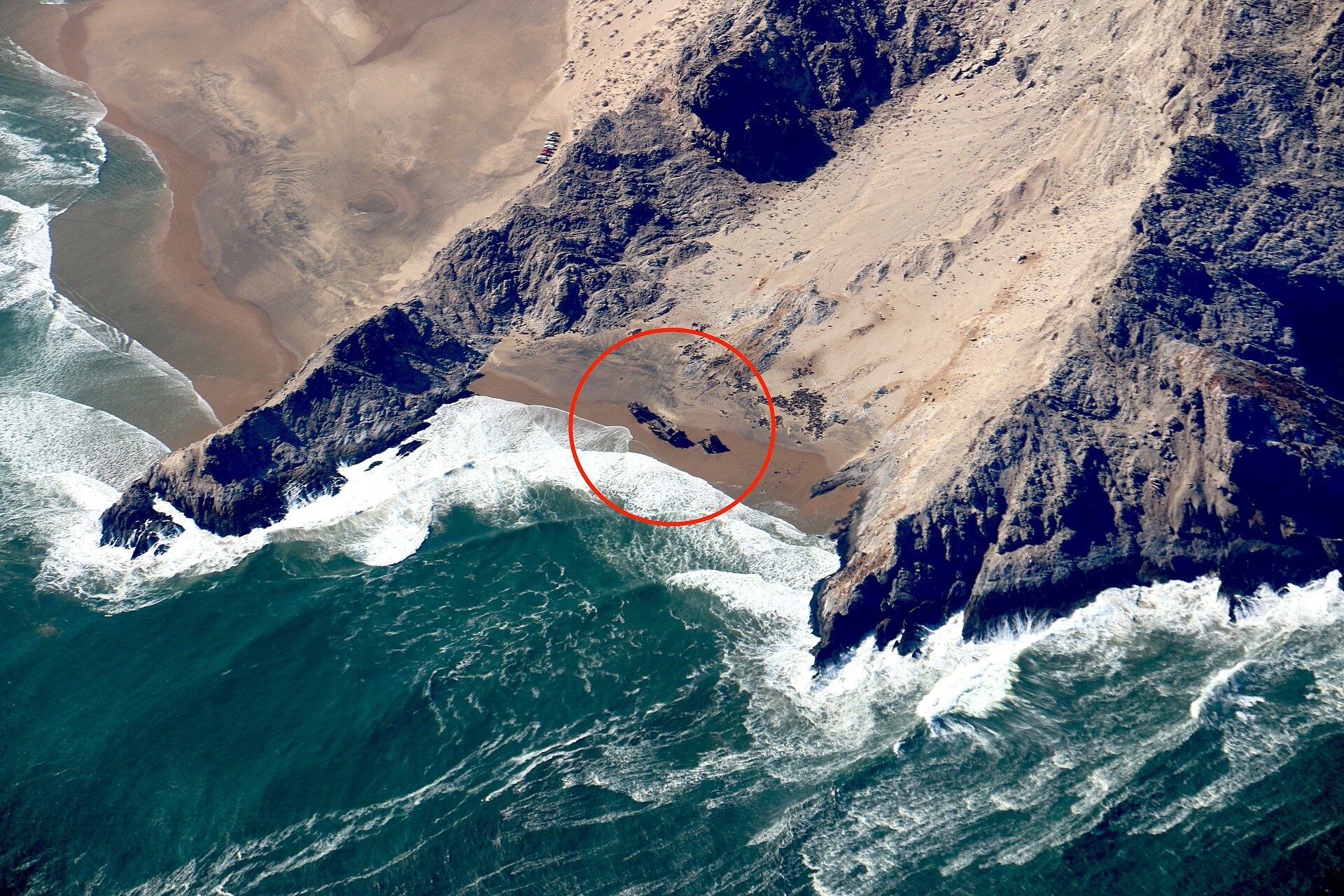
The Skeleton Coast is one of the most desolate and atmospheric shorelines on Earth. Here the Namib — the oldest desert on the planet — runs straight into the icy Benguela Current, and the collision generates dense fog that rolls inland almost daily. That fog is both killer and lifeline: it wrecked countless ships on the unmarked shore, whose rusting hulls and bleached whale bones gave the coast its name, yet it is also the only reliable water, sustaining desert-adapted life that drinks the mist. Beetles stand on dune crests to condense fog on their backs; desert lions, elephants, and oryx range the dry riverbeds inland; and vast Cape fur seal colonies crowd the beaches. The Bushmen called it 'the land God made in anger', the Portuguese 'the gates of hell' — and the raw, empty beauty of it is unforgettable.
Why visit
Few coastlines feel so utterly wild — shipwrecks half-buried in sand, fog rolling over immense dunes, and desert-adapted lions and elephants inland make this one of Africa's most haunting and unusual journeys.
What to know before you go
🗓️ Best time
Year-round, though the cooler months (roughly May–October) are most comfortable; fog is most frequent in the early mornings whatever the season.
🧭 Getting there & access
Along northwestern Namibia's Atlantic shore, reached by 4x4 from Swakopmund; the northern sections require permits and are usually visited via fly-in safari to remote camps.
Good to know
- The far northern coast is permit-only — most visit by fly-in safari.
- Travel with guides and fuel reserves; distances are vast and services none.
- Mornings bring the thickest fog and the most atmospheric light.
Plan your visit
Moderate🧭 Getting there
From Windhoek (WDH) or Walvis Bay (WVB), then Swakopmund
- Fly to Windhoek and drive to Swakopmund — roughly 4h
- North along the coast to the Ugab gate — about 2h–2h30
- The northern concession above the Hoanib is fly-in only, by charter from Windhoek or Swakopmund
- Total travel
- Most of a day from Windhoek to the southern section
- Time at site
- 2 days for the accessible south; 3–4 nights for a fly-in northern camp
- Access
- A Skeleton Coast Park permit, with fixed transit times — you must reach the far gate before it closes, and rangers do enforce it. The northern concession is restricted to a small number of licensed fly-in operators and cannot be self-driven into at all. Check current permit arrangements with Namibia Wildlife Resorts.
🎒 What to bring & consider
- A full tank and jerry cans; fuel points are extremely far apart and running dry out here is genuinely dangerous rather than inconvenient
- Drinking water well beyond whatever you estimated
- Warm layers — the Benguela current makes this coast cold and foggy even in summer, which catches out everyone who packed for a desert
- A spare tyre and the ability to fit it
- A satellite communicator; there is no mobile coverage and very little passing traffic
👁️ What to expect
- Crowds
- Almost none. You can drive for hours without meeting another vehicle.
- Conditions
- Gravel and salt roads, thick coastal fog, cold wind, and enormous distances with no services.
- Facilities
- Essentially nothing in the southern park beyond a couple of basic points. The fly-in camps up north are all-inclusive.
- The view
- Fog is the defining atmosphere and it sits here most mornings — the wrecks and the desert-meets-ocean line read far better in it than under sun. Clear blue sky is the less interesting condition on this coast.
Times and requirements are approximate and change with season, weather, and local rules — confirm permits, fares, and schedules with operators before you travel.
Natural riches of the area
- The Namib, the world's oldest desert, meeting the cold Atlantic
- Persistent coastal fog that sustains desert-adapted life
- Shipwrecks, whale bones, and vast Cape fur seal colonies
- Desert-adapted lions, elephants, and oryx along dry riverbeds
Local food
- Namibian seafood
- Cold-water fish, oysters, and crayfish from the Benguela Current.
- Game meats
- Oryx, kudu, and springbok, usually grilled — Namibian staples.
- Biltong & potjiekos
- Dried spiced meat and slow-cooked pot stew of southern Africa.
The Skeleton Coast is one of the most desolate and haunting shorelines on Earth. Here the Namib — the oldest desert on the planet — runs headlong into the icy Benguela Current, and the collision throws up dense fog that rolls inland almost every morning. That fog is both killer and lifeline. It drove countless ships onto an unmarked shore, leaving rusting hulls and bleached whale bones that gave the coast its name; yet it is also the only dependable water for hundreds of kilometres.
Life here has learned to drink the mist. Beetles climb dune crests at dawn to condense fog on their backs; inland, desert-adapted lions, elephants, and oryx range along dry riverbeds; and vast Cape fur seal colonies crowd the beaches. The Bushmen called it ‘the land God made in anger,’ the Portuguese ‘the gates of hell.’ Empty, foggy, and immense, it remains one of Africa’s most extraordinary journeys.
Skeleton Coast: common questions
How do you get to Skeleton Coast?
From Windhoek (WDH) or Walvis Bay (WVB), then Swakopmund: Fly to Windhoek and drive to Swakopmund — roughly 4h; North along the coast to the Ugab gate — about 2h–2h30; The northern concession above the Hoanib is fly-in only, by charter from Windhoek or Swakopmund. Allow Most of a day from Windhoek to the southern section.
When is the best time to visit Skeleton Coast?
Year-round, though the cooler months (roughly May–October) are most comfortable; fog is most frequent in the early mornings whatever the season.
How long should you spend at Skeleton Coast?
2 days for the accessible south; 3–4 nights for a fly-in northern camp. Most of a day from Windhoek to the southern section of travel from Windhoek (WDH) or Walvis Bay (WVB), then Swakopmund.
What should you bring to Skeleton Coast?
A full tank and jerry cans; fuel points are extremely far apart and running dry out here is genuinely dangerous rather than inconvenient Drinking water well beyond whatever you estimated Warm layers — the Benguela current makes this coast cold and foggy even in summer, which catches out everyone who packed for a desert A spare tyre and the ability to fit it A satellite communicator; there is no mobile coverage and very little passing traffic
Do you need a permit or guide for Skeleton Coast?
A Skeleton Coast Park permit, with fixed transit times — you must reach the far gate before it closes, and rangers do enforce it. The northern concession is restricted to a small number of licensed fly-in operators and cannot be self-driven into at all. Check current permit arrangements with Namibia Wildlife Resorts.
Is Skeleton Coast crowded, and what are conditions like?
Almost none. You can drive for hours without meeting another vehicle. Gravel and salt roads, thick coastal fog, cold wind, and enormous distances with no services. Facilities: essentially nothing in the southern park beyond a couple of basic points. The fly-in camps up north are all-inclusive.
Added
More wonders to explore