Landmannalaugar
📍 Southern Highlands, Iceland
Rhyolite mountains streaked in red, pink, green, and gold above black lava fields and steaming hot springs — the most colourful landscape in Iceland's remote interior highlands.
What makes it marvelous
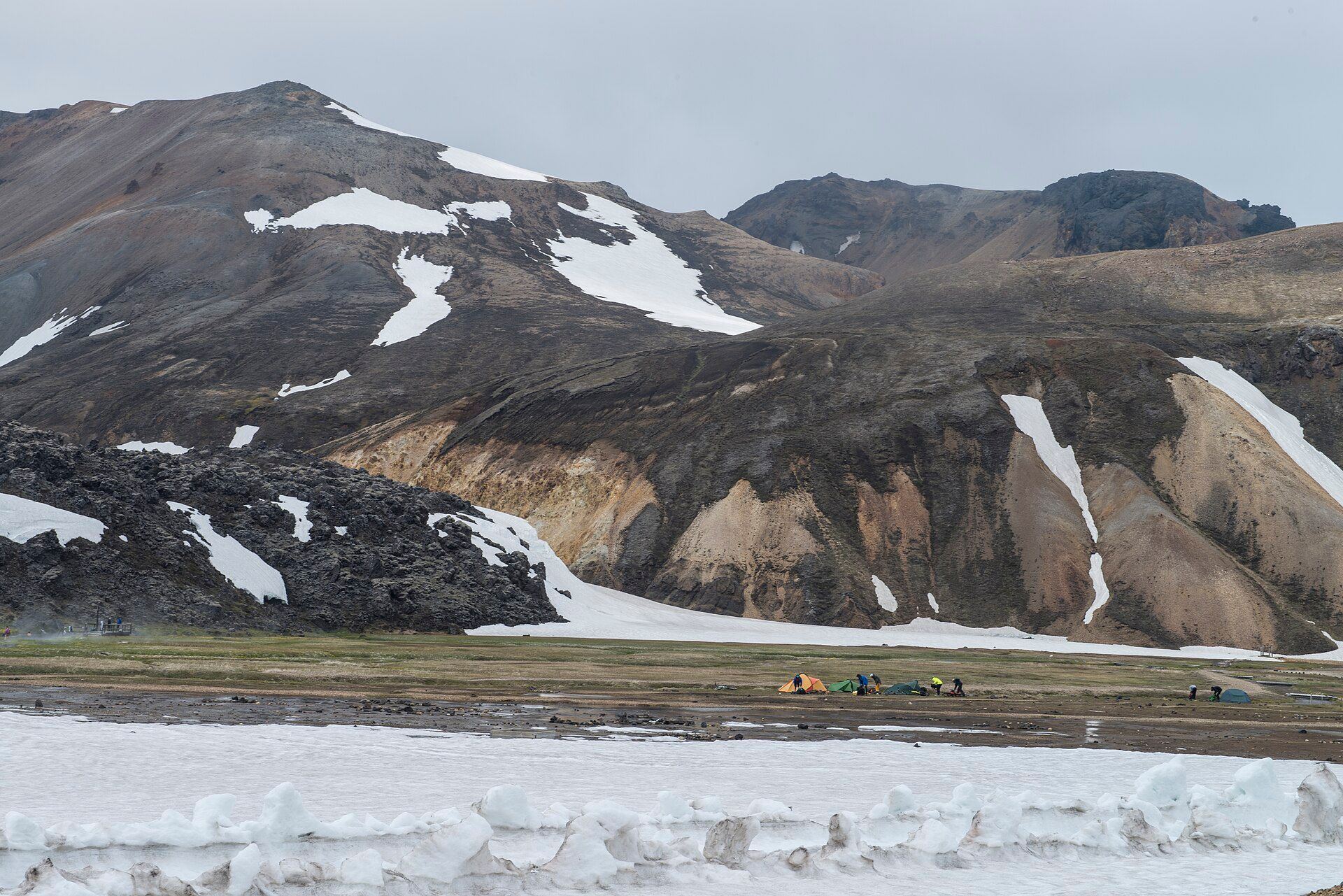
Deep in Iceland's uninhabited highlands, Landmannalaugar is a geothermal wonderland of impossible colour. The mountains here are made of rhyolite, a rare volcanic rock that weathers into extraordinary shades — rust red, pink, ochre, yellow, and pale green — and the hillsides are streaked and banded with them, shifting hour by hour with the light. Between the coloured peaks lie jet-black obsidian lava fields from historic eruptions, snow patches, and steaming vents, and at the heart of it a natural hot spring where a cold stream meets a hot one, giving a perfect bathing temperature in the middle of the wilderness. It is the trailhead for the Laugavegur, widely rated one of the finest multi-day treks on Earth. Reachable only in summer over unbridged rivers, it feels utterly remote.
Why visit
Hiking among rainbow-streaked mountains and black lava, then soaking in a natural hot spring surrounded by highland wilderness, is quintessential Iceland — and the start of one of the world's great treks.
What to know before you go
🗓️ Best time
The short highland summer (roughly late June–early September), the only window the mountain roads are open; outside it the interior is snowbound and inaccessible.
🧭 Getting there & access
In Iceland's southern highlands, reached only by rugged F-roads requiring a high-clearance 4x4 (with unbridged river fords) or by highland bus in summer; there is a hut and campsite at the site.
Good to know
- Only reachable in summer — check F-road openings before setting out.
- Do not attempt the river fords in a standard rental car; take the highland bus.
- Bring a swimsuit for the natural hot spring, and layers for fast-changing weather.
Plan your visit
Strenuous🧭 Getting there
From Reykjavik, then the Highland F-roads
- Drive or take a highland bus from Reykjavik — roughly 4h–5h
- The final approach is on F-roads with unbridged river crossings, requiring a genuine 4x4
- Highland buses run only during the short summer season
- Total travel
- Most of a day from Reykjavik
- Time at site
- A day for the day-walks; the Laugavegur trek to Thorsmork runs 3–4 days
- Access
- Open access, but the F-roads into the highlands only open once snow and river levels allow — typically some point in June — and close again in autumn. Opening dates move every year, so check the Icelandic road authority. Hire-car insurance almost always excludes water damage from river crossings; if you are not confident fording, take the bus. Huts on the Laugavegur must be booked well ahead.
🎒 What to bring & consider
- Full waterproofs and warm layers — highland weather turns to sleet and gale in any month
- Boots you accept will get soaked, plus sandals or old trainers for the river fords on foot
- All your food; there is no shop and the small hut kiosk cannot be relied on
- A map, compass and the ability to use them, because trail markers vanish in fog
- A swimsuit for the hot spring, which is the one genuinely easy pleasure here
👁️ What to expect
- Crowds
- Day visitors arrive by bus around the middle of the day. Mornings, evenings and anywhere off the short loops are quiet.
- Conditions
- Loose rhyolite scree, steep climbs, snow patches lingering into summer, and cold river crossings.
- Facilities
- A hut, campsite and toilets at Landmannalaugar. Nothing else for a very long way.
- The view
- The famous colour in the rhyolite hills comes out under soft light or after rain, when the mineral bands saturate. Flat midday sun washes them grey.
Times and requirements are approximate and change with season, weather, and local rules — confirm permits, fares, and schedules with operators before you travel.
Natural riches of the area
- Rhyolite mountains in red, pink, gold, and green
- Black obsidian lava fields from historic eruptions
- Natural geothermal hot springs and steaming vents
- Trailhead of the Laugavegur, a world-class multi-day trek
Local food
- Icelandic lamb
- Free-ranging, herb-fed lamb, the mainstay of Icelandic cooking.
- Skyr
- Thick cultured dairy, a centuries-old Icelandic staple and hiking fuel.
- Rye bread & smoked fish
- Dark rye (sometimes geothermally baked) with smoked or cured fish.
Deep in Iceland’s uninhabited interior, Landmannalaugar breaks every expectation of what a volcanic landscape should look like. The mountains here are rhyolite, a rare volcanic rock that weathers into extraordinary colours — rust red, pink, ochre, yellow, pale green — and the hillsides are banded and streaked with them, shifting hour by hour as the light moves. Between the coloured peaks lie jet-black obsidian lava fields, patches of snow, and vents steaming quietly into the cold air.
At the centre of it all is a natural hot spring, where a cold stream meets a hot one and mixes to a perfect bathing temperature in the middle of the wilderness. Landmannalaugar is also the trailhead of the Laugavegur, rated among the finest multi-day treks on the planet. Reachable only in the brief highland summer, over unbridged river fords, it is remote in a way few accessible places still are — and all the more extraordinary for it.
Landmannalaugar: common questions
How do you get to Landmannalaugar?
From Reykjavik, then the Highland F-roads: Drive or take a highland bus from Reykjavik — roughly 4h–5h; The final approach is on F-roads with unbridged river crossings, requiring a genuine 4x4; Highland buses run only during the short summer season. Allow Most of a day from Reykjavik.
When is the best time to visit Landmannalaugar?
The short highland summer (roughly late June–early September), the only window the mountain roads are open; outside it the interior is snowbound and inaccessible.
How long should you spend at Landmannalaugar?
A day for the day-walks; the Laugavegur trek to Thorsmork runs 3–4 days. Most of a day from Reykjavik of travel from Reykjavik, then the Highland F-roads.
What should you bring to Landmannalaugar?
Full waterproofs and warm layers — highland weather turns to sleet and gale in any month Boots you accept will get soaked, plus sandals or old trainers for the river fords on foot All your food; there is no shop and the small hut kiosk cannot be relied on A map, compass and the ability to use them, because trail markers vanish in fog A swimsuit for the hot spring, which is the one genuinely easy pleasure here
Do you need a permit or guide for Landmannalaugar?
Open access, but the F-roads into the highlands only open once snow and river levels allow — typically some point in June — and close again in autumn. Opening dates move every year, so check the Icelandic road authority. Hire-car insurance almost always excludes water damage from river crossings; if you are not confident fording, take the bus. Huts on the Laugavegur must be booked well ahead.
Is Landmannalaugar crowded, and what are conditions like?
Day visitors arrive by bus around the middle of the day. Mornings, evenings and anywhere off the short loops are quiet. Loose rhyolite scree, steep climbs, snow patches lingering into summer, and cold river crossings. Facilities: a hut, campsite and toilets at Landmannalaugar. Nothing else for a very long way.
Added
More wonders to explore