Railay
📍 Krabi Province, southern Thailand
A tiny peninsula of white-sand beaches walled off from the mainland by towering limestone cliffs — reachable only by boat, and one of the world's great rock-climbing spots.
What makes it marvelous
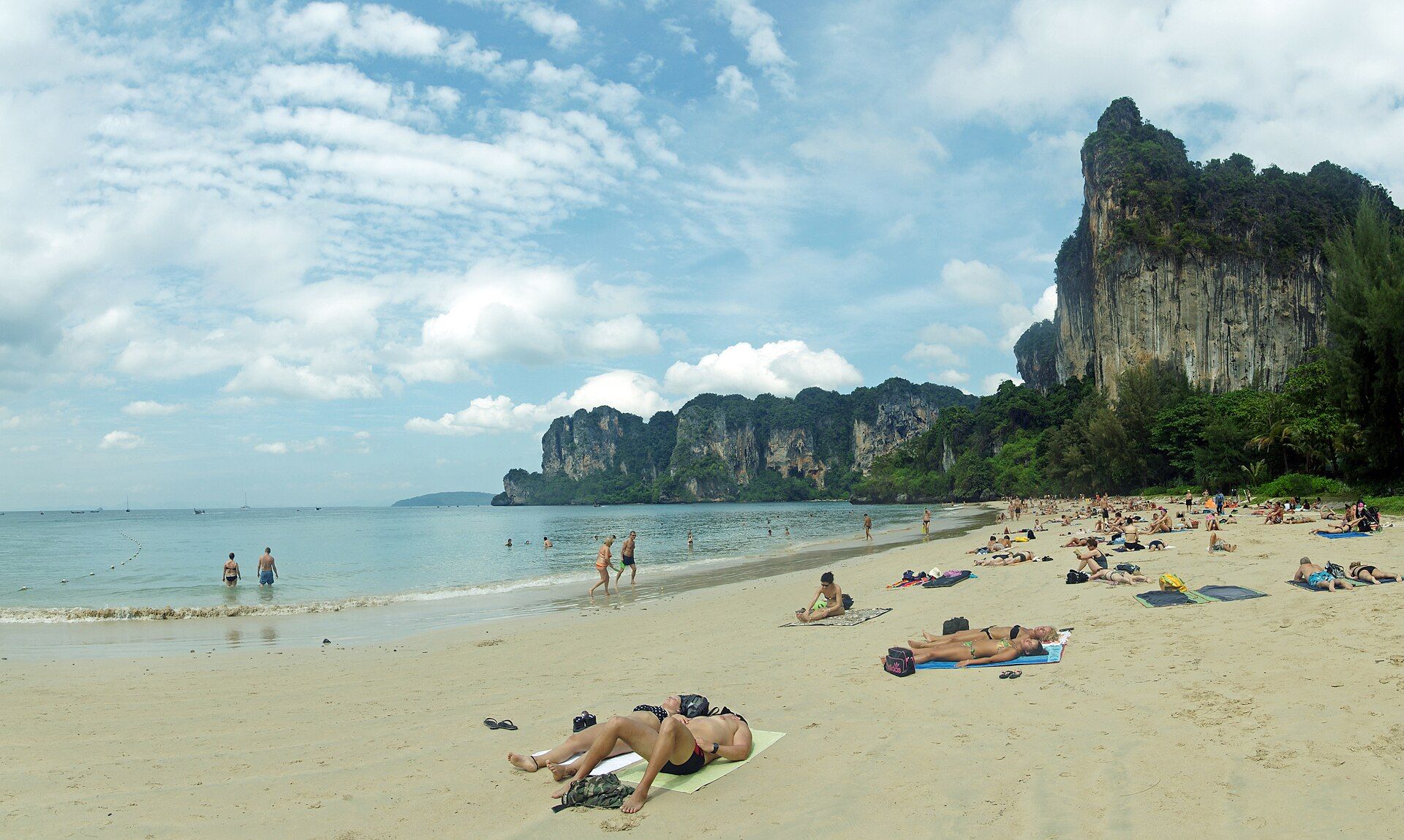
Railay is a small peninsula on the Andaman coast cut off from the rest of the mainland by sheer limestone karst cliffs, so that despite being attached to land it can only be reached by boat. Those cliffs are the same ancient reef limestone that forms the islands offshore, dissolved and undercut into overhangs, caves, and stalactite-hung walls. The result is a cluster of soft white beaches — Railay East and West and the hidden Phra Nang beach — hemmed by jungle and vertical rock.
Why visit
Few beaches have a setting this dramatic: warm turquoise water, powder sand, and orange-and-grey cliffs rising straight up behind. Phra Nang beach shelters a cave shrine and dangling stalactites, viewpoints and a hidden lagoon reward a scramble, and the karst walls have made Railay a world-famous rock-climbing destination, with routes for beginners and experts alike.
What to know before you go
🗓️ Best time
November to March, the dry season, for calm seas, clear skies, and reliable boat crossings; May to October brings monsoon rain and rougher water.
🧭 Getting there & access
Reached only by longtail boat, a short ride from Ao Nang or Krabi town. There are no roads onto the peninsula; boats land directly on the beach, so expect a wet-footed arrival.
Good to know
- Cross to the viewpoint and hidden lagoon early — the muddy scramble is hot and busy later.
- Boats run on the tide and in daylight; check the last crossing so you aren't stranded.
- Bring cash; ATMs are few and charge high fees on the peninsula.
Plan your visit
Easy🧭 Getting there
From Krabi (KBV), southern Thailand
- Fly to Krabi
- Road to Ao Nang or the Krabi pier — 20–40min
- Longtail boat to Railay — about 10–15 minutes across the water
- Total travel
- Half a day from Krabi airport
- Time at site
- A day trip is easy; 2–3 nights to settle into the beaches and climbing
- Access
- No park permit, but the only way in is by boat, which runs on the tide and stops after dark. Rough monsoon seas can suspend crossings. Rock climbing is via the many local operators; the cliffs are open access with local etiquette.
🎒 What to bring & consider
- A dry bag and the expectation of a wet-footed beach landing
- Reef-safe sunscreen, a hat, and plenty of water
- Grippy sandals for the muddy viewpoint-and-lagoon scramble
- Cash for boats, food, and the pricey local ATMs
👁️ What to expect
- Crowds
- The beaches and the Phra Nang cave are busy midday with day-trippers; mornings, evenings, and an overnight stay are far quieter.
- Conditions
- Warm, calm swimming in the dry season; the viewpoint climb is a steep, slippery clay scramble with ropes.
- Facilities
- Resorts, bars, and restaurants on the peninsula; no roads, hospitals, or big shops — it stays low-key.
- The view
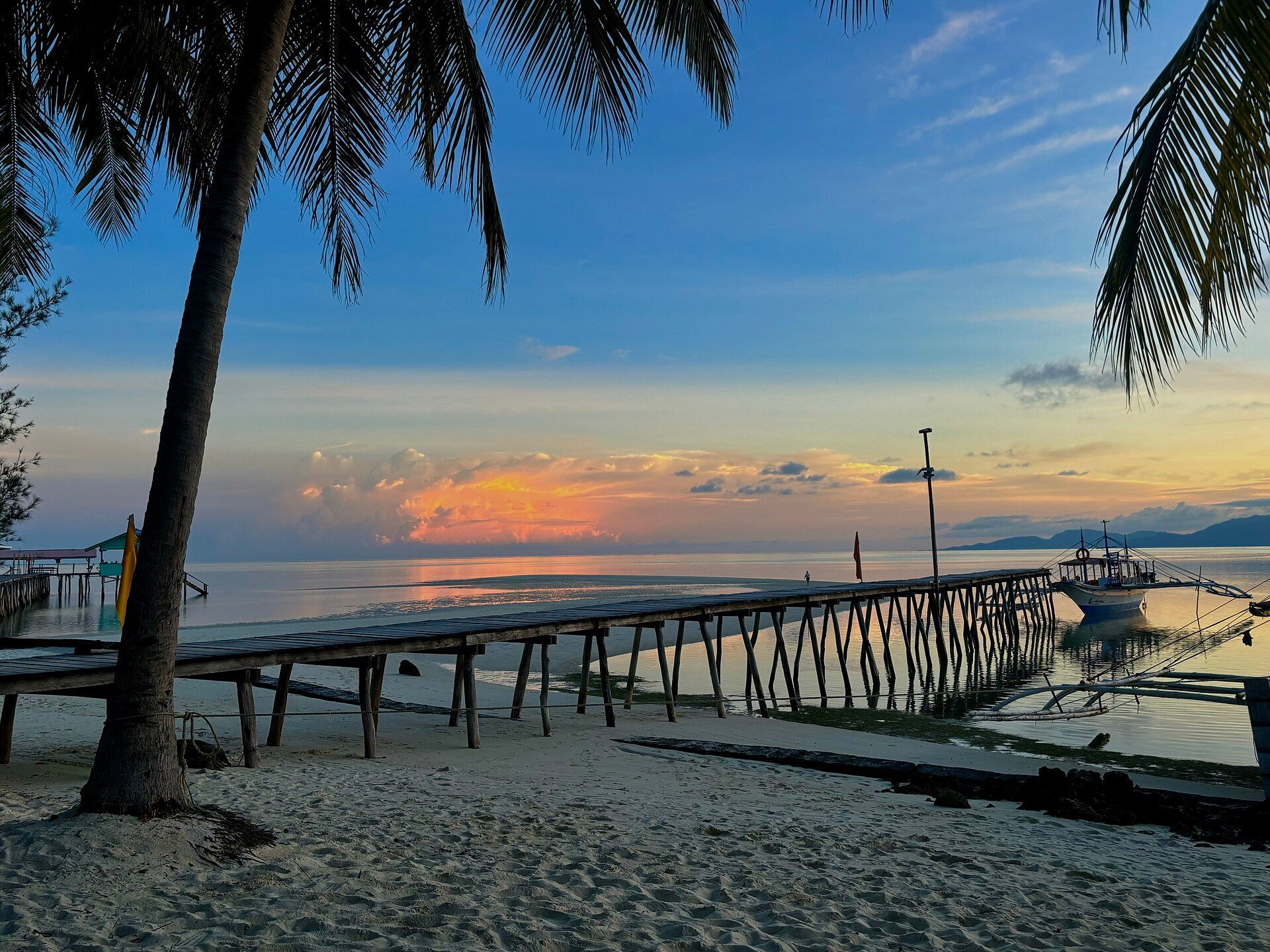
- The longtail boats on Railay West at sunset, or Phra Nang beach beneath its overhanging cliff. Dry-season afternoons deliver the classic light; the monsoon muddies both weather and water.
Times and requirements are approximate and change with season, weather, and local rules — confirm permits, fares, and schedules with operators before you travel.
Natural riches of the area
- Sheer limestone karst cliffs, caves, and stalactites
- White-sand beaches and clear Andaman Sea water
- Fringing reef and a hidden inland lagoon
- Monsoon forest and cliff-nesting swiftlets
Local food
- Grilled seafood
- Fresh fish and prawns cooked on the beach, a Krabi coast staple.
- Massaman curry
- A mild, aromatic southern Thai curry of Muslim-Thai origin.
Railay is a beach with an almost impossible setting. It sits on a small peninsula on Thailand’s Andaman coast, but sheer limestone cliffs seal it off from the mainland so completely that the only way to arrive is by longtail boat, stepping off into the shallows onto soft white sand. Those cliffs — ancient reef limestone dissolved and undercut into overhangs, caves, and hanging stalactites — are the whole reason the place looks the way it does, framing a handful of beaches in walls of orange and grey stone.
Beyond the postcard sand and turquoise water, Railay packs in a hidden lagoon reached by a muddy scramble, a cave shrine tucked into Phra Nang beach, and some of the most famous rock climbing in the world, with routes rising straight from the sand. It has no roads and no high-rises, and the boats stop after dark — which is part of why, for all its fame, it still feels like a place apart.
Railay: common questions
How do you get to Railay?
From Krabi (KBV), southern Thailand: Fly to Krabi; Road to Ao Nang or the Krabi pier — 20–40min; Longtail boat to Railay — about 10–15 minutes across the water. Allow Half a day from Krabi airport.
When is the best time to visit Railay?
November to March, the dry season, for calm seas, clear skies, and reliable boat crossings; May to October brings monsoon rain and rougher water.
How long should you spend at Railay?
A day trip is easy; 2–3 nights to settle into the beaches and climbing. Half a day from Krabi airport of travel from Krabi (KBV), southern Thailand.
What should you bring to Railay?
A dry bag and the expectation of a wet-footed beach landing Reef-safe sunscreen, a hat, and plenty of water Grippy sandals for the muddy viewpoint-and-lagoon scramble Cash for boats, food, and the pricey local ATMs
Do you need a permit or guide for Railay?
No park permit, but the only way in is by boat, which runs on the tide and stops after dark. Rough monsoon seas can suspend crossings. Rock climbing is via the many local operators; the cliffs are open access with local etiquette.
Is Railay crowded, and what are conditions like?
The beaches and the Phra Nang cave are busy midday with day-trippers; mornings, evenings, and an overnight stay are far quieter. Warm, calm swimming in the dry season; the viewpoint climb is a steep, slippery clay scramble with ropes. Facilities: resorts, bars, and restaurants on the peninsula; no roads, hospitals, or big shops — it stays low-key.
Added
More wonders to explore