The Sahara (Erg Chebbi)
📍 Merzouga / Erg Chebbi, southeastern Morocco
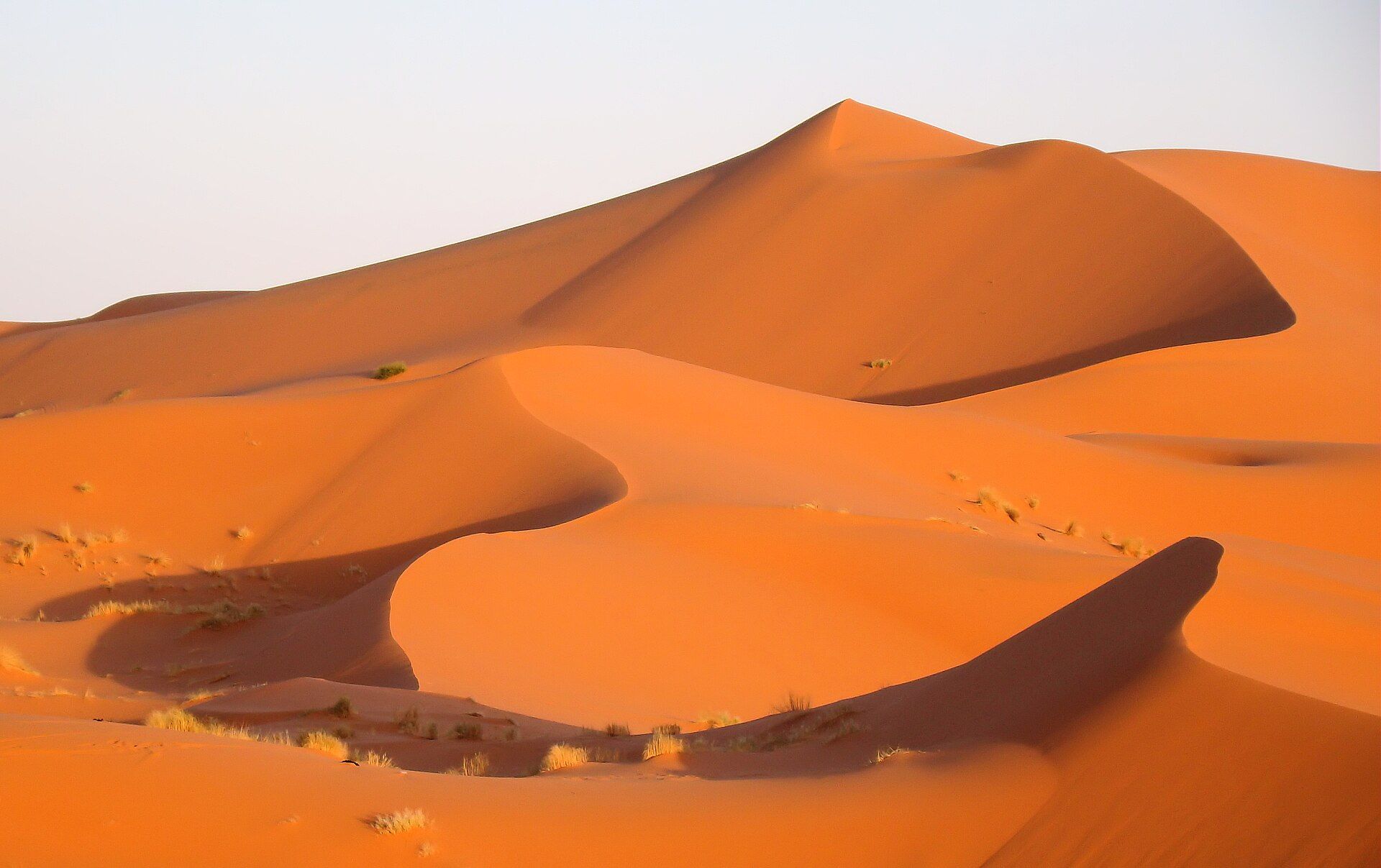
The largest hot desert on Earth, met at its most iconic in Morocco's Erg Chebbi — a sea of towering, rippling dunes that glow gold and rose at dawn and dusk beneath some of the clearest, darkest skies anywhere.
What makes it marvelous
The Sahara spans roughly 9.2 million square kilometres across North Africa — nearly the size of the United States — and Erg Chebbi is one of its great 'sand seas', where wind has piled dunes up to 150 metres high. Deserts like this are shaped entirely by wind and drought: the dunes migrate, ripple, and re-form, and beneath the sand lie fossil aquifers that surface as palm-shaded oases. With almost no light or moisture, the night sky here is extraordinary.
Why visit
Riding a camel over the crest of a great dune to camp among the sand, watching the desert turn molten at sunset and then fill with stars, is one of travel's timeless experiences. The scale, silence, and shifting light of a true sand sea are unforgettable.
More views of The Sahara (Erg Chebbi)
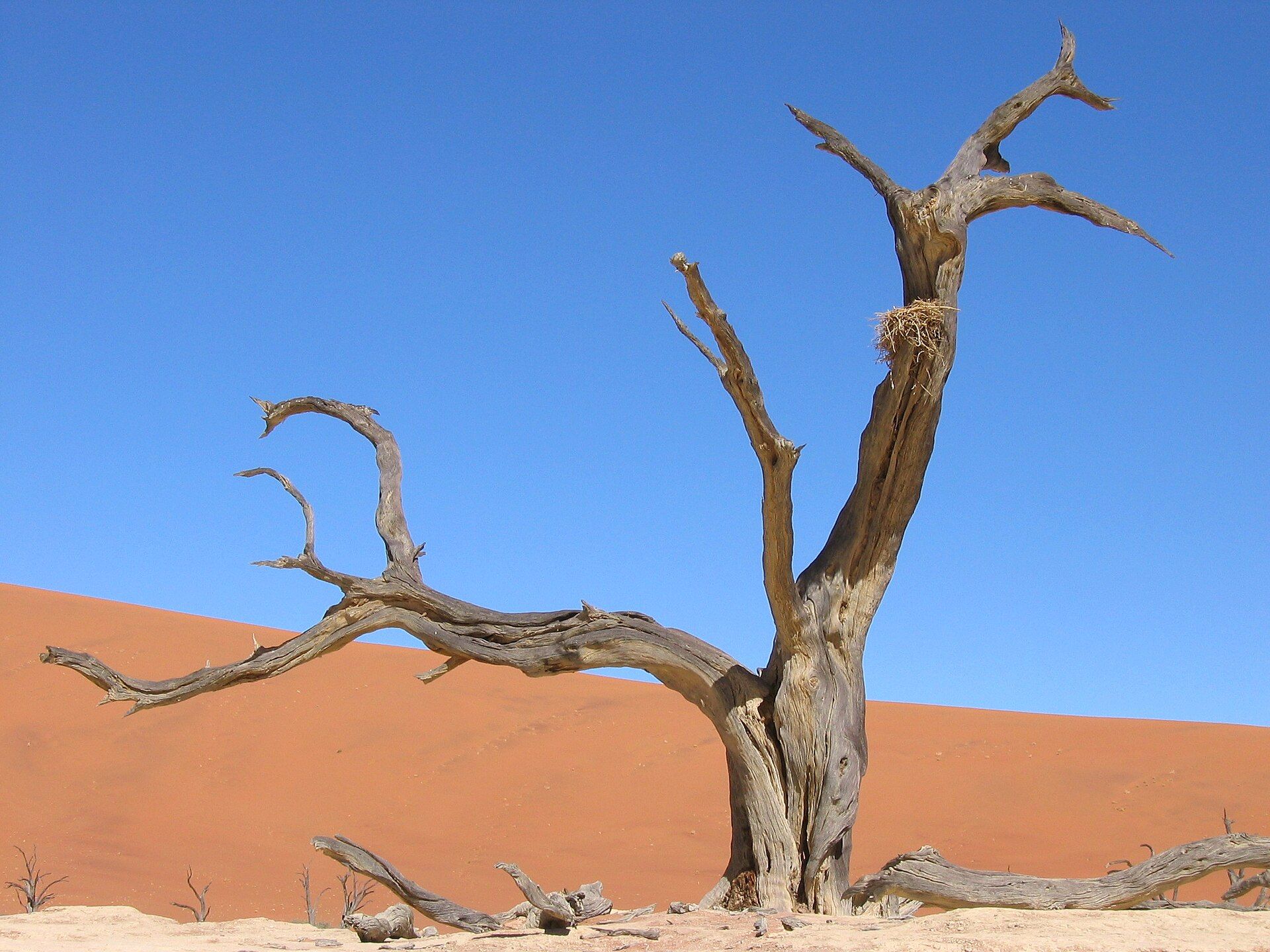
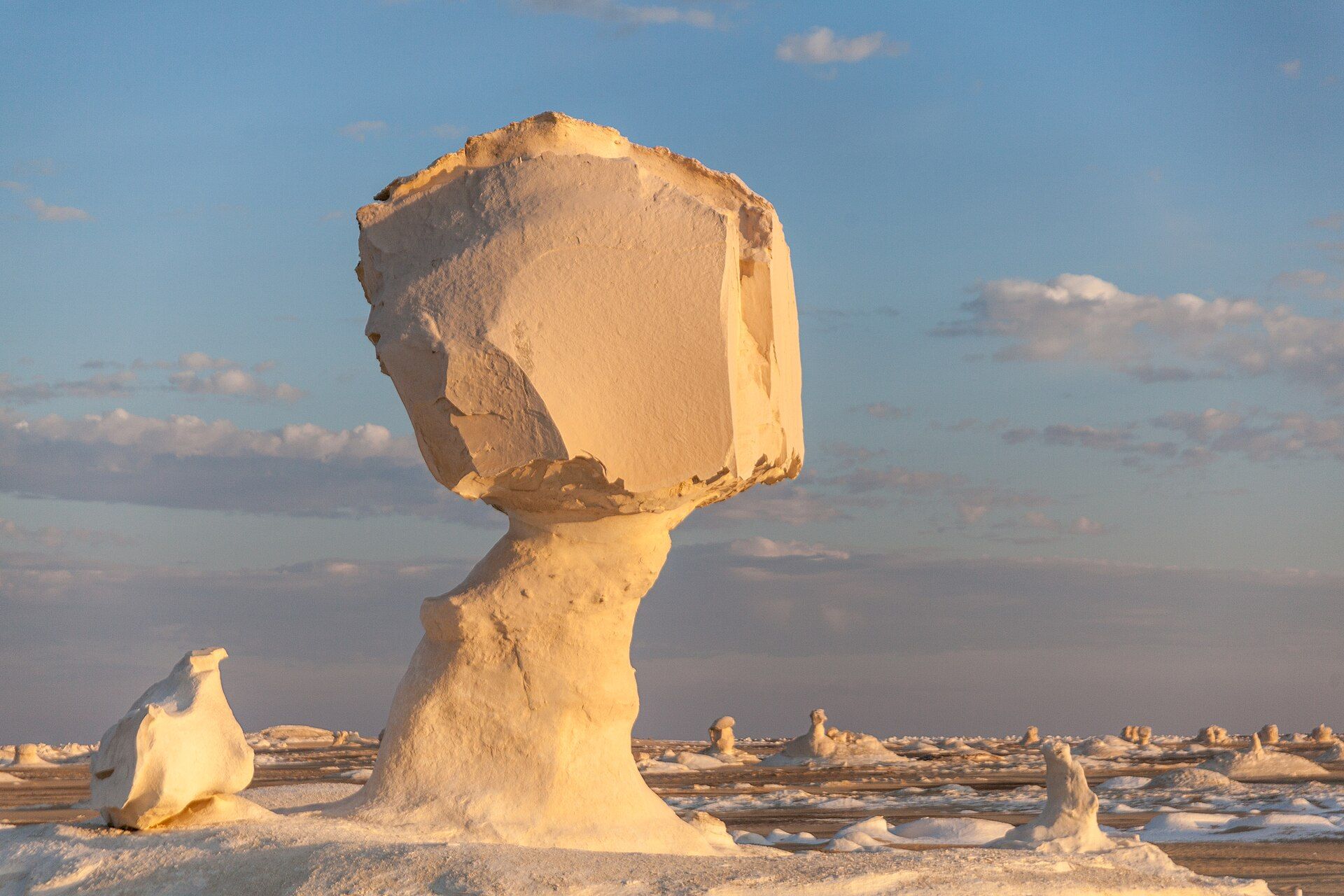
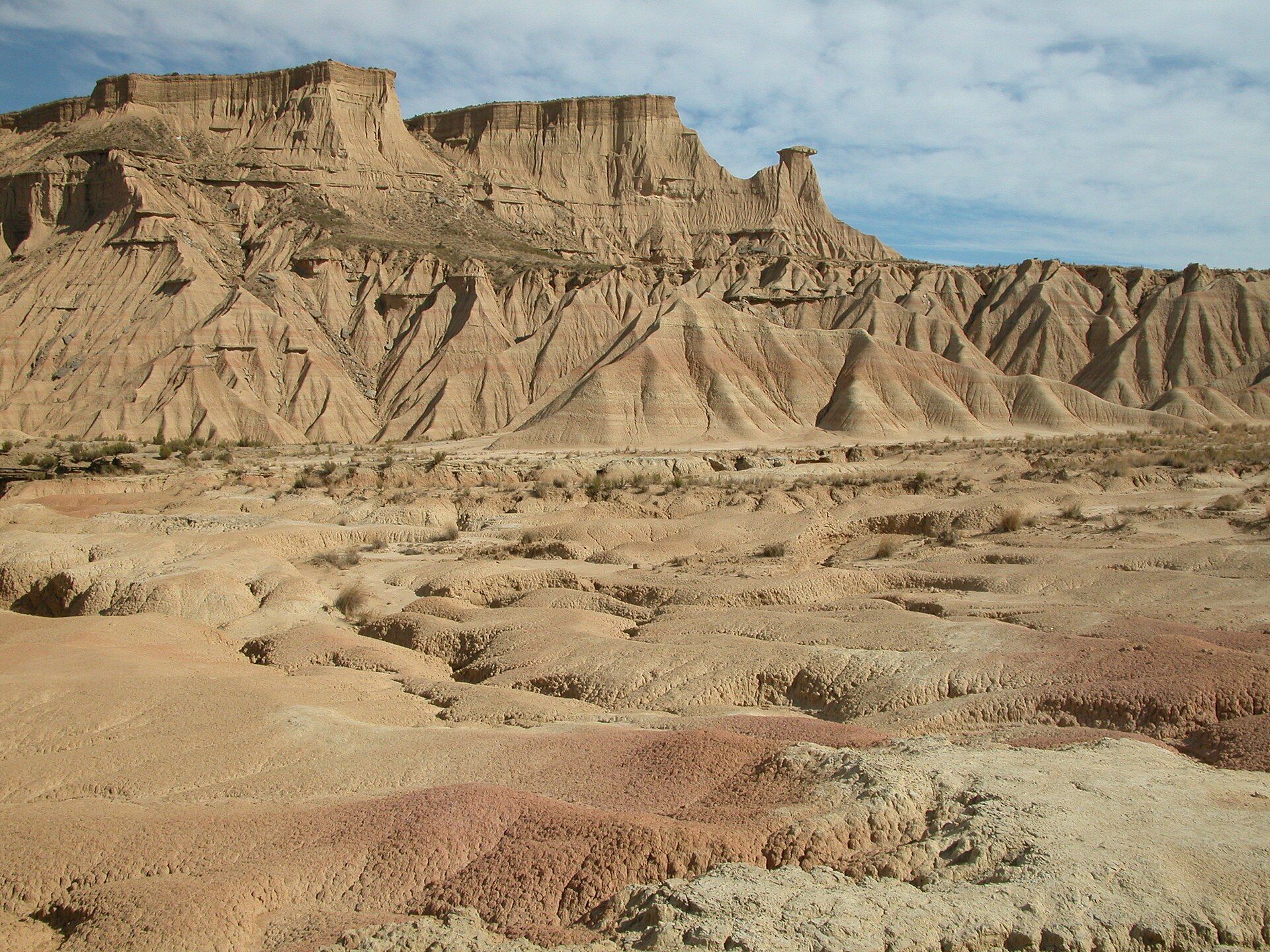
Additional photographs of the actual site — each freely licensed, with its photographer and licence credited.
What to know before you go
🗓️ Best time
October to April for tolerable temperatures; summer is dangerously hot. Spring and autumn nights are cool and clear for stargazing.
🧭 Getting there & access
From Marrakech or Fes to Merzouga in southeastern Morocco (a long drive), then camel treks and 4x4 trips into the Erg Chebbi dunes with local Amazigh (Berber) guides and desert camps.
Good to know
- Avoid high summer — Saharan heat is genuinely dangerous.
- Go with local guides; the dunes are disorienting and shift constantly.
- Stay overnight in a desert camp for the sunset, silence, and stars.
Plan your visit
Moderate🧭 Getting there
From Marrakech (RAK) or Fez (FEZ), for Merzouga or M'Hamid
- Fly into Marrakech or Fez
- Road Marrakech → Merzouga over the Atlas via Ouarzazate — roughly 8–10h, normally split across two days
- Fez → Merzouga is about 7–8h
- Camel or 4x4 from the dune edge into the erg — 1–2h
- Total travel
- Two days from Marrakech if done properly rather than rushed
- Time at site
- One or two nights in a desert camp
- Access
- Open access, with camps and excursions run by local operators; no permit is needed for the standard Erg Chebbi and Erg Chigaga circuits. Deeper crossings and travel toward sensitive border areas require guides and, in places, authorisation — ask operators rather than improvising, and check current advice for any route heading toward the Algerian frontier.
🎒 What to bring & consider
- Far more water than you think; the dryness is deceptive and dehydration arrives quietly here
- Sun protection, a hat and a scarf for wind-blown sand — the local headwrap exists for a reason
- Warm layers for the night, because desert temperatures fall hard after dark and winter nights are genuinely cold
- Shoes you can empty, or sandals, for deep soft sand
- Cash, since camps and guides work on it
👁️ What to expect
- Crowds
- The Merzouga dune edge is busy and heavily commercialised. Erg Chigaga is further out, harder to reach, and much quieter for it.
- Conditions
- Long overland drives, then soft sand. Camel riding is uncomfortable for rather longer than most people anticipate.
- Facilities
- Everything from basic to genuinely luxurious camps at the dune edge. Nothing beyond them.
- The view
- The dunes only have shape in low sun at either end of the day — midday flattens them entirely. Sand haze can obscure the horizon for days at a time, and summer middays are simply unusable.
Times and requirements are approximate and change with season, weather, and local rules — confirm permits, fares, and schedules with operators before you travel.
Natural riches of the area
- The world's largest hot desert and migrating sand seas (ergs)
- Fossil aquifers surfacing as oases and date-palm groves
- Exceptionally dark skies for astronomy
- Solar-energy potential and hardy desert-adapted life
Local food
- Tagine
- Slow-cooked Moroccan stew of meat or vegetables with fruit and spices, in a conical pot.
- Dates
- The fruit of the desert oases, a staple sweet and energy source.
- Amazigh (Berber) bread & mint tea
- Flatbread baked in the sand and sweet mint tea, the desert's hospitality.
The Sahara is almost too vast to grasp — some 9.2 million square kilometres of desert stretched across North Africa, close to the size of the United States. You meet it at its most postcard-perfect in Morocco’s Erg Chebbi, a ‘sand sea’ where the wind has heaped dunes as high as 150 metres, their crests knife-sharp and their flanks rippled like water.
A desert like this is pure wind and drought made visible: the dunes creep and re-form, and hidden beneath them, fossil water surfaces as palm-shaded oases. Ride a camel over a great dune at sunset, when the sand turns molten gold and then deep rose, make camp in the silence, and wait for a night sky so dark and thick with stars it feels close enough to touch. Few landscapes are so elemental, or so timeless.
Erg Chebbi is a sand sea — an “erg” — where wind has piled the Sahara into a compact range of dunes rising well over a hundred metres above the surrounding stony desert near the village of Merzouga. It is one of the most accessible places to meet the classic image of the Sahara: travellers ride camels out from the dune’s edge to overnight in Berber tent camps, watching the sand turn from gold to deep orange as the sun drops and the sky fills with stars once it’s dark. The dunes shift constantly, so the crests and hollows are never quite the same twice — and the daytime heat and night-time chill of the open desert are both very real.
The Sahara (Erg Chebbi): common questions
How do you get to The Sahara (Erg Chebbi)?
From Marrakech (RAK) or Fez (FEZ), for Merzouga or M'Hamid: Fly into Marrakech or Fez; Road Marrakech → Merzouga over the Atlas via Ouarzazate — roughly 8–10h, normally split across two days; Fez → Merzouga is about 7–8h; Camel or 4x4 from the dune edge into the erg — 1–2h. Allow Two days from Marrakech if done properly rather than rushed.
When is the best time to visit The Sahara (Erg Chebbi)?
October to April for tolerable temperatures; summer is dangerously hot. Spring and autumn nights are cool and clear for stargazing.
How long should you spend at The Sahara (Erg Chebbi)?
One or two nights in a desert camp. Two days from Marrakech if done properly rather than rushed of travel from Marrakech (RAK) or Fez (FEZ), for Merzouga or M'Hamid.
What should you bring to The Sahara (Erg Chebbi)?
Far more water than you think; the dryness is deceptive and dehydration arrives quietly here Sun protection, a hat and a scarf for wind-blown sand — the local headwrap exists for a reason Warm layers for the night, because desert temperatures fall hard after dark and winter nights are genuinely cold Shoes you can empty, or sandals, for deep soft sand Cash, since camps and guides work on it
Do you need a permit or guide for The Sahara (Erg Chebbi)?
Open access, with camps and excursions run by local operators; no permit is needed for the standard Erg Chebbi and Erg Chigaga circuits. Deeper crossings and travel toward sensitive border areas require guides and, in places, authorisation — ask operators rather than improvising, and check current advice for any route heading toward the Algerian frontier.
Is The Sahara (Erg Chebbi) crowded, and what are conditions like?
The Merzouga dune edge is busy and heavily commercialised. Erg Chigaga is further out, harder to reach, and much quieter for it. Long overland drives, then soft sand. Camel riding is uncomfortable for rather longer than most people anticipate. Facilities: everything from basic to genuinely luxurious camps at the dune edge. Nothing beyond them.
Added Updated
More wonders to explore