Aoraki / Mount Cook
📍 Canterbury, South Island, New Zealand
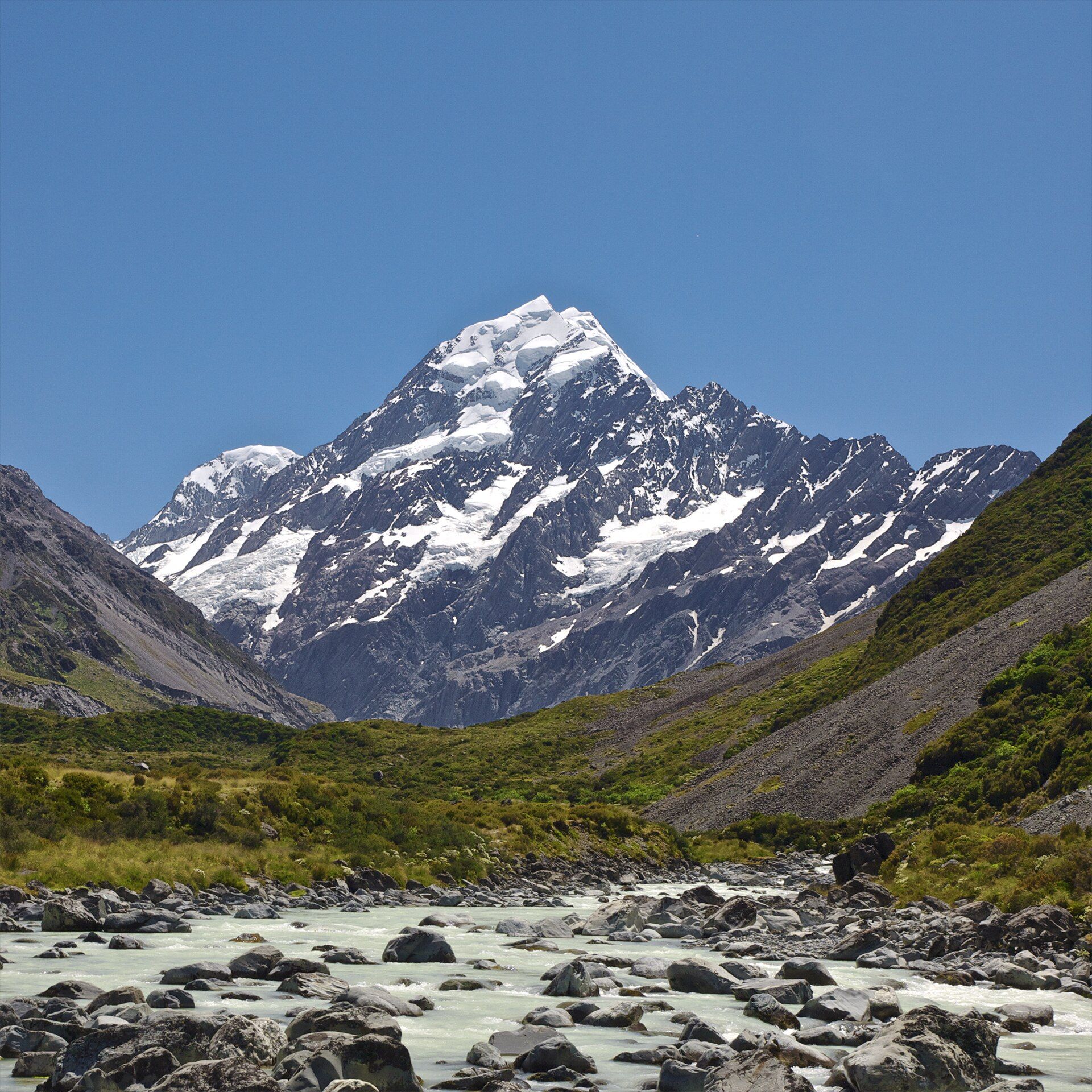
New Zealand's highest peak — a snow-and-ice pyramid rising above glacier-fed turquoise lakes and the country's longest glacier, in the heart of the Southern Alps' greatest concentration of high mountains.
What makes it marvelous
Aoraki / Mount Cook stands 3,724 metres above the Southern Alps, the highest mountain in New Zealand and the crown of a range that holds most of the country's highest peaks and largest glaciers. Around it flows the Tasman Glacier, the longest in New Zealand, calving icebergs into a milky glacial lake, while meltwater feeds the astonishing turquoise of Lakes Pukaki and Tekapo below. The mountain is sacred to the Ngāi Tahu Māori, who know it as Aoraki, an ancestor turned to stone; it was on these slopes that Edmund Hillary trained for Everest. The park's clear, dark skies are among the best for stargazing on Earth, part of a vast International Dark Sky Reserve. It is a UNESCO World Heritage Site within Te Wāhipounamu.
Why visit
Gazing up at Aoraki's icy pyramid above a turquoise lake, walking to glacier viewpoints, and taking in some of the clearest night skies anywhere make this the alpine heart of New Zealand and one of the Southern Hemisphere's great mountain landscapes.
What to know before you go
🗓️ Best time
Summer and early autumn (roughly December–April) for the best hiking weather and lake colour; winter brings snow, harder access, but superb clear-sky stargazing.
🧭 Getting there & access
In the central South Island, reached by road from Christchurch or Queenstown to Aoraki/Mount Cook Village along the shore of Lake Pukaki; day walks like the Hooker Valley Track start from the village.
Good to know
- Walk the Hooker Valley Track for classic mountain-and-glacier-lake views.
- Stay overnight for the world-class dark-sky stargazing.
- Mountain weather changes fast — carry layers even in summer.
Plan your visit
Moderate🧭 Getting there
From Mount Cook Village, New Zealand
- Drive Christchurch → Aoraki/Mount Cook Village — roughly 4h30, along Lake Pukaki
- Or drive from Queenstown — about 3h30–4h
- Walk the valley tracks from the village, chief among them the Hooker Valley Track
- Total travel
- Around four hours from Christchurch or Queenstown
- Time at site
- Two days for the walks and the night sky
- Access
- The national park is free to enter and the village is the base for it. The standout walk, the Hooker Valley Track, is a mostly flat there-and-back of about three hours over swing bridges to a glacial lake dotted with icebergs beneath the peak — accessible to most, but fully exposed to wind and cold. Tougher routes like Mueller Hut climb steeply into real alpine terrain. The whole area is an International Dark Sky Reserve, so a clear night is as much the point as the daytime views. Alpine weather closes in fast; check the forecast and the track conditions with the visitor centre.
🎒 What to bring & consider
- Windproof and warm layers for the Hooker Valley, which is easy underfoot but bitterly exposed when the wind funnels down it
- Sturdy shoes and a head for the swing bridges, plus far more capability for the steep Mueller Hut climb
- A clear-night plan, since this is a Dark Sky Reserve and the stars are among the best-reason to stay over
- Sun protection for strong alpine UV bouncing off snow and glacier
- A check of the forecast and track status, because mountain weather here shifts quickly and closes routes
👁️ What to expect
- Crowds
- The Hooker Valley Track is popular and busy midday. Early, late and the harder routes are quieter.
- Conditions
- Alpine and exposed, with easy valley walking and serious climbs, under fast-changing weather.
- Facilities
- A village with lodging, a visitor centre and food. Nothing on the tracks themselves.
- The view
- Aoraki reflected in the iceberg-strewn Hooker Lake at the end of the track, with the swing bridges as the lead-in. After dark, the Milky Way over the peak from the dark-sky reserve is the other frame worth staying for.
Times and requirements are approximate and change with season, weather, and local rules — confirm permits, fares, and schedules with operators before you travel.
Natural riches of the area
- New Zealand's highest peak (3,724 m) and highest range
- The Tasman Glacier, the country's longest, and its iceberg lake
- Glacier-fed turquoise lakes (Pukaki, Tekapo)
- An International Dark Sky Reserve with superb night skies
Local food
- South Island lamb
- New Zealand's famous grass-fed lamb, a Canterbury staple.
- Freshwater salmon
- Farmed in the cold glacial canals near Lake Pukaki.
- Central Otago wine & produce
- Cool-climate wines and stone fruit from the nearby region.
Aoraki / Mount Cook is the alpine heart of New Zealand. Rising 3,724 metres above the Southern Alps, it is the country’s highest peak and the crown of a range that gathers most of its tallest mountains and largest glaciers. The Tasman Glacier, New Zealand’s longest, flows down from the heights and calves icebergs into a milky lake, while glacial meltwater lends Lakes Pukaki and Tekapo their unreal turquoise below.
The mountain is sacred to the Ngāi Tahu Māori, who know it as Aoraki — an ancestor turned to stone — and it was here that Edmund Hillary trained for Everest. By night the park reveals another wonder: some of the clearest, darkest skies on Earth, part of a vast Dark Sky Reserve where the Milky Way blazes overhead. A UNESCO World Heritage Site, it is one of the Southern Hemisphere’s great mountain landscapes, and a walk up the Hooker Valley to its glacier lakes is a classic of New Zealand travel.
Aoraki / Mount Cook: common questions
How do you get to Aoraki / Mount Cook?
From Mount Cook Village, New Zealand: Drive Christchurch → Aoraki/Mount Cook Village — roughly 4h30, along Lake Pukaki; Or drive from Queenstown — about 3h30–4h; Walk the valley tracks from the village, chief among them the Hooker Valley Track. Allow Around four hours from Christchurch or Queenstown.
When is the best time to visit Aoraki / Mount Cook?
Summer and early autumn (roughly December–April) for the best hiking weather and lake colour; winter brings snow, harder access, but superb clear-sky stargazing.
How long should you spend at Aoraki / Mount Cook?
Two days for the walks and the night sky. Around four hours from Christchurch or Queenstown of travel from Mount Cook Village, New Zealand.
What should you bring to Aoraki / Mount Cook?
Windproof and warm layers for the Hooker Valley, which is easy underfoot but bitterly exposed when the wind funnels down it Sturdy shoes and a head for the swing bridges, plus far more capability for the steep Mueller Hut climb A clear-night plan, since this is a Dark Sky Reserve and the stars are among the best-reason to stay over Sun protection for strong alpine UV bouncing off snow and glacier A check of the forecast and track status, because mountain weather here shifts quickly and closes routes
Do you need a permit or guide for Aoraki / Mount Cook?
The national park is free to enter and the village is the base for it. The standout walk, the Hooker Valley Track, is a mostly flat there-and-back of about three hours over swing bridges to a glacial lake dotted with icebergs beneath the peak — accessible to most, but fully exposed to wind and cold. Tougher routes like Mueller Hut climb steeply into real alpine terrain. The whole area is an International Dark Sky Reserve, so a clear night is as much the point as the daytime views. Alpine weather closes in fast; check the forecast and the track conditions with the visitor centre.
Is Aoraki / Mount Cook crowded, and what are conditions like?
The Hooker Valley Track is popular and busy midday. Early, late and the harder routes are quieter. Alpine and exposed, with easy valley walking and serious climbs, under fast-changing weather. Facilities: a village with lodging, a visitor centre and food. Nothing on the tracks themselves.
Added Updated
More wonders to explore